
How Liquidity Affects Day Trading Results
When I first started trading day trading, I believed success was all about finding the perfect indicator. I spent weeks testing moving averages, RSI settings, support and resistance levels, and dozens of YouTube strategies that promised easy wins. Some worked for a few trades, but most failed.
What confused me was that the same setup could produce completely different results on different days. One morning, a simple breakout would run perfectly to expiry. The next day, the exact same setup would stall, reverse, and finish out of the money.
At first, I blamed the broker. Then I blamed the strategy. Eventually, I discovered the real culprit: liquidity.
Understanding liquidity completely changed how I approached day trading. More importantly, it helped me stop taking low-probability trades that looked attractive on the chart but had almost no chance of producing consistent results. If you trade day trading and have ever wondered why some days feel easy while others feel impossible, liquidity may be the missing piece.
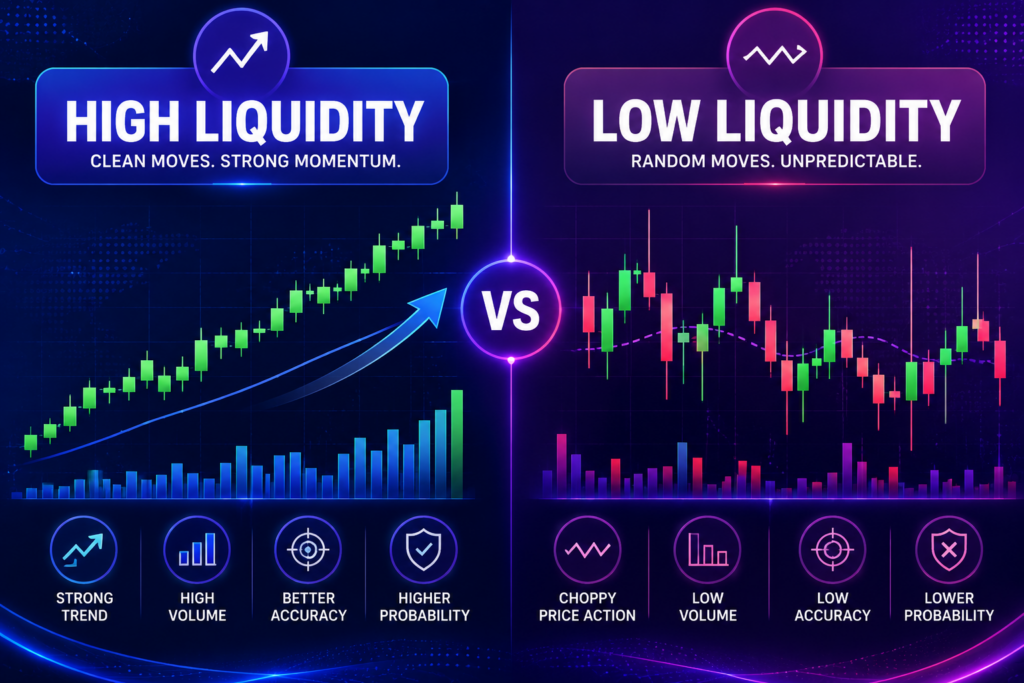
What Is Liquidity in Trading?
Liquidity refers to the amount of buying and selling activity taking place in a market.
- High Liquidity: There are plenty of buyers and sellers participating actively.
- Low Liquidity: Fewer market participants are active.
For day traders, liquidity matters because it directly affects how price moves. High liquidity creates cleaner price action, while low liquidity often creates random, erratic movements that are incredibly difficult to predict.
I learned this lesson the hard way. One evening, I found what looked like a perfect support bounce setup on EUR/USD. Everything aligned. The level had held multiple times, momentum indicators agreed, and the market structure looked healthy.
I entered confidently, but price suddenly spiked right through support for a few seconds before returning to the original direction. The trade expired as a loss. The next day I checked the chart and realized I had traded during a period of extremely low market activity. The setup wasn’t bad; the timing was. If you want to avoid these traps, finding your rhythm starts with choosing the right platform workspace, a journey I wrote about in Finding My Perfect Workspace: The Search for the Best Broker for My Daily Trading Routine.
Why Liquidity Creates Better Day Trading Opportunities
Day trading depend entirely on one specific thing: where price closes at the exact expiry moment. Unlike traditional trading where you can hold positions longer to weather random spikes, day traders need accurate, short-term price movement. That makes liquidity even more important.
When liquidity is strong:
- Trends move more smoothly.
- Support and resistance levels react more reliably.
- Breakouts have greater follow-through.
- Candlestick patterns become more meaningful.
- Random market noise decreases.
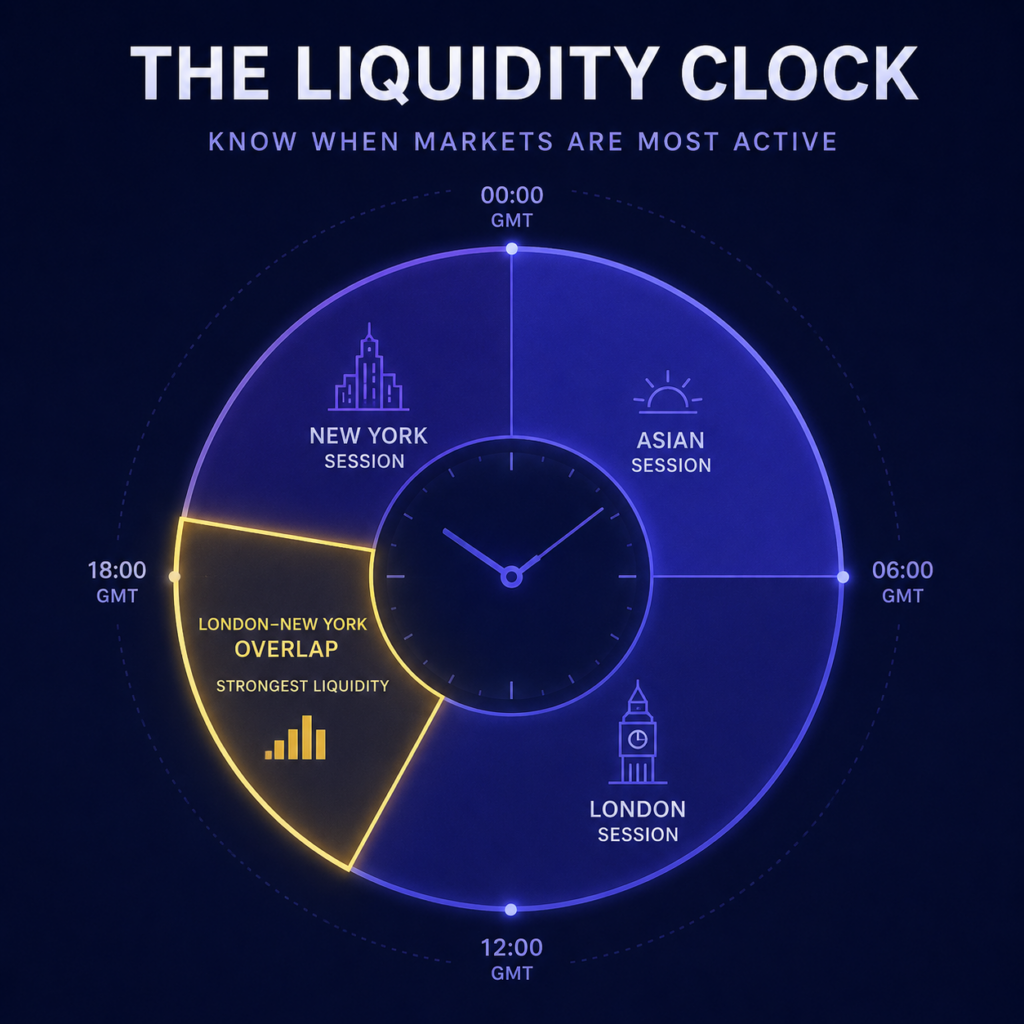
This is one reason session timing plays such an important role. In my experience, the best setups often appear when major financial centers overlap. The London and New York overlap remains one of the most active trading periods globally, where price moves with clear purpose rather than hesitation. If you want to understand how trading sessions influence your setups, read my detailed guide on The Clock and the Cash: My Journey Into the Hidden Rhythm of Session-Based Trading.
The Hidden Danger of Low Liquidity
Most beginners focus entirely on finding trades, whereas professionals focus on avoiding bad conditions. Low liquidity creates environments where probability becomes harder to measure. During these quiet times, you will often notice:
- Long, unpredictable candlestick wicks
- Sudden, unexplained reversals
- Frequent false breakouts
- Slow, grinding price movement
- Choppy consolidations
I used to force trades during quiet periods because I felt I needed action. That mindset cost me more money than any structural strategy mistake. Eventually, I realized that choosing not to trade is often the best trading decision you can make.
That realization closely mirrors what I discussed in How I Learned to Sit on My Hands During Choppy Markets. The market rewards patience far more than forced activity.
Liquidity and Market Sessions
One of the biggest breakthroughs in my trading came from tracking liquidity throughout the day. I noticed that the exact same strategy produced dramatically different results depending on the active trading session.
The strongest liquidity generally appears during:
- The London Session: European markets generate substantial volume and often establish the core direction for the day. This environment makes it the best broker for learning price action in 2026 tested by real traders a crucial asset if you are trying to master structural movements.
- The New York Session: American traders enter the market, creating heavy participation and clean momentum.
- The London-New York Overlap: This is where the highest liquidity peak appears, and many of my best day trading trades occurred during this specific window.
Meanwhile, low-liquidity periods often include late New York hours, holiday periods, and session transition dead zones. If you are restricted to trading outside these hours, you have to adjust your strategy completely. For instance, some platforms offer synthetic indices that mimic true market liquidity even on weekends. You can see how platforms handle this in our comparison of Deriv vs IQ Option for Synthetic Indices: Which Platform Is Better in 2026, or check out our guide on Why Market Open Hours Create the Best Trading Opportunities.
How Liquidity Impacts Common Day Trading Strategies
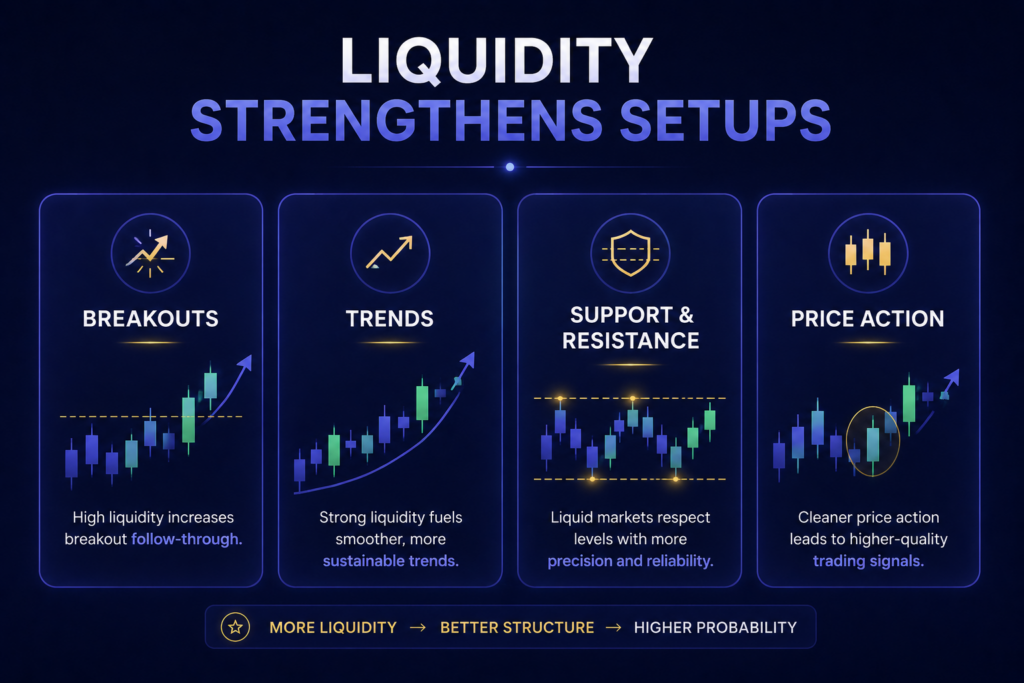
Liquidity affects nearly every strategy you deploy on your charts.
- Breakout Trading: High liquidity helps breakouts continue forcefully. Low liquidity increases false breakout frequency, trapping retail traders.
- Trend Following: Strong liquidity supports directional momentum. Weak liquidity often creates sideways, exhausting consolidation.
- Support and Resistance: Levels tend to react more predictably when active market participants are involved to defend those prices.
- Price Action Trading: Candlestick signals become significantly more reliable when formed in liquid conditions rather than a vacuum.
This is one reason many traders eventually focus heavily on market structure over messy indicators. Our article How Understanding Market Structure Saved My Day Trading explains this concept in greater detail.
The Connection Between Liquidity and Trader Psychology
What surprised me most wasn’t the market impact; it was the intense psychological impact. Low-liquidity environments actively encourage overtrading. Because nothing seems to happen, traders become impatient. They start inventing setups, forcing entries, and abandoning their core discipline.
Ironically, the periods with the fewest real opportunities often generate the biggest account damage. This destructive behavioral loop is why so many beginners struggle to protect their balances. If you are wondering why consistency feels so elusive, our extensive breakdown in Why 90% of Traders Lose Money: Real Reasons Beginners Don’t Realize explores many of these hidden behavioral traps.
Choosing a Platform That Supports Better Trading Conditions
Liquidity itself comes from the broader global market, not individual brokers. However, platform quality still matters tremendously. Execution speed, chart responsiveness, available asset variety, and session accessibility all directly influence your ability to capitalize on liquid windows.
Many traders compare major platforms before choosing where to start out. If you are assessing your options, it helps to read real, head-to-head performance evaluations:
- Ease of Use: Which Is Easier for Beginners: Binomo or IQ Option
- Payout Testing: Top 3 Trading Platforms That Actually Pay: Proof-Based
- Withdrawal Physics: Binomo vs IQ Option Withdrawal Speed: Full 2026 Comparison Guide or view broader tests at Fastest Withdrawal Brokers: Real Test Results
- Mobile Portability: Binomo vs IQ Option Mobile App Comparison 2026: Which Trading App Is Better for Beginners
- Alternative Matchups: Deriv vs IQ Option for Beginners in 2026: Which Platform Is Better to Start With and Deriv vs Binomo for Low-Risk Trading in 2026: Which Platform Is Better for Safer Growth
For those managing specific capital constraints or geographical requirements, targeted guides can save you substantial time:
- Trading on lower balances? See the Safest Broker for Small Deposits in 2026 or read How Much Money Do You Really Need to Start Trading: A Realistic Beginners Guide for 2026.
- Located in South Asia? Check the Best Broker for Pakistani Traders in 2026.
- Balancing classes? Review Which Broker Is Better for Students in 2026.
You can open an account directly with top-tier brokers using our verified partner links below:
- Open a Binomo Account or an IQ Option Account
- Explore alternative environments via a Pocket Option Account, Quotex Account, Deriv Account, Expert Option Account, Olymp Trade Account, or CapitalCore Account
The Liquidity Checklist I Use Before Every Trade
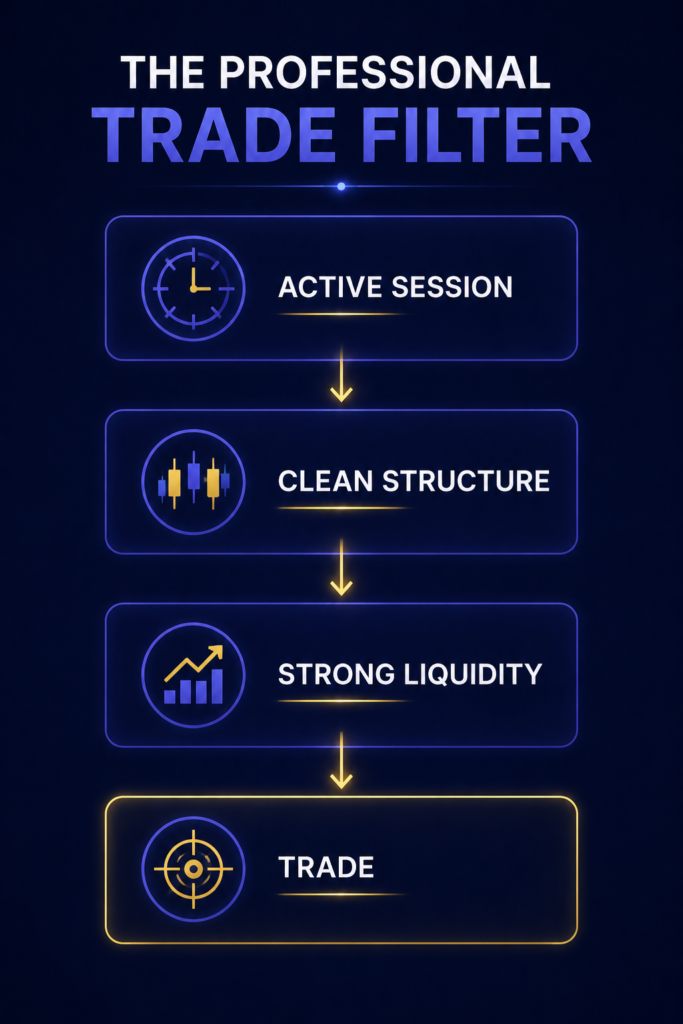
Today, before entering any day trading position, I force myself to answer five simple questions:
- Is the underlying market currently active?
- Am I trading during a major regional session or overlap?
- Is the price moving cleanly without erratic, hyper-extended wicks?
- Are technical support and resistance levels actively respecting historical structure?
- Would I still take this exact setup if my trade volume size were twice as high?
If I cannot confidently answer “yes” to those questions, I walk away from the chart. The difference in my long-term account survival has been night and day.
Final Thoughts
For years I searched for a magic technical indicator, but the truth was much simpler. Market conditions matter far more than the tools you overlay on top of them. Liquidity influences trend quality, breakout reliability, support and resistance reactions, and overall predictability. Many losses that retail traders blame on strategy failure are actually liquidity problems in disguise.
Once I stopped chasing trades during quiet markets and focused heavily on high-participation periods, my daily results stabilized. If you’re serious about improving your day trading performance, start paying attention not only to where price is moving, but also to how much volume exists behind that move.
If you want deeper market analysis before placing your next trade, explore our Forecast Hub for comprehensive insights and daily market preparation. For traders who want a genuine structural edge, you can access institutional-style analysis, volume liquidity mapping, session planning, and premium asset forecasts through BECOIN Premium.
The biggest improvement in my career did not come from finding more trades. It came from learning which market environments were actually worth risking capital in the first place.
Best Capital Core Day Trading Strategy for 1-Minute and 5-Minute Trades
I did not build my short-expiry strategy on Capital Core from a perfect week, a flashy YouTube setup, or some “secret indicator” thread. I built it by making the same mistakes most traders make when they first touch 1-minute and 5-minute day trading. I entered too early. I forced trades because the candles looked exciting. […]
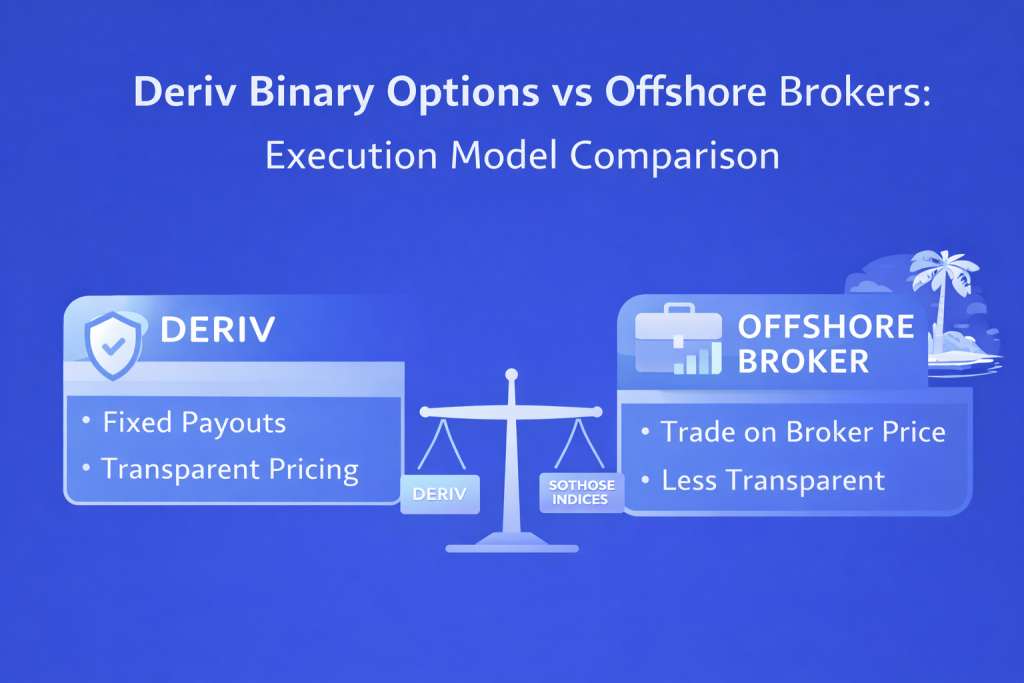
Deriv Day Trading vs Offshore Brokers: Execution Model Comparison
I did not start my trading journey thinking about execution models. Like most beginners, I started with charts, indicators, and the belief that if I could just find the right entry signal, profits would follow. My early trading notebook was full of screenshots of RSI signals, candlestick patterns, and support levels. What it did not […]

Best Broker for Learning Price Action in 2026 (Tested by Real Traders)
Most traders think they need a better strategy. What they actually need is a better understanding of price. A few years ago, one of our community members had over ten indicators on his chart. RSI. MACD. Moving averages. Bollinger Bands. Stochastic. Every new YouTube video added another indicator. The result? More confusion. Not more profits. […]

Binomo Support Contact Guide: What to Send So You Don’t Get Copy-Paste Replies
I didn’t take support seriously until my first withdrawal got stuck. At that point, I had already made a few decent trades and felt confident. But when the money didn’t arrive, I rushed to support and sent a quick message. It felt clear to me, but the reply I received was generic and didn’t solve […]
Deriv Copy Trading (DBot & Signal Services): Can Automation Beat Manual Trading?
When I first started trading on Deriv, everything I did was manual. Every entry, every exit, every mistake. I would sit in front of charts watching price ticks move on synthetic indices, trying to time trades perfectly. Some days I would catch a streak of wins and feel like I had finally figured it out. […]

Chasing Safety in a High-Stakes World: My Quest for the Best Low-Risk Trading Platforms
I still remember the sinking feeling in my stomach when I lost my first tiny trading account. It wasn’t a massive fortune, but it was mine. That night, I realized a brutal truth about this industry: most beginners fail not because they lack passion, but because they dive into high-risk environments without a life jacket. […]