
Why Market Open Hours Create the Best Trading Opportunities
I used to think trading was a 24-hour conveyor belt of endless cash. In my earliest days, armed with a laptop, a hot cup of coffee, and far too much unearned confidence, I would stare at charts at 11:00 PM on a Tuesday. The candles barely moved. They crawled across my screen like snails on a sleepy afternoon. I would force trades out of sheer boredom, trying to squeeze profit out of microscopic price wiggles, only to get eaten alive by spreads and sudden, random reversals.
It took losing a painful amount of capital to realize a fundamental truth about the financial markets: the market does not care about your work schedule. It has its own heartbeat, its own opening bell, and its own rush hours.
When I finally figured out that the highest concentration of trading opportunities happens during specific market open hours, my entire approach shifted. I stopped chasing the market and started waiting for it to wake up. Here is the raw story of how I learned to ride the opening waves, why these hours hold the highest win potential, and how you can structure your day to exploit them.
The Ghost Town vs. The Trading Floor
Imagine walking into a massive shopping mall at 4:00 AM. The lights are dim, the doors are locked, and the only sound is the echo of your own footsteps. If you wanted to sell a high-end watch right there, your chances of finding a buyer are close to zero. If you do find someone, they will probably offer you pennies on the dollar because there is no competition.
That is what trading feels like during the dead zones—those awkward transition hours between the close of New York and the slow awakening of Sydney and Tokyo.
Now, imagine that same mall at 10:00 AM on a Saturday. The doors fly open, thousands of shoppers stream in, music is playing, and buyers are actively competing for goods. Prices move rapidly, transactions happen in milliseconds, and the energy is palpable.
In the digital markets, the opening bell of a major global session—be it London, New York, or Tokyo—is that Saturday morning rush.
When a major market opens, institutional investors, hedge funds, algorithmic bots, and retail traders all dump their orders into the order book at the exact same time. This massive influx creates two beautiful ingredients that every successful trader needs: extreme liquidity and explosive volatility. Without these two, you are essentially trying to sail a boat in a puddle with no wind.
The Magic Magic Hour: The London and New York Overlap
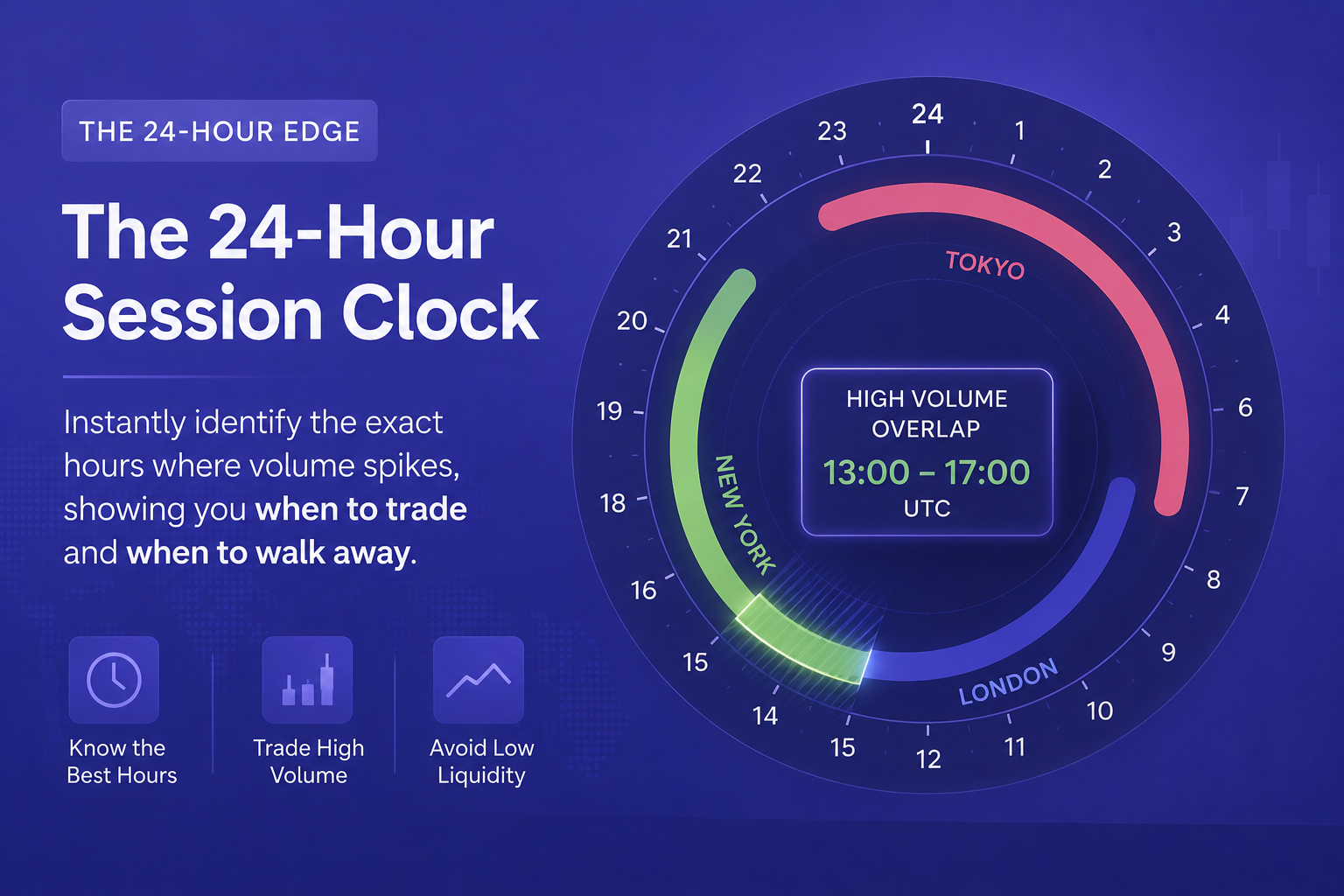
If you want to know the exact moment my trading account turned a corner, it was when I synchronized my alarm clock with the overlap of the London and New York sessions.
The London session opens early in the morning European time, bringing in the massive weight of European banking capital. A few hours later, New York traders wake up, pour their coffee, and open their terminals. For roughly a four-hour window, the two largest financial capitals on earth are trading simultaneously.
The sheer volume during this overlap is staggering. Trends do not just form; they accelerate. Support and resistance levels that held firm for twelve hours suddenly shatter as institutional momentum drives prices toward clean targets.
Before I realized this, I spent months analyzing charts during quiet periods, wondering why my perfect technical setups kept failing. The answer was simple: there was no volume to push the price through the levels. Understanding this structural reality is why many traders end up migrating across platforms, looking for environments that handle high-velocity execution smoothly. If you have ever wondered why execution speed matters so much during these frantic windows, you can read more about why traders move from Binomo to Deriv in 2026 for a clearer perspective on platform mechanics.
During the open, the spread—the difference between the buy and sell price—shrinks to its narrowest point because there are so many participants. This saves you money the second you click "Buy" or "Sell." More importantly, the price action becomes highly predictable because it is driven by real directional intent, not random retail noise.
Why the First 60 Minutes Dictate the Whole Day
There is a distinct psychological phenomenon that happens during the first hour of a market open. I call it the "unzipping" of the market.
Overnight, while a specific market was closed, world events kept happening. Companies released earnings, politicians made announcements, and economic data dropped. Because the local exchange was closed, all that raw human emotion and fundamental data got compressed into a coiled spring.
When the opening bell rings, that spring uncoils instantly.
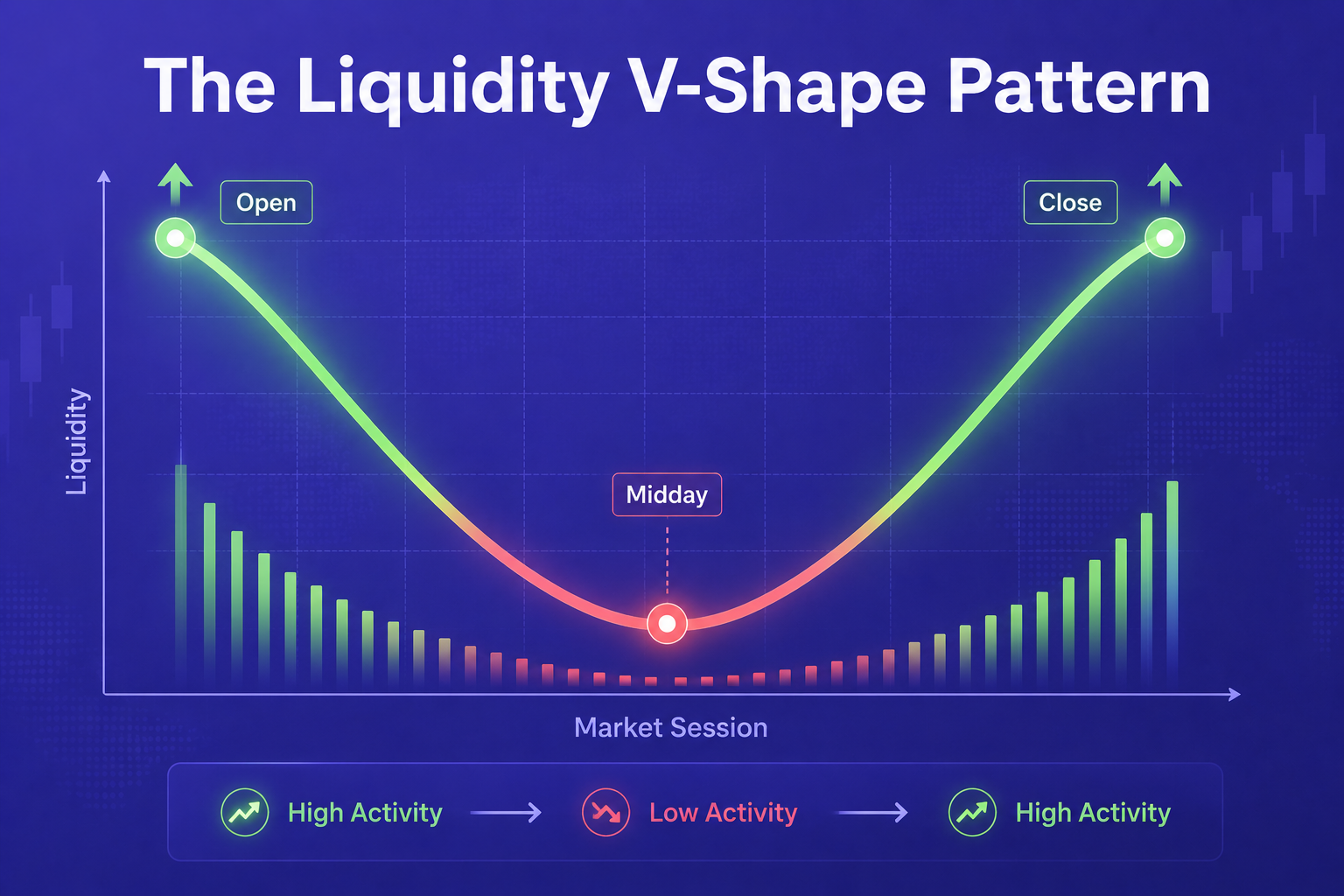
The first hour is a battlefield where the market plays catch-up. You will often see a massive initial spike in one direction, followed by a sharp reversal as early trapped traders get liquidated, followed finally by the true trend of the day establishing itself.
Early on, I used to jump into the market the exact second the clock struck the opening hour. It was an adrenaline rush, but it was also financial suicide. I was getting chopped up in the initial chaos.
Eventually, I adapted my strategy. I began to treat the first fifteen to thirty minutes as an observation window. I let the big institutional players battle it out, let the initial volatility clear out the weak hands, and then I looked for clean price action entries once a clear direction emerged. This patient, methodical approach completely transformed my daily routine. If you are struggling to find a balance between your personal life and the chaotic market schedule, exploring my personal journey in finding my perfect workspace and building a daily trading routine might give you some practical structural ideas.
Matching the Session to Your Trading Identity
One of the biggest mistakes I see beginners make is trying to trade every single session with the exact same strategy. They will use an aggressive breakout strategy during the quiet Asian session, or a slow range-bound strategy during the explosive New York open. It never works.
Every market session has a completely unique personality, and your strategy must match that personality.
- The Tokyo/Asian Open: This session is traditionally calmer, more deliberate, and prone to consolidation. It is a fantastic environment for mean-reversion strategies, where you trade the bounces off well-defined support and resistance ranges.
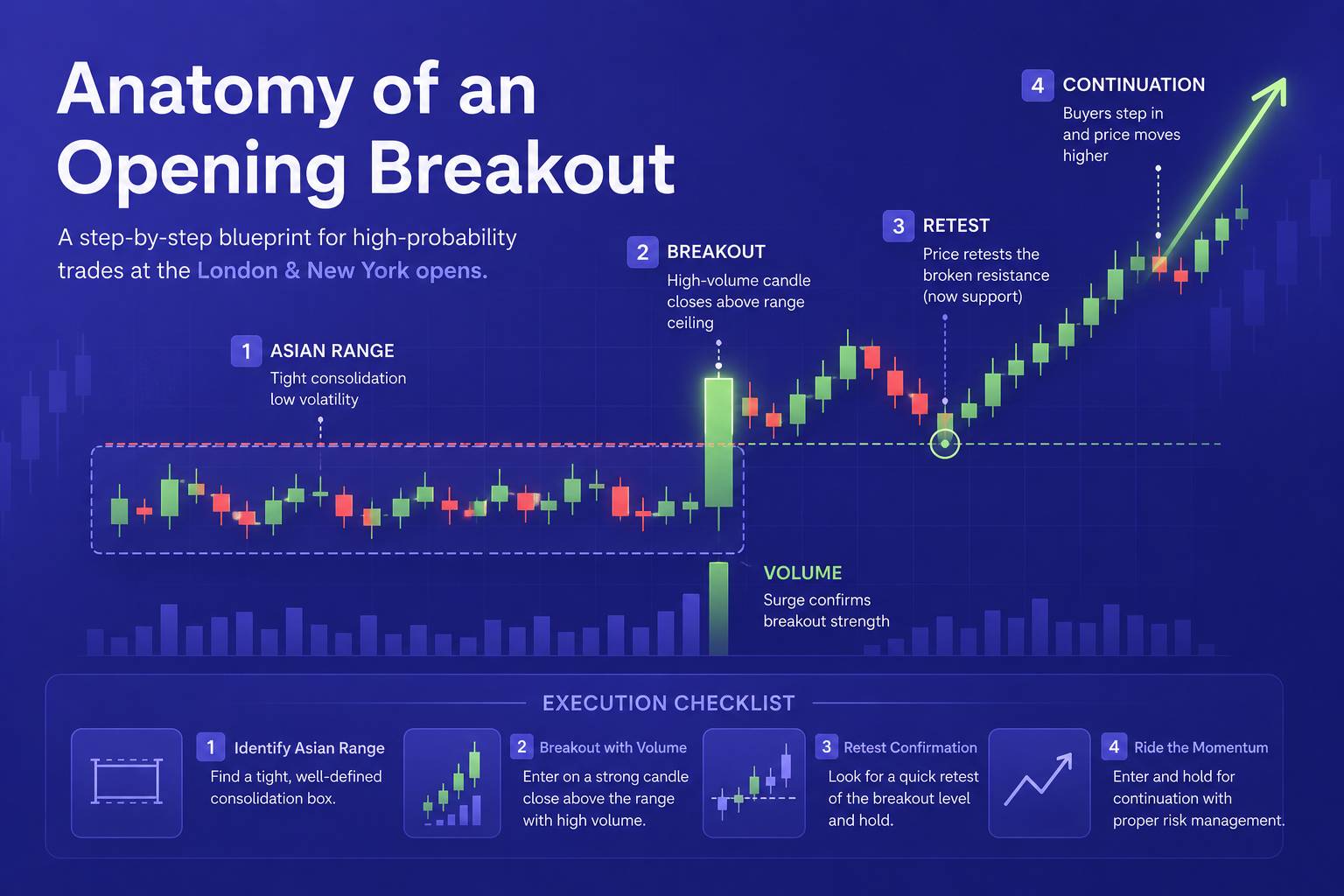
- The London Open: This is the trendsetter. London loves to break out of the ranges established overnight during the Asian session. If you love trading explosive breakouts and high-momentum line breaks, this is your playground.
- The New York Open: This is the wild card. It brings immense volume but is heavily influenced by macroeconomic news events, interest rate decisions, and employment data releases. It requires sharp risk management because reversals can be swift and violent.
To navigate these personality shifts, you need platforms that do not choke when the volume spikes. If you are operating with a smaller retail bankroll, choosing the right venue is critical. I highly recommend looking over the comprehensive analysis of Binomo vs IQ Option for small accounts to see which ecosystem provides the stability you need when a session kicks off.
The Dark Side of the Open: Managing the Chaos
I would be lying if I said the market open is an easy ticket to wealth. The same volatility that creates massive profit windows can wipe out an undisciplined account in seconds.
When the volume surges, slippage can happen. You might click to enter a trade at one price, but because the market is moving at terminal velocity, your order gets filled a few pips away. If your platform has poor charting tools or lagging execution, you are starting the race with a broken leg.
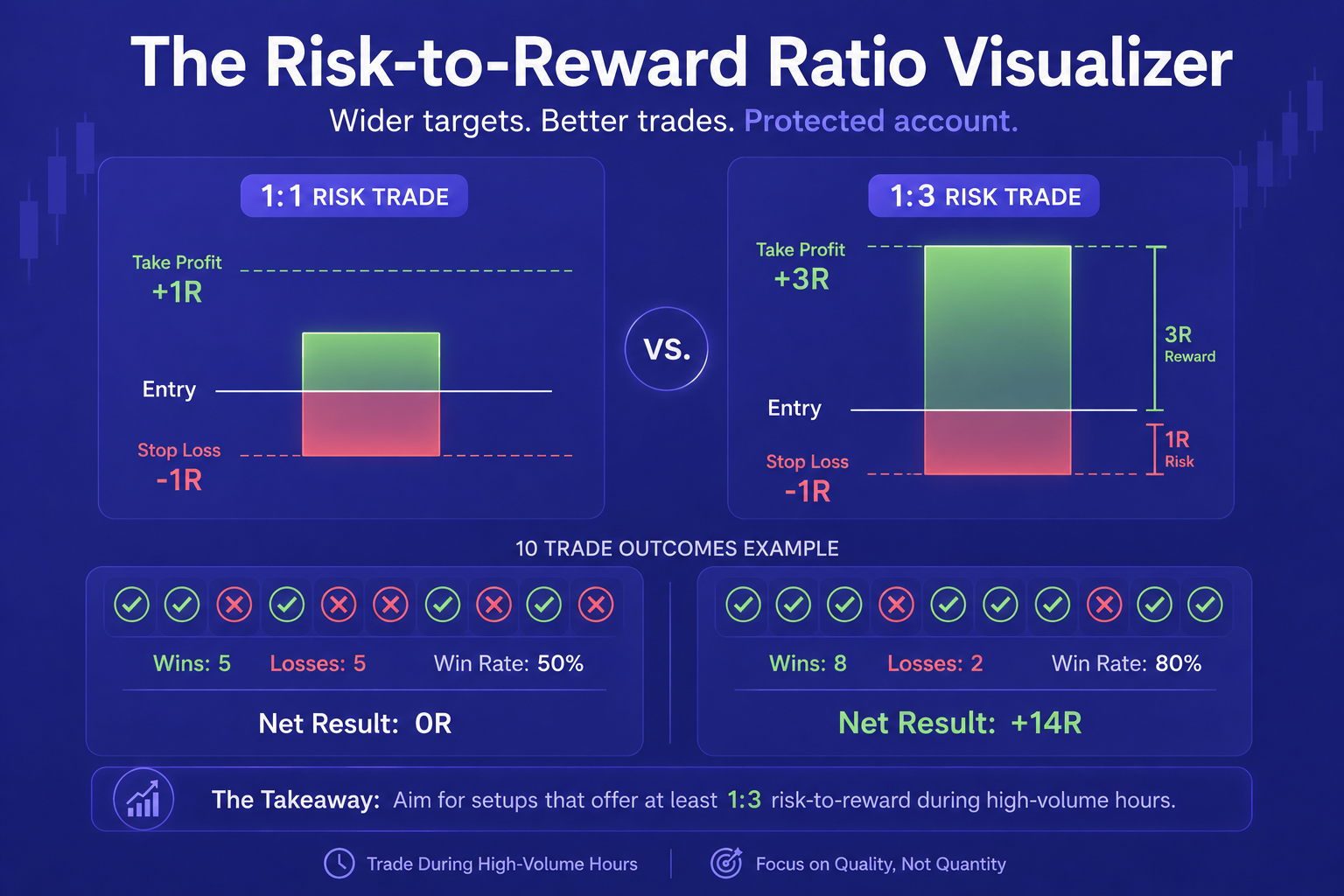
To survive the open, your risk management has to be completely automated and entirely unemotional. I never enter an opening bell trade without a hard stop-loss already calculated and plugged into the system. The market moves too fast for mental stop-losses; by the time your human brain processes that a trade has gone wrong, your balance could take a catastrophic hit.
Finding tools that allow you to manage this risk cleanly is a vital part of your development. For a deeper look at platforms built to protect your capital during high-velocity moves, take a look at the breakdown of which broker has better risk management tools.
The Real Cost of Forcing Trades in the Dead Zones
It took me years to realize that some of the highest-earning days I will ever have are the days where I simply choose not to trade.
When you try to trade outside of the market open hours, you are essentially gambling against the house edge. The lack of volume means the market is easily manipulated by single large orders. You will see a candle spike up, convince yourself a trend is starting, buy in, and then watch the price immediately collapse because there was no genuine institutional follow-through behind the move.
When I shifted my focus exclusively to the primary session opens, my stress levels plummeted. I no longer had to sit at my desk for twelve hours a day, frying my nervous system. Instead, I spend two to three highly focused hours trading the open, and then I close my laptop. I let the market do the heavy lifting while I go live my life.
If you are currently trapped in the loop of constant, exhausting overtrading, you are not alone. It is a phase almost every professional trader goes through before they learn the value of timing. You can read my candid personal reflection on the day I stopped trading and finally started making money to see exactly how stepping back can miraculously push your account forward.
Stepping Up to Professional Execution
If you are ready to stop treating the markets like a casino and start trading the sessions with institutional precision, you need to use platforms designed to handle high-volume opens without lagging or freezing.
For fast-paced binary and digital options strategies where every single second counts on the execution clock, I highly recommend opening an account with IQ Option. Their charting engine is highly intuitive and exceptionally fast. If you want a platform known for seamless navigation and smooth asset transitions during heavy volume shifts, take a look at Binomo to see how it fits your routine.
For traders who prefer exploring non-traditional assets, algorithmic setups, or unique market instruments during global session handoffs, checkout the specialized trading environments over at Deriv, experiment with the lightning-fast fills at Pocket Option, or test the sleek operational agility provided by Quotex. If you are looking for straightforward platforms tailored for crisp execution layouts, look into ExpertOption or explore the institutional-grade routing tools available at Capital Core.
Gain the Ultimate Edge with Becoin Premium
Understanding the clock is only the first step to financial independence. Knowing exactly what to do when that clock strikes the hour is what separates the top ten percent of traders from the ninety percent who consistently wash out their accounts.
You do not have to sit in front of the charts guessing where the big institutional money is moving next. By joining our inner circle, you get access to institutional-grade market depth, real-time volume analysis, and predictive session breakdowns before the opening bell even rings.
Stop fighting the tide alone. Give your strategy the professional structural backing it deserves. Join Becoin Premium today and start trading with an unfair analytical edge.
How I Learned to Sit on My Hands During Choppy Markets
I remember the morning vividly. It was a Tuesday. The coffee on my desk was still piping hot, the charts on my screen were blinking, and I was feeling incredibly confident. I had just finished reading about how market open hours create the best trading opportunities, and I was ready to hunt for a clean […]
Biggest Beginner Mistakes That Kill Trading Accounts
Trading looks simple from the outside. Open an account, place a few trades, and grow your balance. But reality is different. Most beginners do not lose because markets are impossible. They lose because they repeat the same avoidable mistakes. A small account can survive bad market conditions. What usually kills it is poor decision-making, emotional […]
How Liquidity Affects Day Trading Results
When I first started trading day trading, I believed success was all about finding the perfect indicator. I spent weeks testing moving averages, RSI settings, support and resistance levels, and dozens of YouTube strategies that promised easy wins. Some worked for a few trades, but most failed. What confused me was that the same setup […]
The Clock and the Cash: My Journey into the Hidden Rhythm of Session-Based Trading
There was a time when I thought the global financial market was a single, monstrous wave that never stopped moving. I believed that if I sat in front of my monitors long enough, clicking buttons whenever a pretty pattern appeared on my charts, the market would eventually reward my sheer endurance. I was dead wrong. […]
The Clock and the Candle: How I Stopped Guessing the Best Time to Trade Day Trading
I still remember the night I blew my third trading account. It was 11:30 PM. The house was completely quiet, the market charts on my screen were barely crawling, and I was forcing trades out of pure impatience. I kept staring at a flatline asset, placing one-minute positions, convinced that the market owed me a […]

Finding the Best Trading Broker for Side Income: My Raw, First-Hand Journey to Consistent Daily Wins
Six months ago, I sat at my kitchen table staring at an accumulation of household bills, realizing my primary salary was no longer cutting it. I didn’t want a second job that required clocking into a physical location or taking endless boss mandates after hours. I needed a flexible, scalable side income. That night, I […]