Deriv Day Trading vs Offshore Brokers: Execution Model Comparison
I did not start my trading journey thinking about execution models.
Like most beginners, I started with charts, indicators, and the belief that if I could just find the right entry signal, profits would follow. My early trading notebook was full of screenshots of RSI signals, candlestick patterns, and support levels. What it did not include was something far more important: how the broker actually executes a trade.
That blind spot took me months to notice.
At first, I traded with offshore day trading brokers because they were easy to access and offered high payouts. The platforms looked clean, deposits were simple, and everything seemed designed to make trading feel fast and exciting.

Later, I discovered Deriv and began testing its binary contracts alongside offshore platforms. That decision quietly changed the way I understood trading platforms.
This article documents what I discovered while comparing Deriv Day Trading vs Offshore Brokers from the perspective of someone actually placing trades, recording outcomes, and studying how each system behaves under pressure.
If you want to test the same environment I eventually settled on, you can start here:
👉 Open a Deriv account using my link.
What follows is not theory. It is what I noticed after hundreds of trades.
The Moment I Realized Something Was Off
My first serious trading period happened on an offshore day trading platform.
The experience felt smooth at first. I would analyze a chart, choose “Higher” or “Lower,” wait a minute, and see the result. During my first few weeks, results were inconsistent but believable. I won some trades, lost others, and assumed everything was functioning normally.
Then I started noticing small inconsistencies.
For example, there were trades where my entry price appeared slightly different from what the chart suggested. In other cases, payout percentages changed dramatically within minutes. None of these issues alone seemed suspicious, but over time the pattern became difficult to ignore.
I began documenting trades carefully.
What I noticed was that the platform environment behaved slightly differently from what I saw on external charts like TradingView. It was subtle enough that beginners might miss it entirely, but once I started comparing platforms side-by-side, the differences became clearer.
That curiosity eventually led me to explore Deriv Day Trading vs Offshore Brokers in much greater depth.
How I First Discovered Deriv
I first heard about Deriv while researching synthetic markets.
Many traders were discussing volatility indices and algorithm-driven markets. Those conversations led me to learn about how Deriv structures its trading ecosystem, which includes binaries, CFDs, and automated trading tools.
If you are curious about how those synthetic markets actually work, I documented the details in my breakdown of how Deriv’s volatility indices are generated and what really powers Volatility 75.
But my focus at the time was binary contracts.
I wanted to see how Deriv handled execution compared to offshore platforms.
So I opened a small account and began testing.
Understanding Execution Models in Simple Terms
Most beginners assume binary trading works the same everywhere.
The reality is that platforms can structure their execution models differently. Those differences affect how trades are priced, how payouts are calculated, and how the broker manages risk.
Broadly speaking, I encountered two main models.
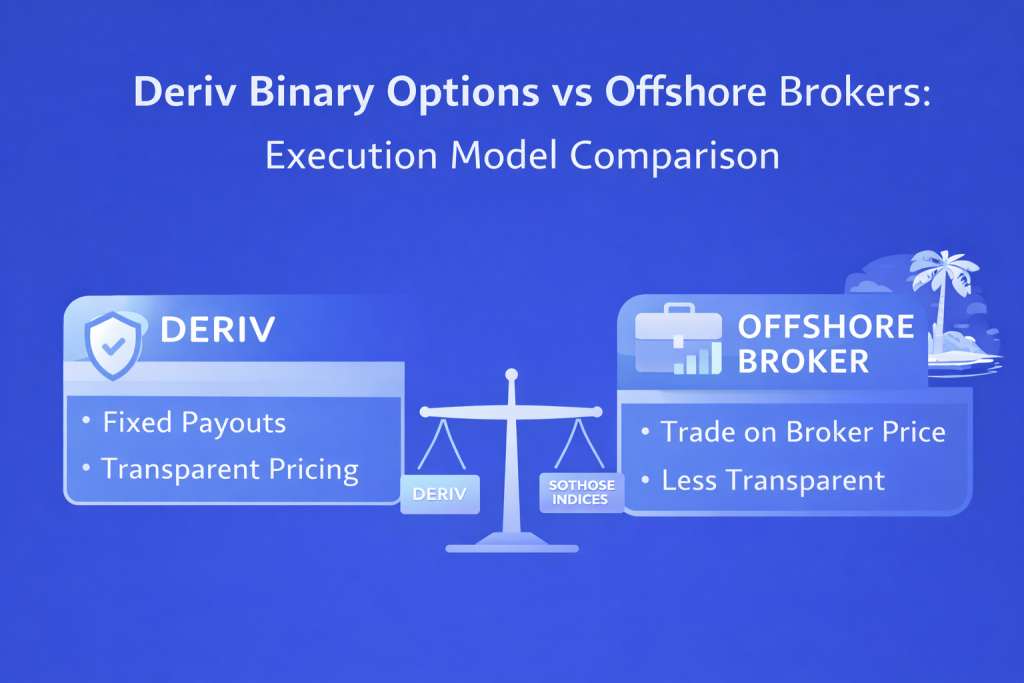
The first model is the classic market-maker approach used by many offshore brokers. In this structure, the broker itself becomes the counterparty to the trade. When a trader wins, the broker pays the profit. When the trader loses, the broker keeps the stake.
This model is simple and efficient, but it creates a situation where trader profits directly reduce broker revenue.
The second model, which I encountered on Deriv, treats day trades as structured contracts with defined probabilities. Instead of simply choosing a payout percentage, the contract price reflects the probability of the outcome.
That distinction might sound technical, but it changes how trades behave.
For example, instead of seeing a fixed payout like 92%, you often see the contract price adjust based on the likelihood of success. This creates a system where the pricing structure reflects probability more directly.
Understanding this was the first real insight I gained from comparing Deriv Day Trading vs Offshore Brokers.

My Side-by-Side Trade Experiment
Curiosity pushed me to run a simple experiment.
I placed identical trades simultaneously on two platforms: one offshore broker and Deriv.
The trade conditions were intentionally simple:
| Condition | Value |
| Asset | EUR/USD |
| Duration | 1 minute |
| Stake | $10 |
| Direction | Higher |
I repeated this process dozens of times.
The goal was not to prove one platform superior, but to observe differences in execution.
Over time, several patterns became clear.
| Observation | Deriv | Offshore Broker |
| Entry timing | Immediate | Occasionally delayed |
| Payout structure | Probability-based | Fixed but adjustable |
| Price feed stability | Consistent | Slight variation |
| Trade result transparency | Clear | Sometimes unclear |
None of these differences were dramatic on their own. However, when repeated across many trades, they created noticeably different trading environments.

The Payout Percentage Illusion
One thing that initially attracted me to offshore brokers was the promise of high payouts.
Seeing a 92% or even 95% payout feels appealing.
But after tracking trades over time, I realized payout percentage alone does not tell the full story.
Offshore platforms frequently adjust payouts depending on market conditions. During periods of high volatility or strong trends, the payout may drop significantly.
This adjustment can affect strategy performance.
Deriv handles this differently because the contract price itself reflects probability. Instead of constantly lowering payouts, the system adjusts the price you pay to enter the contract.
To understand how this affects profitability, I eventually studied the mathematics behind binary payouts. I documented that analysis in detail on how Deriv day trading payout math reveals the true break-even win rate.
That calculation changed the way I evaluated every trading strategy.
Execution Speed and Timing
Binary trading often happens on very short timeframes.
One-minute trades are common, and some traders even go lower. On such short durations, execution speed becomes critical.
During my tests, Deriv consistently executed trades immediately after confirmation. Offshore brokers also executed quickly most of the time, but occasional delays appeared during fast market movements.
Those delays might seem insignificant, but in short-duration trading even a fraction of a second can influence entry price.
Over hundreds of trades, those small differences accumulate.
This is one of the least discussed factors in the Deriv Day Trading vs Offshore Brokers debate.
Most beginners focus on payouts and bonuses, while experienced traders eventually start focusing on execution quality.
Chart Accuracy and Price Feeds
Another detail I started monitoring was chart consistency.
I compared price movements between three sources:
- Deriv charts
- Offshore broker charts
- Independent charts like TradingView
Most of the time, prices were similar across platforms. However, small differences occasionally appeared.
These differences usually come from variations in liquidity sources and price aggregation.
For traders using longer timeframes, the impact may be minimal.
But for one-minute day trades, even a tiny price difference can change the final outcome.
That is why execution models and price feeds deserve more attention than they typically receive.
A Psychological Difference I Did Not Expect
One unexpected difference between the two environments was psychological.
When trading offshore binaries, the platform sometimes felt like a high-speed game. The interface encouraged quick decisions, and payout percentages constantly shifted.
Deriv felt different.
The contract structure made each trade feel more like a probability calculation than a quick bet. That small change influenced how I approached risk.
I slowed down.
I started analyzing fewer trades and focusing on quality setups instead of rapid-fire entries.
That shift alone improved my trading discipline.
Risk Management Became My Real Edge
Eventually I realized that broker choice alone does not determine profitability.
What matters more is how well you control risk.
For example, I once tested whether a small trading account could survive a full month using strict risk management rules. The results surprised me.
I documented the entire experiment in my guide: can a $100 account realistically survive 30 days of trading on Deriv
Another common strategy beginners try is Martingale.
You have probably seen videos where traders double their position after each loss. On the surface it looks powerful.
But once I studied the mathematics behind it, the reality was very different. I explain the numbers in the mathematical reality behind Martingale trading on Deriv synthetic indices
Understanding those probabilities was far more valuable than switching brokers.
Choosing the Right Platform Environment
One thing I appreciate about Deriv is that it does not limit traders to a single interface.
Within the same ecosystem, you can trade through different platforms depending on your strategy.
Some traders prefer the simplicity of Deriv Trader for binaries. Others use MT5 for CFDs and more advanced risk management.
I wrote a detailed comparison exploring whether Deriv Trader or MT5 actually gives traders better control over risk.
Exploring those tools helped me refine my own setup.
The Question Every Trader Eventually Asks
At some point, every trader stops asking about strategies and starts asking about withdrawals.
This is a normal concern.
After several withdrawal cycles myself, I realized the process is usually straightforward but depends on verification and payment methods.
Because many traders worry about this step, I documented the full process in my article explaining how Deriv withdrawals actually work, including timelines and verification delays:
Knowing what to expect removes a lot of unnecessary stress.
My Final Thoughts on Deriv Day Trading vs Offshore Brokers
Looking back, my early trading journey was shaped by trial and error.
I experimented with different platforms, strategies, and risk management approaches before finally understanding the importance of execution models.
The comparison between Deriv Day Trading vs Offshore Brokers taught me something simple but powerful.

A trading platform cannot make you profitable.
But the environment it creates can either support your strategy or quietly work against it.
For me, Deriv eventually provided the consistency I was looking for.
The structured contract model felt more transparent, and the platform ecosystem allowed me to explore different trading styles without switching brokers.
If you want to experience the same environment and test it yourself, you can open an account here.
Just remember something I wish someone had told me earlier.
The real edge in trading rarely comes from a secret indicator.
It usually comes from understanding the mechanics behind the platform you are using.
Deriv Copy Trading (DBot & Signal Services): Can Automation Beat Manual Trading?
When I first started trading on Deriv, everything I did was manual. Every entry, every exit, every mistake. I would sit in front of charts watching price ticks move on synthetic indices, trying to time trades perfectly. Some days I would catch a streak of wins and feel like I had finally figured it out. […]
How Liquidity Affects Day Trading Results
When I first started trading day trading, I believed success was all about finding the perfect indicator. I spent weeks testing moving averages, RSI settings, support and resistance levels, and dozens of YouTube strategies that promised easy wins. Some worked for a few trades, but most failed. What confused me was that the same setup […]
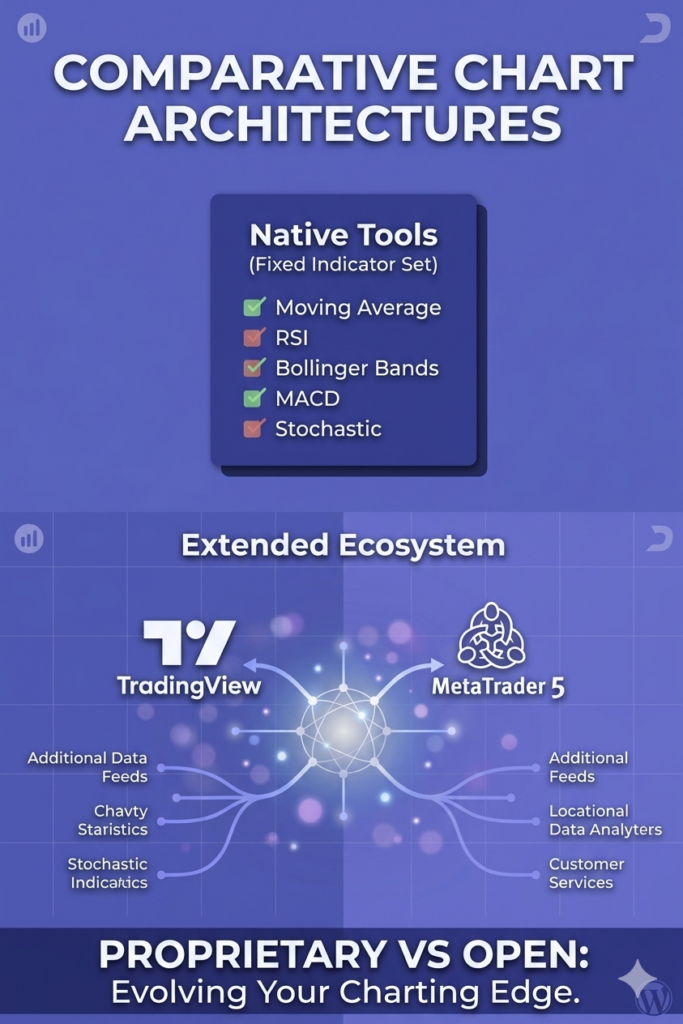
IQ Option vs Deriv Chart Comparison
The Night I Realized My Charts Were Lying to Me It was three in the morning, the exact hour when the market looks either like a goldmine or a psychological hazard. I was sitting in front of two monitors, a lukewarm mug of coffee in hand, watching a critical support level on EUR/USD. On my […]

I Started with $10 on Quotex – Day 1 Results (Real Case Study)
Most beginner traders ask the same question:Can you actually grow a small account like $10? Instead of theory, I decided to test it in real conditions. This is a Day 1 case study of trading with $10 on Quotex, documenting everything from setup to execution, mistakes, emotions, and actual results. No hype, no fake screenshots, […]

Safest Trading Platforms (Risk Breakdown) – Real Comparison for 2026
Choosing a trading platform isn’t about features — it’s about avoiding hidden risk. Most traders compare brokers like Quotex vs Pocket Option vs Deriv vs Olymp Trade expecting a clear winner. Instead, they find conflicting reviews, promotional claims, and no real explanation of how these platforms behave when money is on the line. The real […]

Top 3 Trading Platforms That Actually Pay (Proof-Based)
Choosing the wrong broker at the start is where most traders fail. Not because they lack strategy but because they end up stuck with slow withdrawals, poor execution, or confusing platforms that break decision flow. If your goal is to find the best trading platform for small deposit or the best broker for beginners, you […]