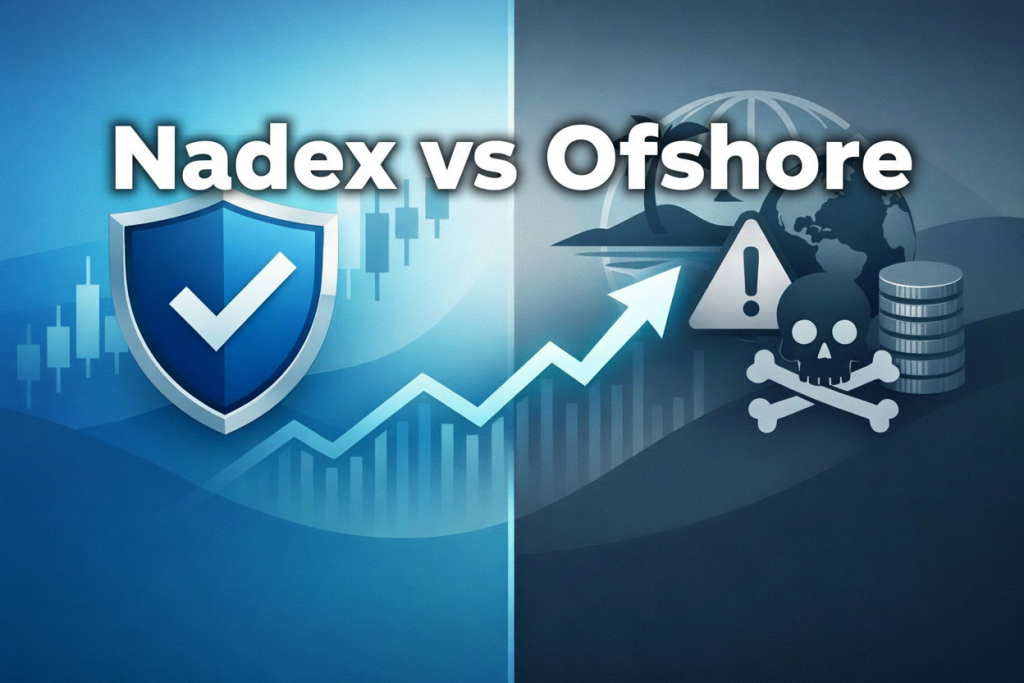
Nadex Day Trading vs Offshore Brokers: Risk, Regulation & Payout Comparison
I did not start my trading journey thinking about regulation.
I started thinking about money.
Like most retail traders, I was pulled in by screenshots of fast profits, social media claims of 80 percent returns in minutes, and the promise that day trading were simple. Just pick up or down. Fixed risk. Fixed reward.
What I did not understand at the time was that the real battle in Nadex Day Trading vs Offshore Brokers is not about payouts. It is about structure. It is about who holds your funds. It is about whether the platform sits on your side of the trade or matches you against other traders.

That realization took me years and several painful withdrawals to fully grasp.
If you are exploring regulated binary trading instead of offshore setups, you can open a Nadex demo or live account here and test the structure yourself before risking capital:
👉 https://static.olymptrade.com/lands/GA-OTPO-LPL45-07-01n/index.html?af_siteid=GA-OTPO-LPL45-07-01n&affiliate_id=2521424&lref=&lrefch=affiliate&pixel=1&subid1=&sub
This is not a promotional piece. It is my private trading notes turned into a structured comparison.
Let me walk you through what actually happened.

My First Experience with Offshore Day Trading Brokers
My first day trade was with an offshore broker based in an island jurisdiction I had never heard of. The platform looked polished. The deposits were easy. The payouts were advertised at 85 percent.
I deposited $500.
My first trade was EUR/USD, 5-minute expiry, $100 position. I won. The return was $85.
The math looked simple:
- Risk: $100
- Potential Profit: $85
- Total Returned if Win: $185
It felt clean.
But then I noticed something strange.
When price was extremely close to my entry at expiry, the result sometimes flipped against me. On another trade, my price chart froze for a few seconds. I dismissed it as internet lag.
Then I tried to withdraw $1,200 after a strong week.
That is when the emails started.
Additional verification. Bonus volume requirements. Trading turnover conditions. Compliance review.
The issue with most discussions about Nadex Day Trading vs Offshore Brokers is that they focus only on payout percentage. They rarely talk about withdrawal friction.
That friction was my first real lesson.
Discovering Nadex
I came across Nadex while searching for regulated alternatives. What caught my attention was not payout percentages. It was one line:
“US regulated exchange.”
That was new to me.
Unlike offshore brokers, Nadex operates as an exchange. Traders trade against each other. The platform does not take the opposite side of your trade.
That structural difference changes everything.
In the Nadex Day Trading vs Offshore Brokers debate, this is the core distinction:
| Feature | Nadex | Offshore Broker |
| Structure | Exchange | Broker |
| Counterparty | Other traders | The broker |
| Regulation | US regulated | Offshore jurisdictions |
| Pricing | Transparent bid/ask | Fixed payout |
| Early Exit | Yes | Usually no |
At first, Nadex felt more complicated. Instead of “invest $100 to make $85,” I saw contracts priced between 0 and 100.
That confused me.
Then I realized something important.
On Nadex, the price itself represents probability.
Understanding Nadex Contract Pricing
A Nadex binary contract settles at 0 or 100.
If I buy at 35:
- My maximum risk = $35
- My maximum reward = $65
If I sell at 65:
- My maximum risk = $35
- My maximum reward = $65
This is very different from offshore fixed payouts.
In Nadex Day Trading vs Offshore Brokers comparisons, most articles stop here. But what they do not explain is how pricing impacts trade management.
With offshore brokers:
- You cannot exit early (in most cases).
- You are locked until expiry.
- The broker decides if you win or lose based on their price feed.
With Nadex:
- You can exit anytime.
- You can reduce loss before expiry.
- You can lock partial profit.
That flexibility saved me during a volatile NFP release.
The Trade That Changed My View
It was a Friday. Non-Farm Payrolls.
I bought a Nadex binary on the S&P 500 at 42, expecting bullish continuation.
Price spiked in my favor quickly. The contract moved to 68.
Instead of waiting for full settlement at 100, I exited at 67.
Profit calculation:
- Entry: 42
- Exit: 67
- Profit: 25 points
That is $25 per contract.
On an offshore platform, I would have had to wait. If price reversed by expiry, I would have lost the entire stake.
This is one of the biggest hidden realities in Nadex Day Trading vs Offshore Brokers discussions. Trade management matters more than payout percentage.
If you want to experience that contract flexibility yourself, you can open a Nadex account here and test it on demo first.
Risk Comparison: What I Learned the Hard Way
When I traded offshore binaries, my risk was binary in the worst sense.
- Win full payout
- Lose entire stake
There was no scaling out.
No partial exit.
No limit orders.
With Nadex, risk is defined upfront and capped. But more importantly, it is adjustable.
Offshore Risk Profile
- Broker controls price feed.
- Slippage at expiry can flip outcomes.
- Bonuses restrict withdrawals.
- Capital often held in segregated but loosely supervised accounts.
Nadex Risk Profile
- Exchange-based matching.
- Clear maximum risk per contract.
- Transparent fees.
- Regulated oversight.
This regulatory layer matters.
Nadex is regulated by the Commodity Futures Trading Commission.
That does not guarantee profits. It does guarantee oversight.
In the Nadex Day Trading vs Offshore Brokers comparison, this is not a minor detail. It is foundational.
Payout Comparison: The Illusion of 90 Percent Returns
Offshore brokers advertise:
“Earn up to 90 percent in 60 seconds.”
That sounds better than buying at 40 and earning 60 on Nadex.
But here is the math I eventually calculated.
Let us say an offshore broker offers 85 percent payout.
If you win 50 percent of trades:
- 10 trades
- 5 wins = +$425
- 5 losses = -$500
- Net = -$75
You need a win rate above 54 percent just to break even.
On Nadex, because contracts are priced by probability, break-even math depends on entry price.
If I consistently buy contracts around 40, I need to win just over 40 percent of the time to break even.
That was eye-opening.
The Nadex Day Trading vs Offshore Brokers debate often ignores expectancy math. But expectancy is what determines survival.

Withdrawal Experience: Reality Check
My worst offshore experience was a $3,800 withdrawal delay.
No scam language. No threats. Just silence.
Eventually the funds arrived, but the psychological damage was done. Every trade felt like I was gambling against the house.
With Nadex, withdrawals felt procedural. Slower than crypto brokers, but predictable.
That predictability matters.
If you are serious about building a system, you cannot operate under constant counterparty anxiety.

Trade Transparency and Order Book
Another difference rarely discussed in Nadex Day Trading vs Offshore Brokers comparisons is the order book.
On Nadex, I can see:
- Bid and ask prices.
- Market depth.
- Where liquidity sits.
Offshore platforms show a simplified chart with no true depth visibility.
This is the difference between trading in a marketplace and betting in a closed room.
Fees: The Hidden Variable
Offshore brokers advertise “zero commission.”
That sounds attractive.
But their spread and payout structure embed their profit.
Nadex charges:
- A small entry fee.
- A settlement fee (capped).
At first I disliked fees.
Then I realized something important. Transparent fees are usually better than hidden structural edge.
Strategy Adaptation: How My Approach Changed
With offshore binaries, my strategy was momentum-based scalping.
With Nadex, I shifted toward:
- Selling overpriced contracts.
- Buying undervalued probabilities.
- Exiting early when delta shifted.
This turned day trading from a coin-flip style system into something closer to probability trading.
If you are transitioning from offshore platforms, you may also want to read my breakdown on position sizing psychology and risk stacking, which complements this comparison and shows how contract pricing changes your mindset.
I also covered expectancy modeling in my guide to structured risk management, which explains how probability-based entries outperform fixed payout chasing.
Psychological Difference
This was the biggest shift.
With offshore brokers, I felt like I was trying to beat the platform.
With Nadex, I felt like I was trading other participants.
That psychological framing changed my discipline.
Losses felt market-driven.
Wins felt earned.
In Nadex Day Trading vs Offshore Brokers comparisons, this emotional component is rarely discussed. But it affects long-term consistency.
Who Should Consider Offshore Brokers?
I will be honest.
Some traders prefer offshore platforms because:
- Simpler interface.
- Faster onboarding.
- Crypto deposits.
- Higher advertised payouts.
If someone is purely speculating short term and understands counterparty risk, that is a choice.
But they must understand:
You are trading against the house.
Who Should Consider Nadex?
Based on my experience, Nadex is better suited for:
- Traders who value regulation.
- Those who want capped risk.
- Traders who want early exit flexibility.
- Those building long-term models.
If you want to test the exchange structure and see how contracts are priced in real time, you can open a Nadex account here.
Start with demo. Study contract pricing. Watch how probabilities shift.
Final Thoughts: Nadex Day Trading vs Offshore Brokers
After years of switching back and forth, here is my honest conclusion.
Offshore brokers optimize for speed and marketing appeal.
Nadex optimizes for structure and transparency.
If you are chasing fast payouts, offshore platforms will look attractive.
If you are building a repeatable system, the exchange model makes more sense.
The Nadex Day Trading vs Offshore Brokers comparison is not about which one pays more on a single trade. It is about which one gives you a sustainable framework.
My early years were driven by payout percentages.
My later years were driven by expectancy, risk caps, and regulatory oversight.
That shift made the difference.
If you are ready to move from fixed payout betting toward exchange-based binary trading, open your Nadex account here and explore the platform with a structured mindset.
Trade small. Document everything. Focus on math, not marketing.
That is the lesson I wish I had learned sooner.
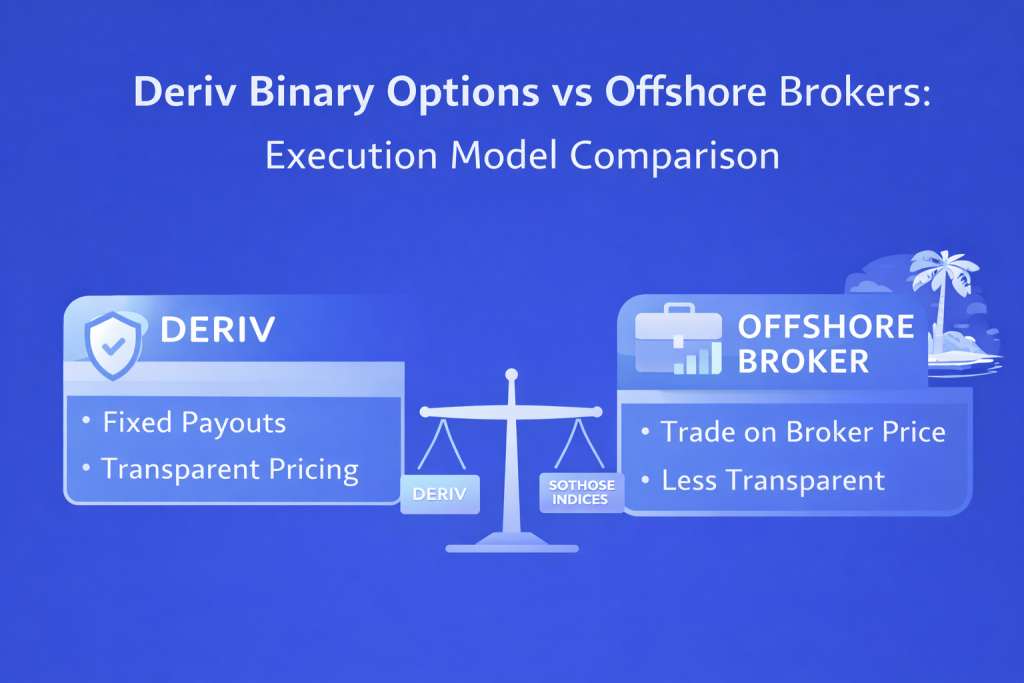
Deriv Day Trading vs Offshore Brokers: Execution Model Comparison
I did not start my trading journey thinking about execution models. Like most beginners, I started with charts, indicators, and the belief that if I could just find the right entry signal, profits would follow. My early trading notebook was full of screenshots of RSI signals, candlestick patterns, and support levels. What it did not […]
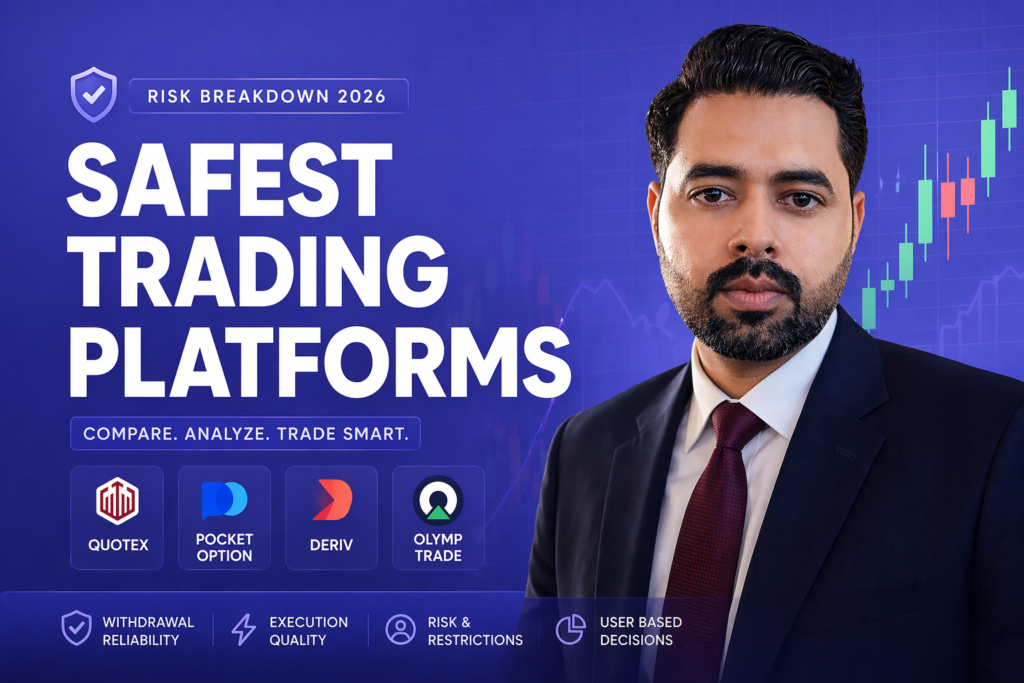
Safest Trading Platforms (Risk Breakdown) – Real Comparison for 2026
Choosing a trading platform isn’t about features — it’s about avoiding hidden risk. Most traders compare brokers like Quotex vs Pocket Option vs Deriv vs Olymp Trade expecting a clear winner. Instead, they find conflicting reviews, promotional claims, and no real explanation of how these platforms behave when money is on the line. The real […]
Binomo Verification (KYC) for First Withdrawal: Exact Documents That Usually Trigger Rejection
The first time I tried to withdraw from Binomo, I was not worried about the trade. I was worried about the paperwork. That probably sounds strange if you are new. Most traders obsess over entries, expiry times, payout percentages, and strategy screenshots. I did too. But the moment I clicked my first withdrawal request, the […]
Binomo vs IQ Option Withdrawal Speed: Full 2026 Comparison Guide
Withdrawal speed is one of the most important factors for traders, especially beginners who want quick access to profits. A platform may look good for trading, but if getting your money takes too long, frustration builds fast. In this detailed comparison of Binomo and IQ Option, we will break down real withdrawal timelines, processing behavior, […]
Binomo First $10–$50 Test Deposit Plan: The Safest Way to Validate the Platform Before Scaling
I didn’t start with confidence. I started with doubt. Every time I searched for answers about Binomo, I found opinions, not proof. Some people claimed fast withdrawals. Others complained about delays. But almost nobody showed a complete journey from deposit to withdrawal using real money. So I stopped reading and started testing. Instead of risking […]
The Day I Stopped Trading and Finally Started Making Money
It was a rainy Tuesday morning, and I was staring at my screen with a familiar knot in my stomach. The previous three days had been a slow, agonizing slide into the red. I had given back two weeks of hard-earned profits in less than seventy-two hours. Every asset I clicked on looked like a […]