
Pin Bar Strategy for Day Trading
I still remember the night my trading account hit zero for the third time. It was raining outside, and the cold glow of my laptop screen felt like a physical weight pressing against my temples. I had spent weeks studying complex indicator setups, plastering my charts with MACD, Bollinger Bands, and Relative Strength Index lines until the actual candlesticks were barely visible. Every single trade felt like a coin toss. I would buy a call option, and the price would instantly plunge. I would buy a put option, and the market would spike. I was trapped in a cycle of frustration, which is precisely why 90% of traders lose money before they ever discover how the market actually works.
Desperate for a change, I stripped everything off my charts. No more colorful lines, no more lagging oscillators. Just raw, naked price bars. That was the moment I discovered the power of a single candlestick: the Pin Bar. It is not an understatement to say that mastering this single pattern was the turning point that allowed me to transition from an emotional gambler into a disciplined, profitable trader.
If you are currently struggling to make sense of the chaotic price movements in day trading, this is my personal blueprint for using the Pin Bar strategy to find consistency.
What is a Pin Bar (And Why Did It Change My Trading?)
Before we dive into the mechanics, let me explain what a Pin Bar actually represents. A Pin Bar (short for Pinocchio Bar, named because its long wick "lies" about the direction of the market) is a single-candle reversal pattern. It tells a story of intense rejection.
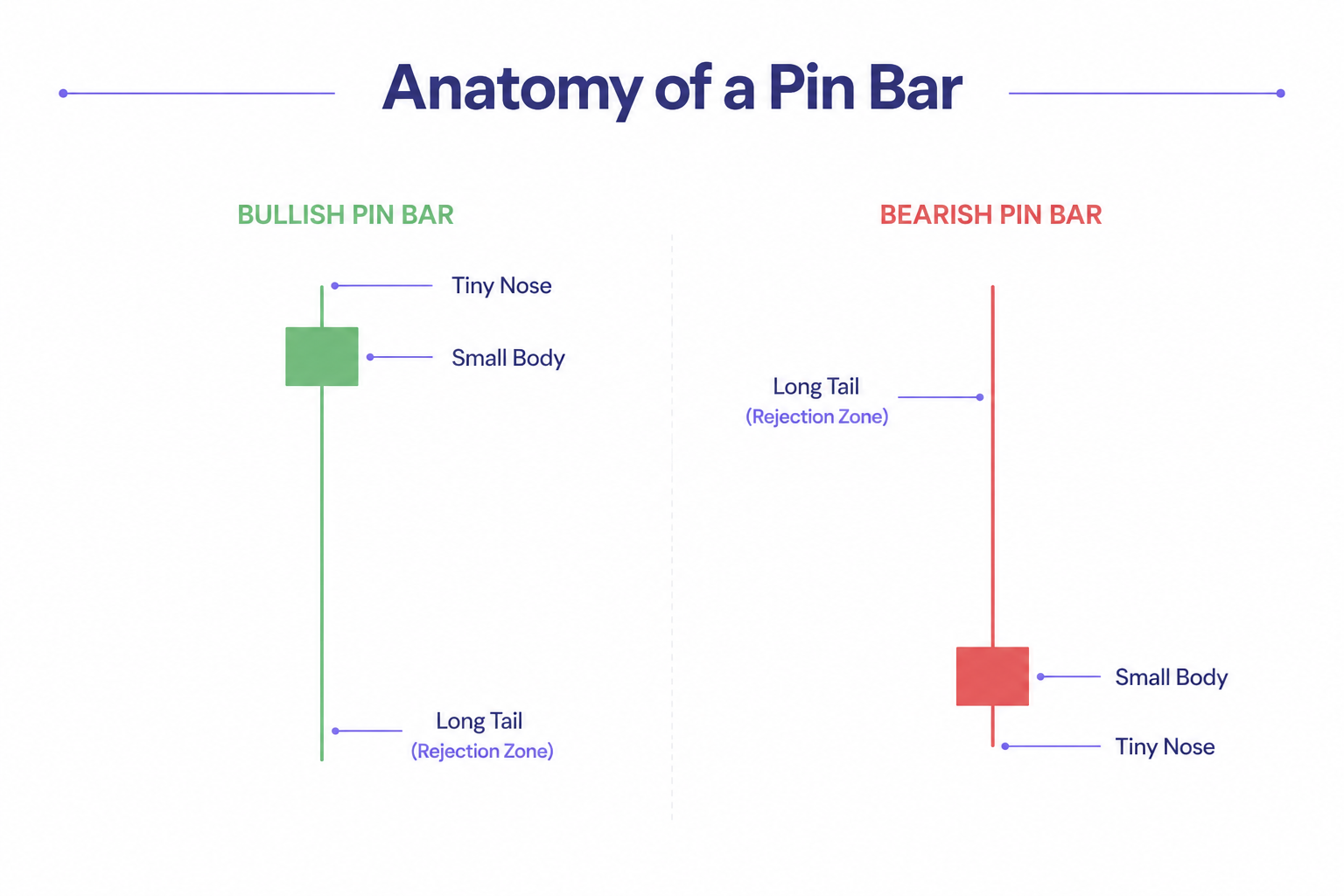
When you look at a Pin Bar, you will see a small body at one end and a very long tail (or shadow) extending out of the other side. This long tail is the key. It tells us that during that specific candle period, the buyers or sellers tried to push the price dramatically in one direction, only to be completely rejected by a flood of opposing orders.
Understanding this shift in order flow was exactly how understanding market structure saved my day trading. Instead of trying to guess where the market might go based on a lagging mathematical formula, I was suddenly reading the real-time battle between buyers and sellers.
There are two types of Pin Bars you need to recognize:
- The Bullish Pin Bar: Features a long lower tail, a small body near the top of the candle, and a tiny or non-existent upper nose. This indicates that sellers tried to push the price down, but buyers stepped in aggressively, forcing the price back up before the candle closed.
- The Bearish Pin Bar: Features a long upper tail, a small body near the bottom of the candle, and a tiny or non-existent lower nose. This indicates that buyers tried to push the price up, but sellers flooded the market, driving the price back down to close near the lows.
The Hard Lesson: Why Context is Everything
When I first learned about Pin Bars, I made a massive mistake. I started trading every single one I saw. If a bullish pin bar appeared on a 1-minute chart, I instantly placed a Call. If a bearish pin bar popped up, I slammed the Put button.
Within two days, my account was down again.
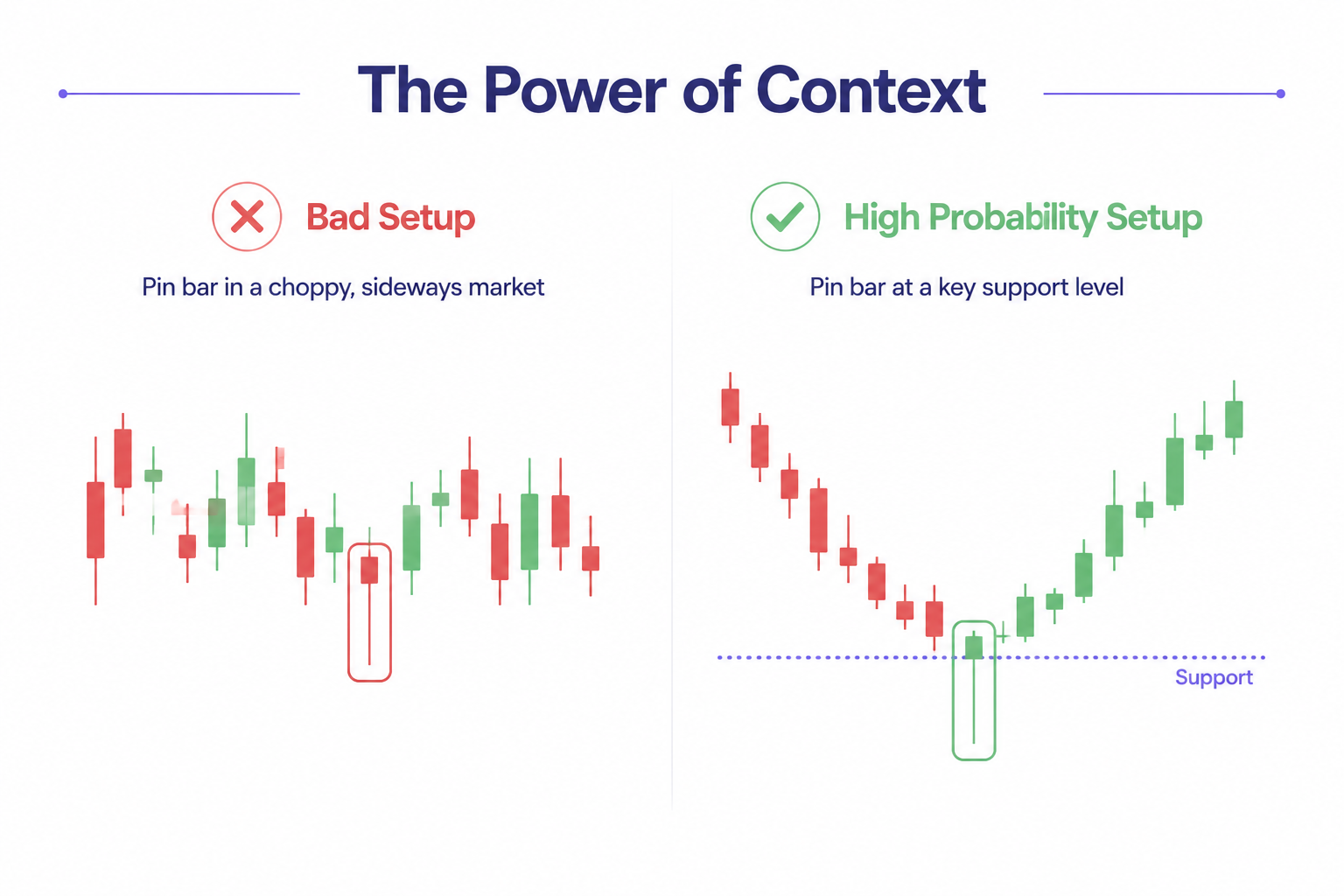
I realized that a Pin Bar on its own means absolutely nothing. If you find a pin bar floating in the middle of a messy, sideways market, it is just random noise. For this strategy to work with the high win rates required for day trading, the Pin Bar must occur at a key level of Support or Resistance.
Think of it this way: a Pin Bar is like a key, but it only works if you insert it into the right lock. The locks are your major psychological price levels. When a Pin Bar rejects a major support level, it is a highly reliable signal that the price is about to bounce. When it rejects a major resistance level, it is a signal that the market is about to drop.
How I Setup My Trades (Step-by-Step)
To make this practical, let us walk through the exact process I use when I sit down at my desk to trade. If you are still figuring out how much money you really need to start trading, keep in mind that you should start with small, controlled risk while practicing this step-by-step setup.
Step 1: Find the Right Platform
You need a platform that offers fast execution and exceptionally clean charts. I spent a long time looking for the best broker for learning price action in 2026, and I highly recommend using a broker like IQ Option or Deriv because their charting engines do not lag, which is critical when you are waiting for a candle to close.
Step 2: Mark Your Key Levels
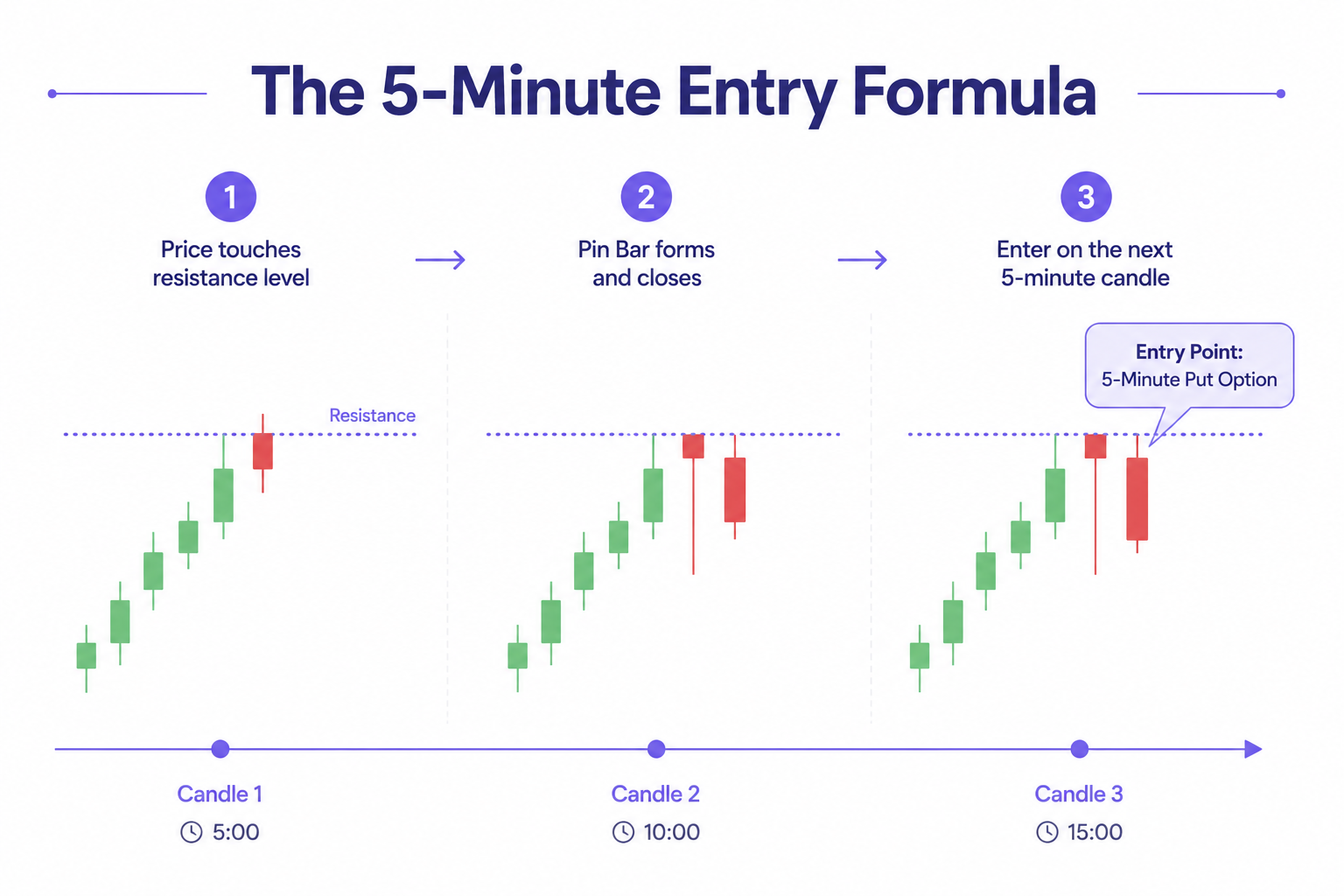
I open my charts on a 5-minute time frame. Before looking for candles, I draw horizontal lines at the most obvious support and resistance zones from the last few hours. These are areas where the price has reacted strongly in the past.
Step 3: Wait for the Touch and Rejection
I do not place a trade just because the price reaches my line. I sit on my hands and wait. I want to see the price pierce through the line, and then I want to see the sellers or buyers rapidly push it back. I am waiting for the Pin Bar to form in real-time.
Step 4: The Entry and Expiry Rule
This is the part that trips up most day traders. Once a Pin Bar successfully closes on my 5-minute chart, confirming the rejection, I enter the trade at the open of the very next candle.
My expiry time is always set to 1 candle period. Since I analyze the 5-minute chart, my trade expiry is exactly 5 minutes. This gives the market enough room to move in our predicted direction without leaving us exposed to long-term market reversals.
Putting the Strategy into Practice: Which Broker to Choose?
When you are trading 5-minute day trading, your choice of platform can make or break your success. A delay of even one second in executing your trade can mean the difference between a winning trade and a loss.
Over the years, I have thoroughly tested various platforms. For high-speed price action setups, I personally prefer trading on Pocket Option or Quotex because of their intuitive layout. If you prefer platforms with highly robust security features, ExpertOption and Olymp Trade are outstanding choices for beginner traders who want a clean, uncomplicated interface. For advanced charting options, you can also explore newer platforms like CapitalCore, which offer excellent execution speeds.
The Hidden Trap of Trading Pin Bars
If there is one thing I want you to take away from my experience, it is this: do not let your emotions override your plan.
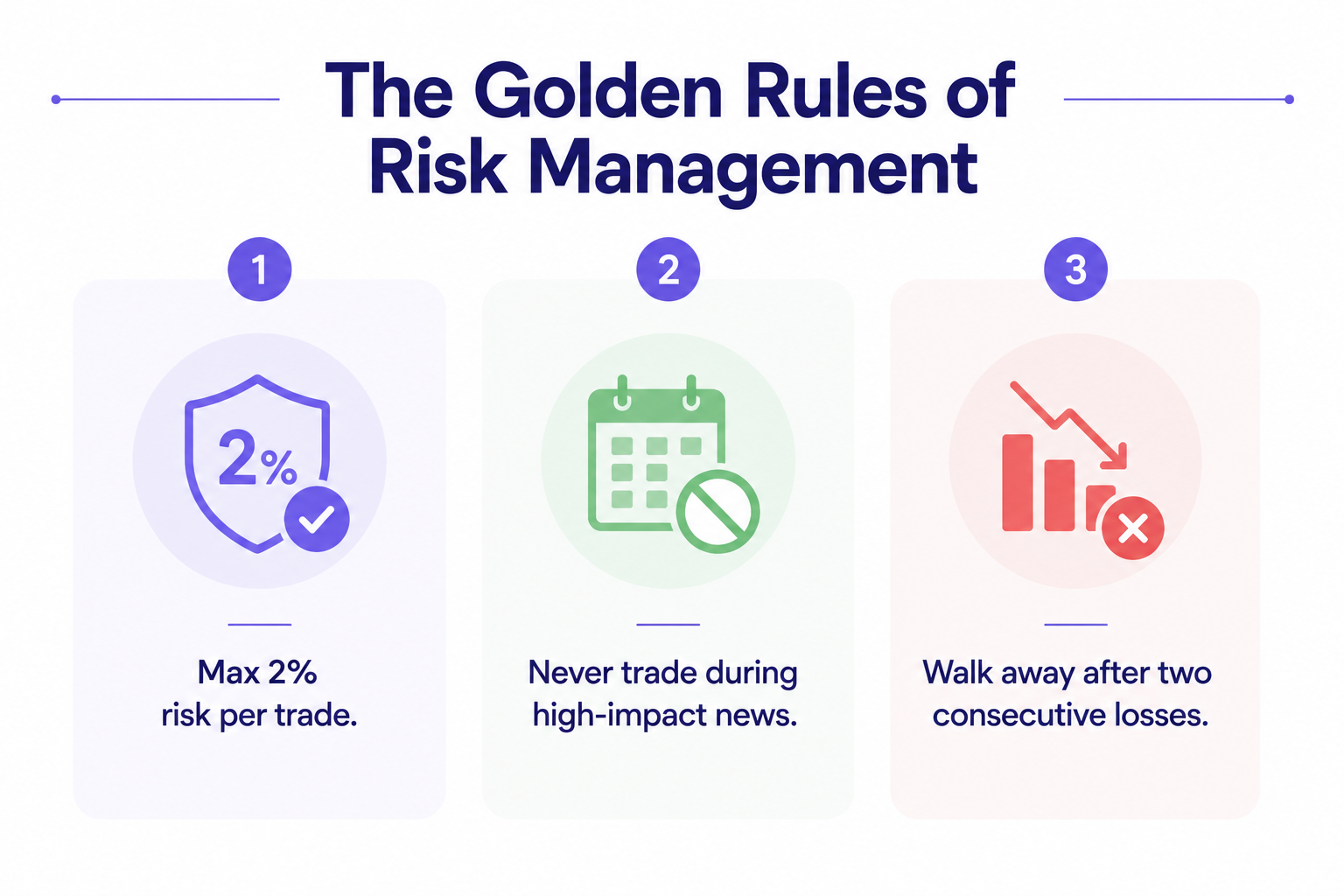
There will be days when the market is highly erratic, and your perfectly formed Pin Bars will get broken. That is simply the reality of trading. The difference between a professional and an amateur is that the professional accepts the loss, closes their laptop, and walks away. This mental shift was exactly how I learned to sit on my hands during choppy markets and preserve my hard-earned capital.
Remember, the Pin Bar is a tool of patience. It teaches you to wait for the market to come to your levels, rather than chasing after every minor price wiggle. That paradigm shift marked the absolute turning point: the day I stopped trading and finally started making money.
Elevate Your Trading Journey
Mastering price action takes time, dedication, and the right data. If you are tired of trading alone and want to gain a significant edge in the markets with institutional-grade daily analysis, real-time market insights, and advanced structural forecasts, consider upgrading your toolkit.
You can start by visiting the Becoin Forecast Hub to see our high-probability market setups, and when you are ready to take your trading serious, join Becoin Premium for the ultimate edge in deep market analysis and structured education.

How Understanding Market Structure Saved My Day Trading
I remember the exact moment my trading account hit zero for the third time in a single month. It was a rainy Tuesday evening, and I was staring at a 1-minute chart on my laptop screen. The price had been moving up aggressively. It looked like a flawless rocket ship to the moon. I clicked […]
Deriv Copy Trading (DBot & Signal Services): Can Automation Beat Manual Trading?
When I first started trading on Deriv, everything I did was manual. Every entry, every exit, every mistake. I would sit in front of charts watching price ticks move on synthetic indices, trying to time trades perfectly. Some days I would catch a streak of wins and feel like I had finally figured it out. […]
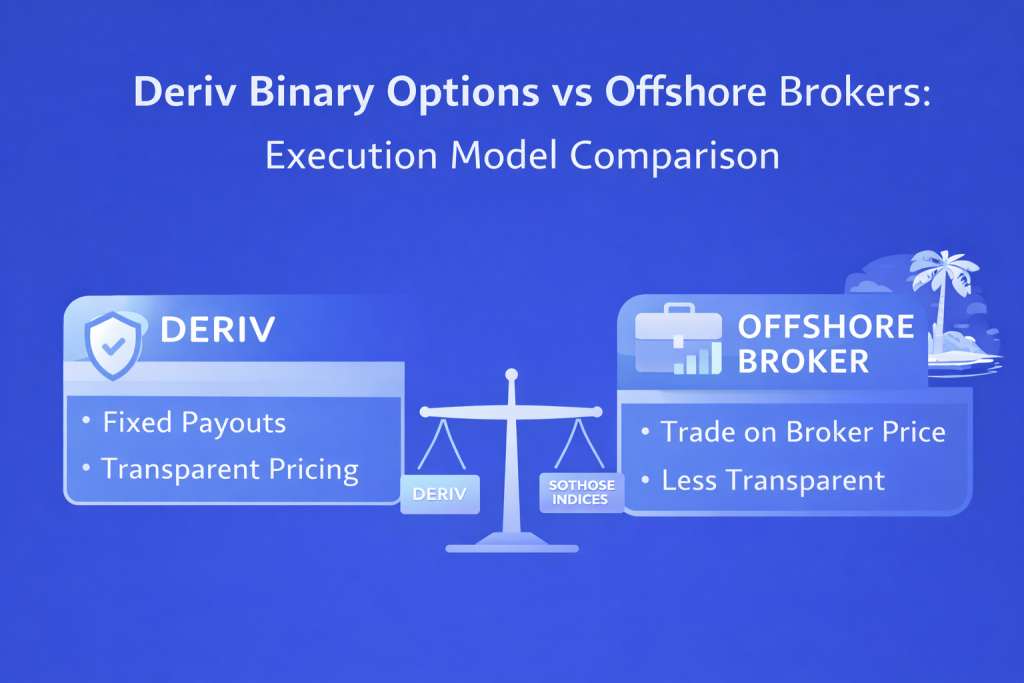
Deriv Day Trading vs Offshore Brokers: Execution Model Comparison
I did not start my trading journey thinking about execution models. Like most beginners, I started with charts, indicators, and the belief that if I could just find the right entry signal, profits would follow. My early trading notebook was full of screenshots of RSI signals, candlestick patterns, and support levels. What it did not […]

Trading Currency Strength Instead of Single Pairs
It was a Tuesday afternoon when I realized I was fighting a losing battle against a ghost. My screen was a chaotic web of indicators. I had the EUR/USD chart open, a moving average crossing over here, a relative strength index flashing oversold there, and a price action setup that looked textbook perfect. I clicked […]

The Day I Stopped Trading and Finally Started Making Money
It was a rainy Tuesday morning, and I was staring at my screen with a familiar knot in my stomach. The previous three days had been a slow, agonizing slide into the red. I had given back two weeks of hard-earned profits in less than seventy-two hours. Every asset I clicked on looked like a […]

The Day I Lost My First Ten Dollars: My Hunt for the Best Mobile Trading App for Beginners
I still remember the exact shape of the cloud outside my window when my first live trade ended in the red. It was a crisp morning, and I was sitting on my couch with a lukewarm cup of coffee, staring at a flashing line on my smartphone screen. I had just deposited ten bucks, convinced […]