The Rookie Dashboard: My Raw Hunt for the Best Beginner Broker in 2026
We have all been there. It is late at night, your morning coffee is hours away, and you are staring at a screen pulsing with bright green and red lines. You have twenty dollars burning a hole in your digital wallet and a sudden, burning desire to conquer the financial markets.
That was me exactly twelve months ago. I was determined to decode trading, but I was completely paralyzed by the sheer volume of platforms screaming for my attention. Every single broker claimed to be the gateway to financial freedom, the easiest layout for newcomers, or the fastest route to a funded account.
Spoiler alert: most of them are lying.
Navigating the markets as a newcomer is a minefield. If you are not careful, you can lose your capital before you even figure out where the “Buy” button is hidden. I spent the last year funding real accounts, testing execution speeds, messing up my charts, and waiting on withdrawal support lines. This is my honest, personal breakdown of the beginner broker landscape in 2026. No corporate jargon. No sugar-coating. Just the ground truth from someone who was in your shoes not too long ago.
The Night I Realized All Platforms Are Not Created Equal
When I first dipped my toes into the markets, I made the classic rookie mistake. I assumed that a price chart was just a price chart, no matter where it was hosted. I thought that as long as I could see the candlesticks moving up and down, the software underlying it did not matter.
I was completely wrong. My journey started with a harsh lesson when I blew my first small deposit simply because my interface lagged during a high-volatility news event. That frustrating evening sent me on a frantic mission, which I documented in the day I lost my first ten dollars and my hunt for the best mobile trading app for beginners.
That loss forced me to slow down and build a strict checklist. I realized that as a beginner, you do not need institutional-grade algorithmic pipelines or hundreds of confusing indicators that look like a flight simulator dashboard. You need a rock-solid foundation:
- Low barriers to entry (because nobody should practice with rent money).
- Clean visual feedback that does not cause eye strain during long sessions.
- Reliable, transparent payout loops.
- An environment that lets you fail cheaply while you learn.
With those parameters set, I systematically moved my capital across the most talked-about platforms in the industry to see how they actually stacked up under real market pressure.
The Heavyweights: IQ Option vs. Binomo
The first major fork in the road for most retail traders is choosing between the two titans of user-friendly design: IQ Option and Binomo. If you browse any trading community, you will see endless debates about which one takes the crown.
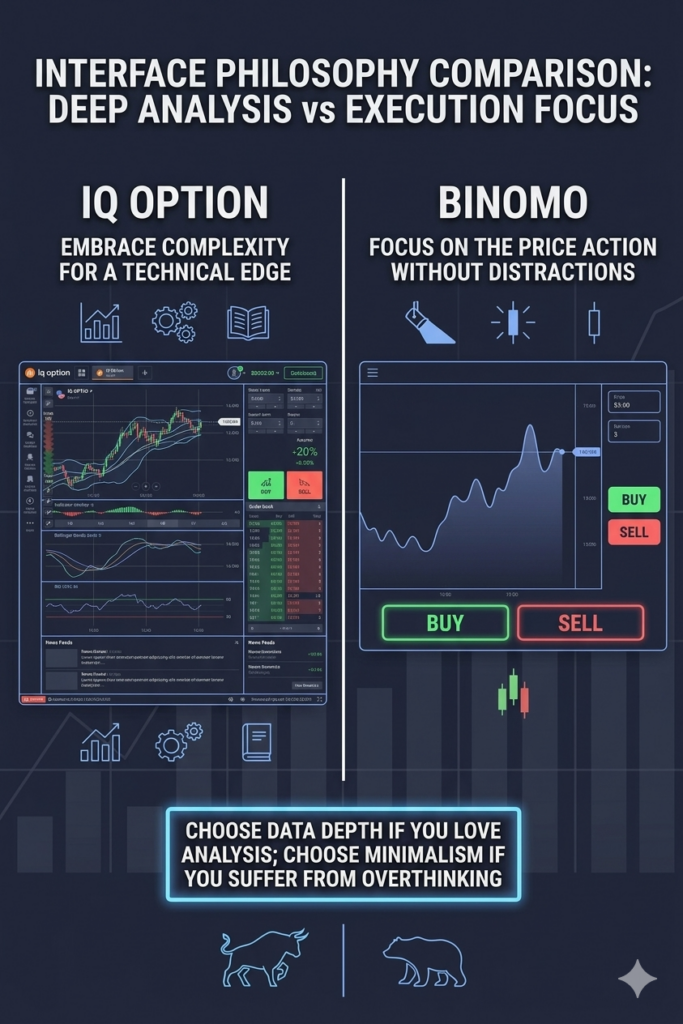
I started my trial run with IQ Option. The moment you open their multi-chart interface, it feels premium. The dark mode is sleek, the asset list is massive, and the graphical tools snap directly to the price action beautifully. For anyone trying to learn technical analysis without getting a headache, it is incredibly intuitive. I spent weeks using their platform to study market structures, and you can see my visual breakdown of their tech layout in our IQ Option vs Deriv chart comparison.
If you want to experience that layout firsthand, you can set up a practice account through the official IQ Option Registration Portal.
However, while I loved the visual polish, I noticed that the sheer amount of data streaming into the app can sometimes choke a weaker internet connection. That is when I pivoted to Binomo.
Binomo takes a radically different approach to user experience. Instead of packing the screen with features, they stripped away the noise. The interface is clean, hyper-focused, and incredibly fast. It answers a fundamental question that every busy newcomer eventually asks: which broker has the cleanest interface for beginners?
For students or people balancing a full-time job, Binomo removes the analytical paralysis that kills so many early accounts. To test their streamlined environment yourself, you can check out the Binomo Official Trading Link.
When choosing between these two, it really comes down to your personal learning style. If you want deep analytical tools, IQ Option wins. If you prefer a distraction-free space to execute your plan cleanly, Binomo is a fantastic starting point. For an even closer look at their day-to-day differences, check out my deep dive on which is easier for beginners: Binomo or IQ Option.
Shifting Gears: The Need for Advanced Flexibility with Deriv
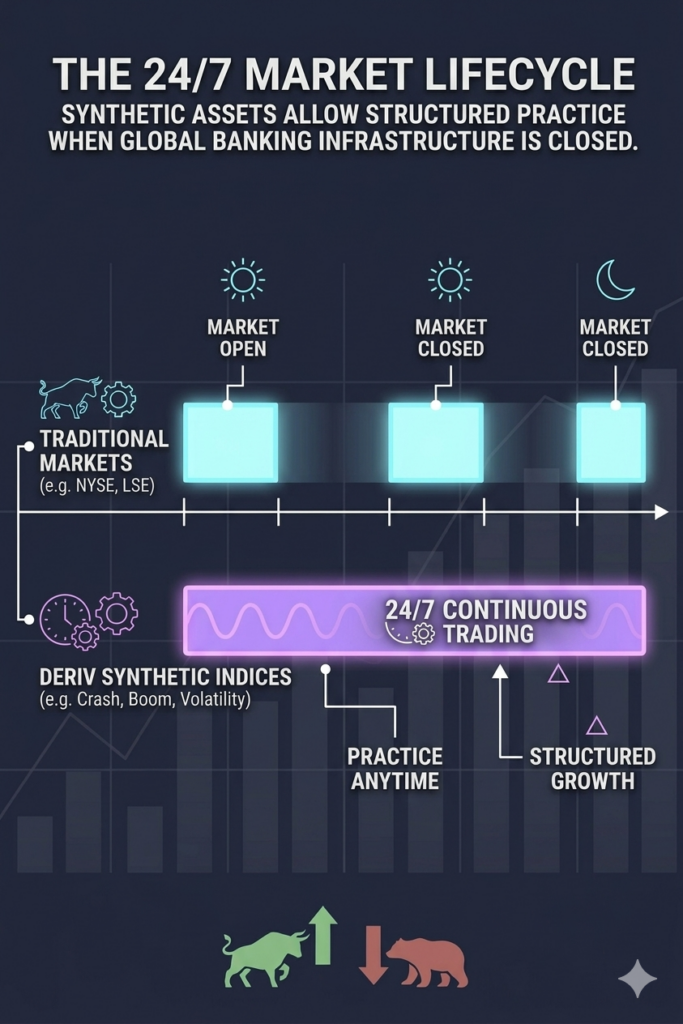
After a few months of trading standard currencies, I hit a wall that almost every retail trader encounters: the weekend dead zone. Traditional markets close down on Friday night, leaving you stuck waiting until Monday morning to build your consistency.
That frustration led me straight to Deriv.
Deriv is a completely different beast because of its proprietary synthetic indices. These are crash and boom markets simulated by cryptographic random number generators, meaning they mimic real market behavior perfectly but run twenty-four hours a day, seven days a week. This unique setup completely transformed my weekend routine. For a direct comparison of how this alters your strategic approach, read my breakdown on Deriv vs IQ Option for synthetic indices.
Beyond the continuous uptime, Deriv opened my eyes to advanced risk control. While simple platforms offer an all-or-nothing payout, Deriv allows you to trade multipliers and traditional forex contracts where you can set tight stop-losses. This structural difference is critical for long-term survival, a concept I explored deeply while chasing safety in a high-stakes world and searching for low-risk platforms.
If you are ready to move past basic options and want to explore round-the-clock synthetic asset classes, you can open an account via the Deriv Professional Portal.
The Wildcards: Pocket Option, Quotex, and Capital Core
As my testing grew more exhaustive, I realized that the modern trading world has a few specialized platforms built for specific trading styles. You cannot have a complete overview without looking at the unique advantages offered by alternative systems.
For instance, if you are working with an incredibly tight budget, your primary concern is finding a platform that won’t lock you out with high minimum balance requirements. I spent an entire week funding alternative platforms with pocket change to see who treated small balances fairly, compiling the results in our guide to the safest broker for small deposits.
During this phase, I tested several distinct alternative platforms:
- Pocket Option: Known for its massive global community and social trading features that let you observe real-time order flows. You can access their setup directly through the Pocket Option Onboarding Link.
- Quotex: Offers a highly responsive, lag-free charting workspace that performs brilliantly even on older laptops. Explore their platform layout via the Quotex Quick Sign-Up Link.
- ExpertOption: Features a highly optimized mobile environment tailored for traders who operate entirely from their phones. You can check their mobile integration at the ExpertOption Registration Hub.
- Capital Core: A rising alternative providing distinct asset pairings and a straightforward portal for verifying accounts without typical institutional delays. Their access point is located at the Capital Core Account Portal.
Each of these platforms scratches a very specific itch. Whether you need an interface optimized for older hardware or a community-driven feed to copy experienced market participants, the options are out there if you know where to look.
Finding My Perfect Workspace: The Real Comparison
After a solid year of rotating funds, analyzing execution sheets, and dealing with customer support agents, I realized that there is no single perfect platform for every human being on earth. The right workspace depends entirely on your lifestyle, your internet speed, and your psychological relationship with risk.
To help you skip the expensive trial-and-error phase that I went through, I have organized my key findings into a concrete decision matrix.
Beginner Broker Comparison Matrix 2026
| Broker Platform | Core Advantage | Ideal User Type | Minimum Entry Comfort |
| IQ Option | Advanced Charting & Analytical Depth | Aspiring Technical Analysts | Moderate ($10 Base) |
| Binomo | Minimalist, High-Speed UI | Fast-Paced Mobile Users & Students | Excellent Low-Barrier Entry |
| Deriv | 24/7 Synthetic Indices & Risk Controls | System Traders & Weekend Warriors | Deep Flexibility |
| Pocket Option | Social Trading & Order Flow Transparency | Community-Driven Learners | Highly Adaptive |
Finding your rhythm takes time, and my personal routine shifted dramatically as my knowledge grew. I detailed that evolution in my article on finding my perfect workspace and building a daily trading routine.
If you are looking for an immediate recommendation based on a specific constraint, like low capital or regional availability, you can save hours of research by jumping straight to our best day trading brokers for beginners 2026 fast decision guide.
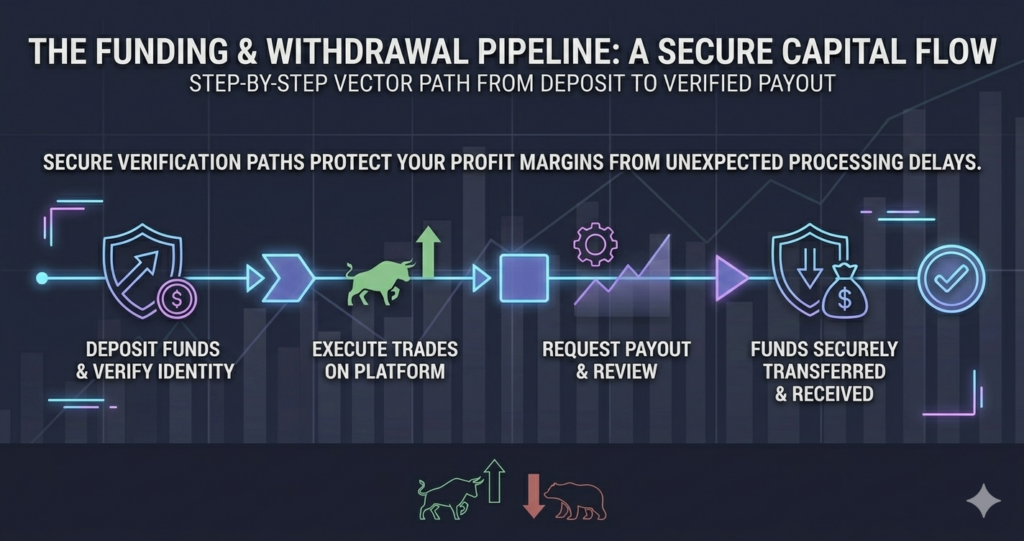
Visualizing the Journey: Suggested Infographics Plan
To maximize your understanding of these environments, use this simple minimalist infographic layout to map out your progression before risking a single dollar.
The Missing Link: Why Software Alone Won’t Save Your Capital
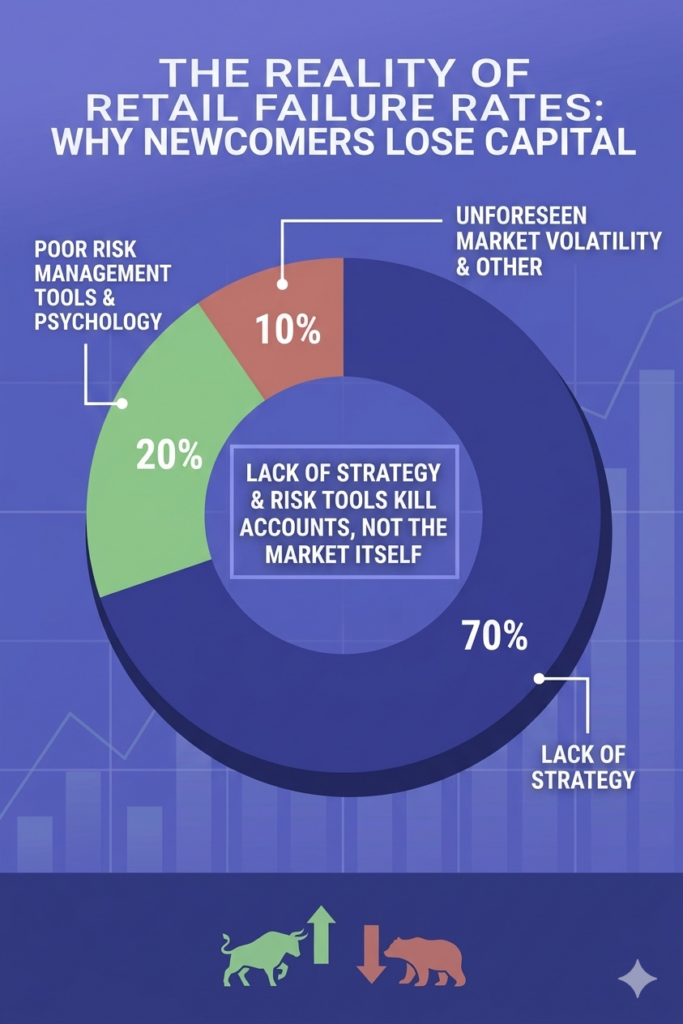
Here is the uncomfortable truth that most brokers try to hide with flashy marketing: you can have the most advanced charting software on earth, lightning-fast fiber-optic execution speeds, and zero-fee accounts, but you will still lose money if you do not know how to read the underlying price action.
A platform is just an execution tool. It is a steering wheel. If you do not know how to drive, a more expensive steering wheel will not keep you from crashing into a wall.
When I first started, I thought my losses were the broker’s fault. I blamed slippage, I blamed bad luck, and I blamed platform bugs. It took me a long time to admit the real culprit: I was gambling based on emotion rather than trading based on systematic data. I did not understand liquidity, I did not track volume profiles, and I had no real framework for managing risk.
If you want to look at the cold, hard numbers behind this psychological trap, take a look at my analysis of why 90 percent of traders lose money and the real reasons beginners fail.
If you are tired of guessing which way the next candle will flip, you need to step out of the amateur sandbox. Finding a broker is only step zero. Step one is gaining a real informational edge.
To bypass the noise, stop relying on free online forums, and get access to institutional-grade asset analysis, professional market setups, and advanced educational tools, join our inner circle today at Becoin Premium Plans. Protect your capital, learn the mechanics of true price action, and start treating your trading like a business rather than a lottery ticket.

The Day I Lost My First Ten Dollars: My Hunt for the Best Mobile Trading App for Beginners
I still remember the exact shape of the cloud outside my window when my first live trade ended in the red. It was a crisp morning, and I was sitting on my couch with a lukewarm cup of coffee, staring at a flashing line on my smartphone screen. I had just deposited ten bucks, convinced […]

How I Learned to Sit on My Hands During Choppy Markets
I remember the morning vividly. It was a Tuesday. The coffee on my desk was still piping hot, the charts on my screen were blinking, and I was feeling incredibly confident. I had just finished reading about how market open hours create the best trading opportunities, and I was ready to hunt for a clean […]

The Day I Stopped Trading and Finally Started Making Money
It was a rainy Tuesday morning, and I was staring at my screen with a familiar knot in my stomach. The previous three days had been a slow, agonizing slide into the red. I had given back two weeks of hard-earned profits in less than seventy-two hours. Every asset I clicked on looked like a […]

Finding the Best Trading Broker for Side Income: My Raw, First-Hand Journey to Consistent Daily Wins
Six months ago, I sat at my kitchen table staring at an accumulation of household bills, realizing my primary salary was no longer cutting it. I didn’t want a second job that required clocking into a physical location or taking endless boss mandates after hours. I needed a flexible, scalable side income. That night, I […]

Which Broker Is Better for Weekend Trading?
It was a chilly Saturday morning, and while the rest of the world was sleeping in or catching up on shows, I was staring at a completely frozen screen. My usual EUR/USD chart looked like a heart monitor flatlining. The traditional markets were closed. The banks were shut down. For a long time, that was […]

How Understanding Market Structure Saved My Day Trading
I remember the exact moment my trading account hit zero for the third time in a single month. It was a rainy Tuesday evening, and I was staring at a 1-minute chart on my laptop screen. The price had been moving up aggressively. It looked like a flawless rocket ship to the moon. I clicked […]