
USD/CAD: Canadian Dollar Gains Ground as Oil and Fed Expectations Shape the Pair
- USD/CAD remains under pressure: The pair is extending its short-term decline while trading below the 50-day EMA.
- Oil and the U.S. dollar are key drivers: Crude-price volatility and shifting Fed expectations are influencing CAD sentiment.
- 1.3700 is the next major support: A break could strengthen the bearish setup, while 1.3800 is the first recovery hurdle.
USD/CAD Fundamental Analysis
USD/CAD is trading with a bearish short-term bias on August 14 as the Canadian dollar benefits from a softer U.S. dollar and continued sensitivity to energy-market developments.
Fresh technical analysis published today shows USD/CAD remaining below its 50-day exponential moving average, while the pair is also trading alongside a descending trendline. Momentum indicators are generating additional negative signals, reinforcing the current bearish structure.
The U.S. dollar has struggled to maintain its recent strength after July inflation and producer-price data reduced expectations for additional Federal Reserve tightening. Cooler inflation has made markets less confident that the Fed will need to raise rates again, reducing one of the dollar's recent sources of support.
That matters for USD/CAD because the Canadian dollar is heavily influenced by interest-rate differentials with the United States.
Oil is the other major variable.
Canada is a major energy exporter, meaning crude-price movements can have a direct impact on CAD sentiment. Oil has remained highly volatile this week as markets balance weaker global demand expectations against continuing geopolitical risks surrounding Iran and the Strait of Hormuz. WTI was around $81.31 per barrel on August 14, while Brent traded near $87.08.
The oil market remains caught between bearish demand forecasts and bullish supply-risk concerns. OPEC and the International Energy Agency have reduced some demand expectations, while geopolitical uncertainty continues to create a risk premium.
If crude prices stabilize or recover, the Canadian dollar could receive additional support.
The opposite scenario would be a renewed dollar rebound caused by geopolitical risk or stronger U.S. data. That could push USD/CAD higher despite Canada's oil advantage.
For now, the fundamental balance slightly favors CAD, but the pair remains highly sensitive to both crude oil and U.S. monetary-policy expectations.
USD/CAD Technical Analysis
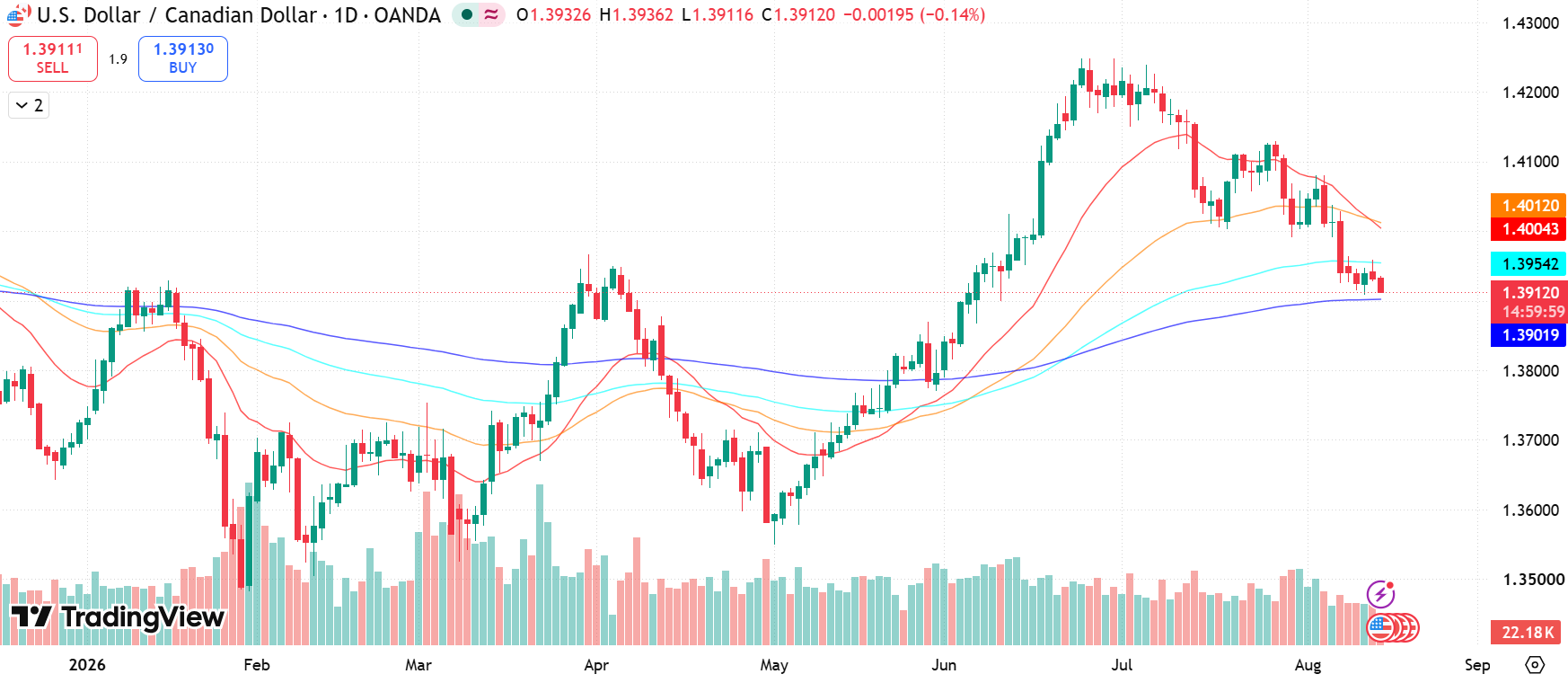
USD/CAD remains below its 50-day EMA, reinforcing the short-term bearish structure. Today's technical assessment also points to negative pressure from the pair's descending trendline and weakening momentum indicators.
The first major downside area is around 1.3750–1.3720. A sustained break below this zone would strengthen the bearish outlook and could expose 1.3680–1.3700.
Below 1.3680, the next potential target would be around 1.3600.
On the upside, 1.3800 is the first important resistance zone. A recovery above that level would weaken the immediate bearish structure.
The next resistance sits around 1.3835–1.3850, with the 200-day moving average near 1.3837 adding significance to that region.
A sustained move above 1.3850 would therefore be important because it could shift the short-term structure from bearish to neutral and potentially open the way toward 1.3900.
For now, the technical bias remains bearish below 1.3800.
The key setup is 1.3720 support versus 1.3800 resistance. A breakdown would favor further CAD strength, while a recovery above resistance would warn that sellers are losing control.
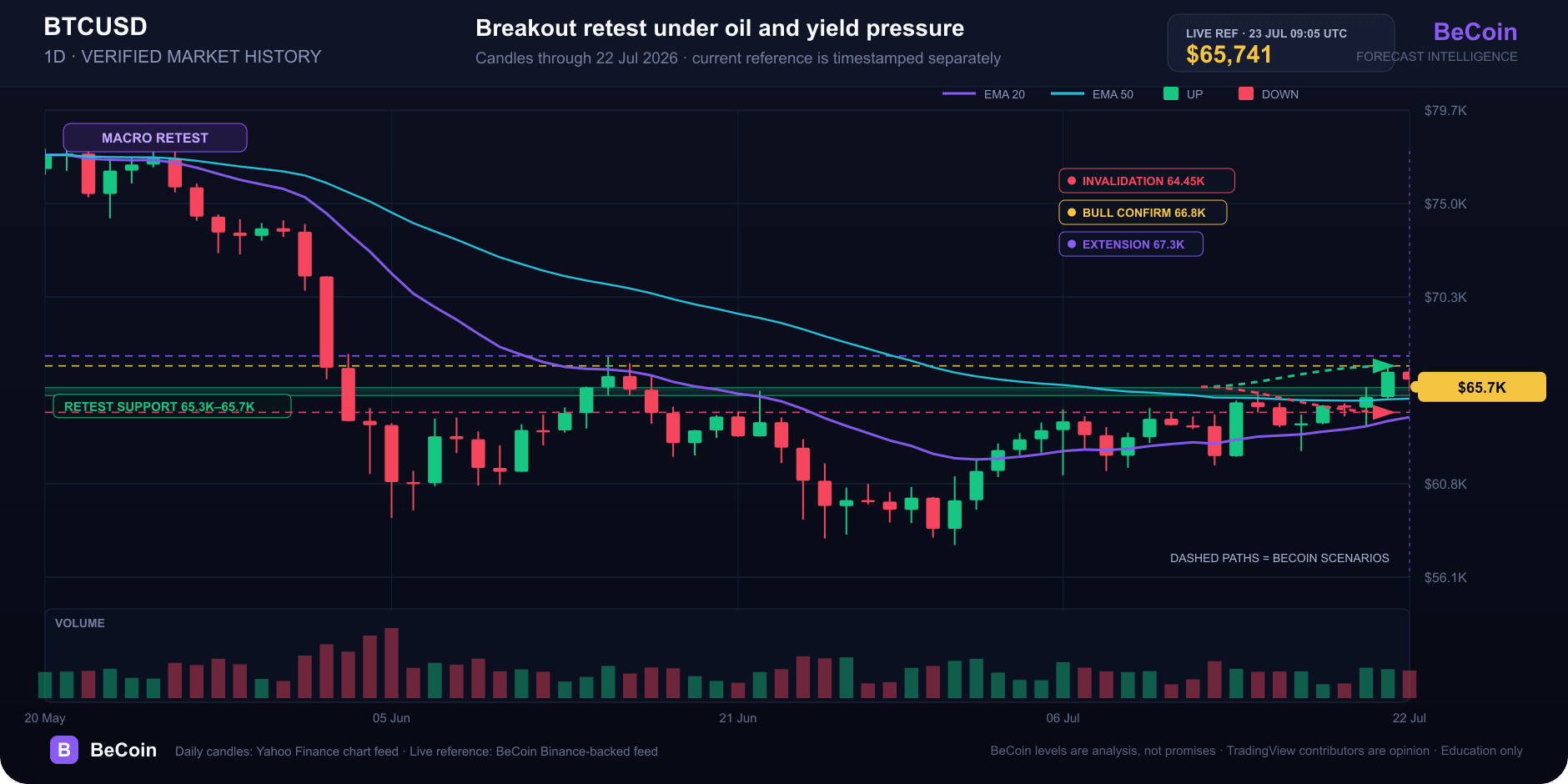
Bitcoin slips to $65,741 as oil and yields test the breakout
Bitcoin is near $65,741 as rising oil and Treasury yields test the $65.7K breakout floor. Here are the levels that confirm or invalidate the move.

How Liquidity Affects Day Trading Results
When I first started trading day trading, I believed success was all about finding the perfect indicator. I spent weeks testing moving averages, RSI settings, support and resistance levels, and dozens of YouTube strategies that promised easy wins. Some worked for a few trades, but most failed. What confused me was that the same setup […]

IQ Option vs Deriv Chart Comparison
The Night I Realized My Charts Were Lying to Me It was three in the morning, the exact hour when the market looks either like a goldmine or a psychological hazard. I was sitting in front of two monitors, a lukewarm mug of coffee in hand, watching a critical support level on EUR/USD. On my […]
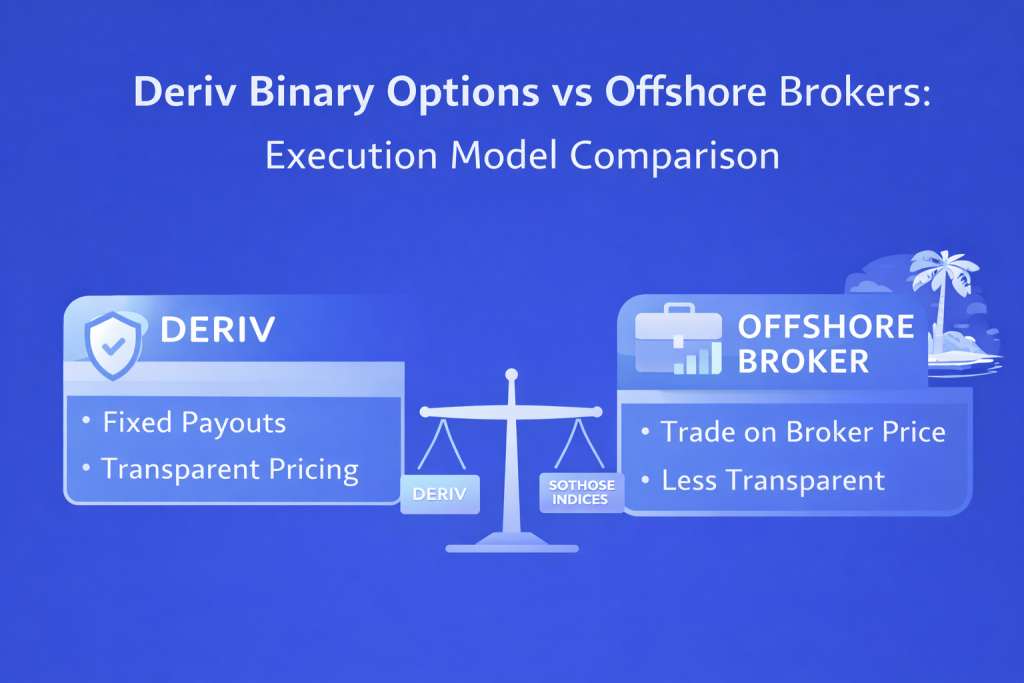
Deriv Day Trading vs Offshore Brokers: Execution Model Comparison
I did not start my trading journey thinking about execution models. Like most beginners, I started with charts, indicators, and the belief that if I could just find the right entry signal, profits would follow. My early trading notebook was full of screenshots of RSI signals, candlestick patterns, and support levels. What it did not […]
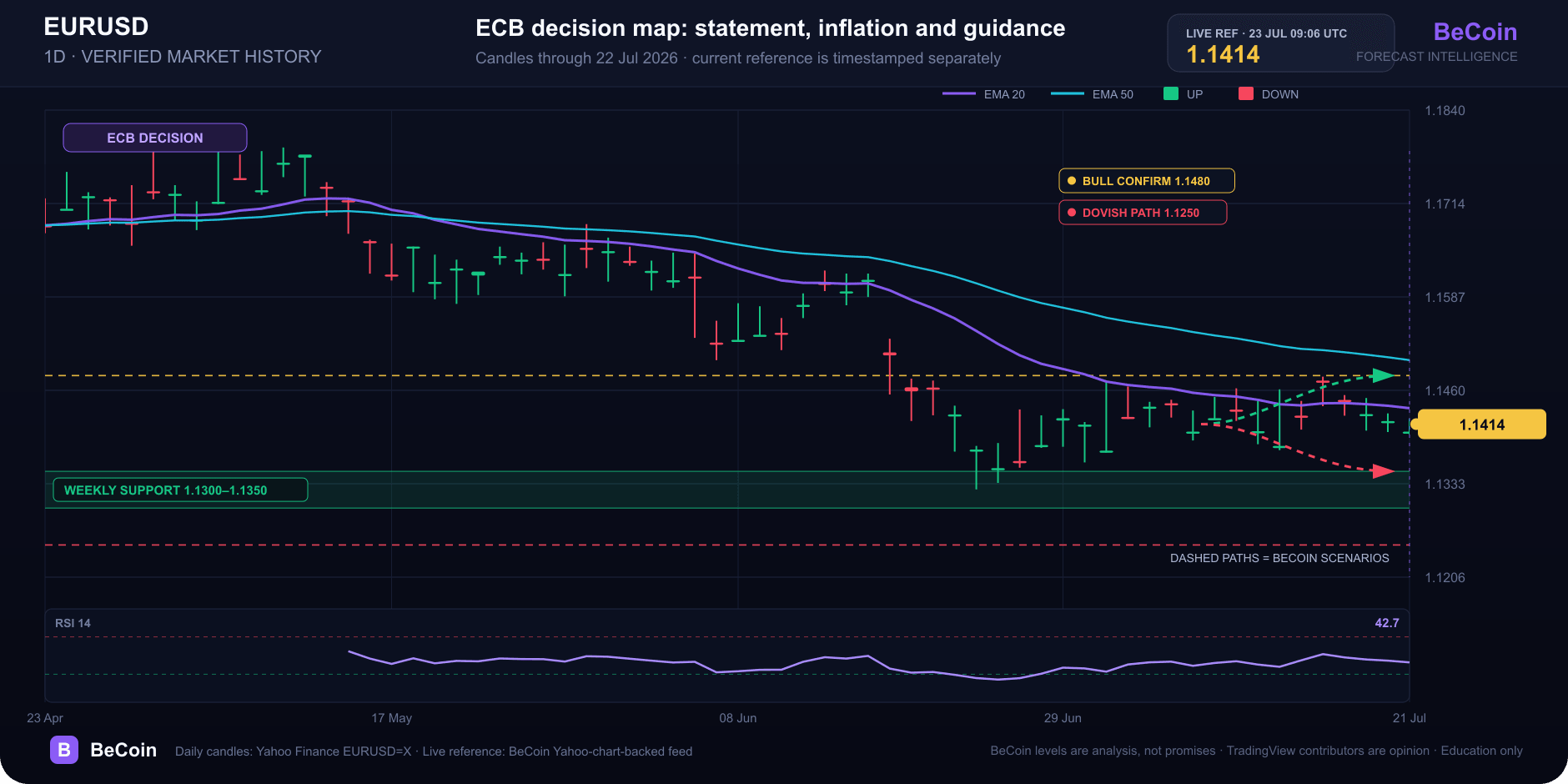
EUR/USD holds 1.1414 before the ECB decision: three scenarios
EUR/USD traded near 1.1414 before the ECB’s July decision. Here is what a hold, hawkish hold or surprise hike could mean for 1.1350 and 1.1480.
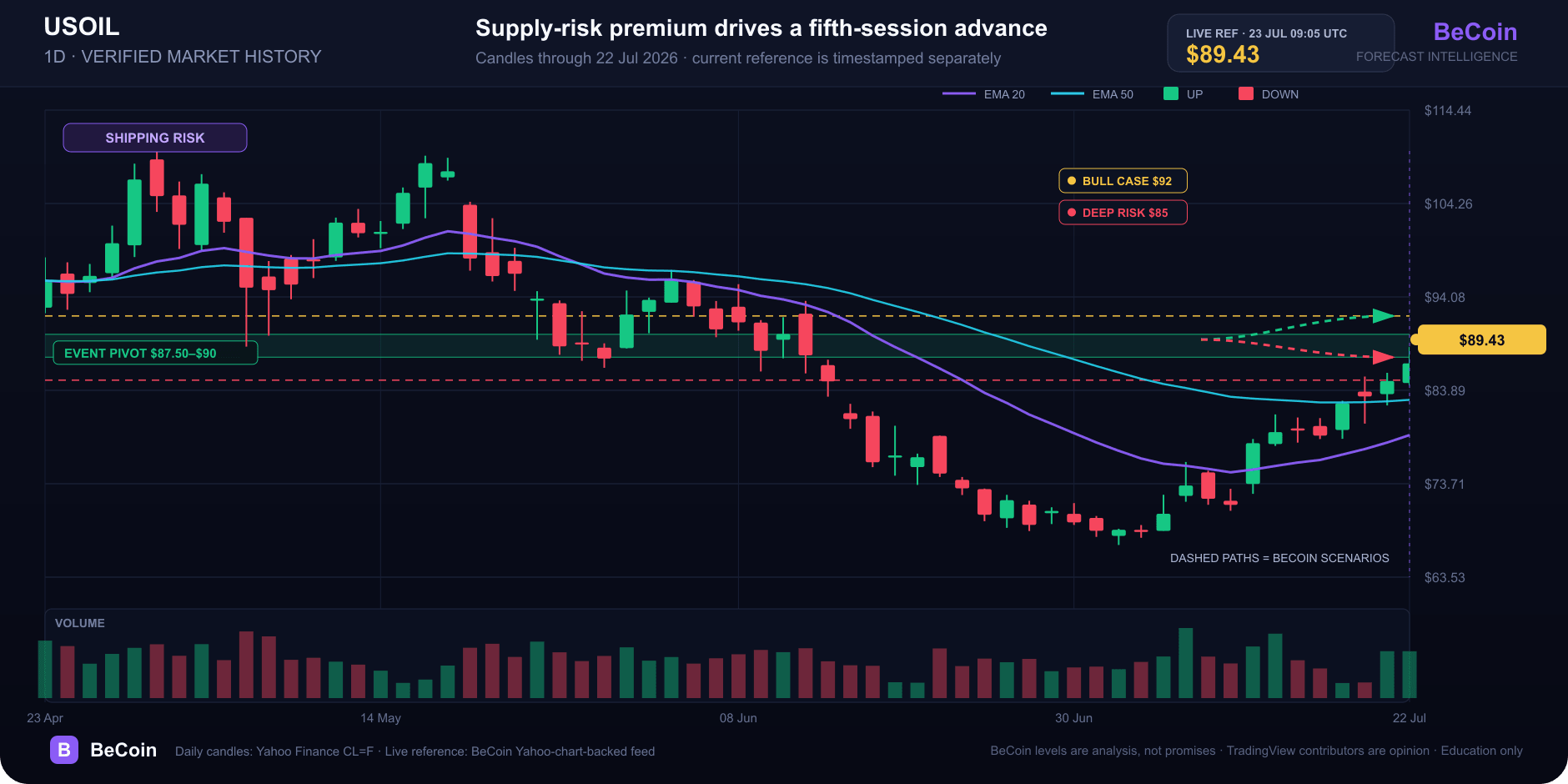
WTI reaches $89.43 as Brent clears $95 on renewed supply risk
WTI traded near $89.43 while Brent moved above $95 as Middle East shipping risk lifted crude for a fifth session. Key levels, catalysts and invalidation.