
How I Found My Golden Trading Hours (And Stopped Blowing My Account)
To gain an unfair advantage in today’s markets, check out Becoin Premium for actionable forecasts and institutional-grade analysis before making your next trade.
When I started trading, I thought I needed to watch the screens all day. I woke up at 5:00 AM, stared at price candles while eating breakfast, and stayed up until midnight watching the charts bounce around.
Guess what happened? I lost money. Lots of it.
I was working sixteen hours a day, taking random trades, and watching my hard-earned savings melt away. One evening, after losing three trades in a row during a slow Asian session, I realized something important. The problem was not my strategy. The problem was when I was trading.
Most trading articles online give you generic advice. They print a basic session chart and tell you to trade whenever London or New York opens. But they miss the hidden trap: your personal routine, your energy levels, and market spread costs.
Here is how I discovered my most profitable trading hours, built a simple routine around my life, and finally turned my results around
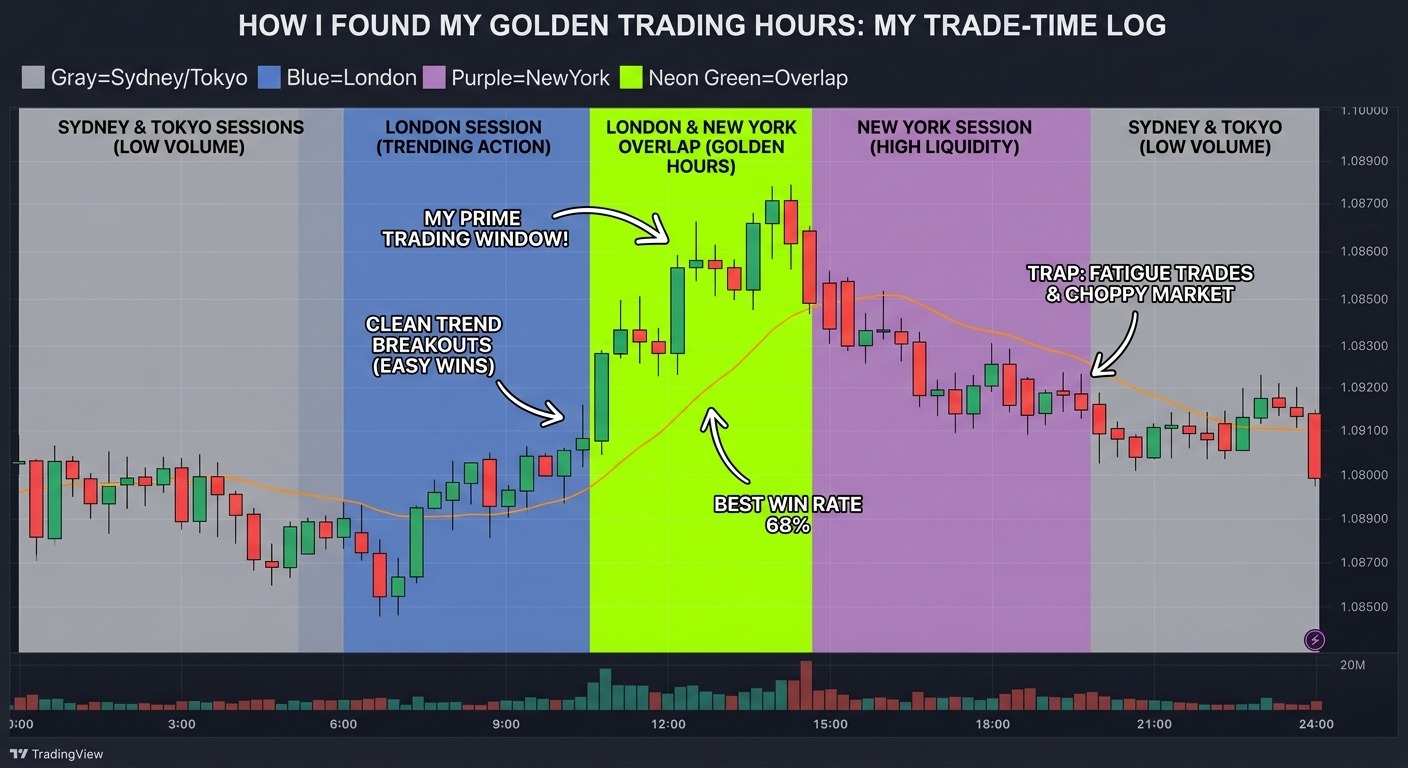 .Why Most Advice Fails You
When you search online for trading hours, most articles say the same thing. They tell you that the Forex market is open 24/5 and give you standard time tables.
Here is what those articles fail to tell you:
- Volume does not equal profitability for every trader: High volatility during the London and New York overlap can wipe out small accounts with slippage and spread spikes.
- Personal fatigue kills trades: If you trade during "peak market hours" while exhausted after a long day at work, your brain will make poor decisions.
- Broker fee traps: Spreads widen during late Friday sessions and early Monday openings. Trading at those times puts you in a financial hole before your trade even starts.
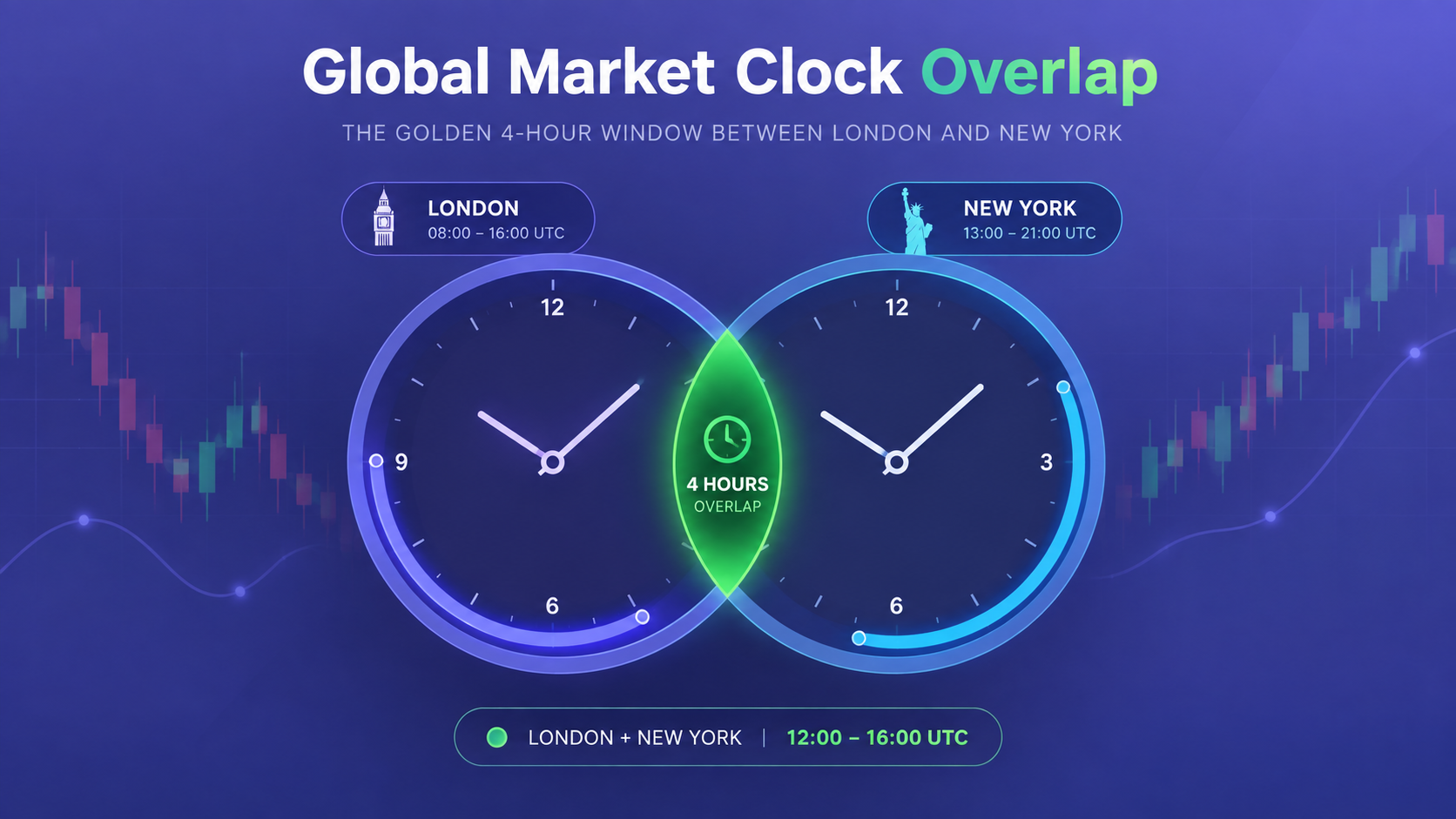
Step 1: Mapping the Four Major Market Sessions
To find your best trading times, you must first know how global money flows. The market cycles through four main financial centers every 24 hours:
- Sydney (Quiet Waters): Lower volume and range-bound price action. Good for calm range strategies, but spreads can be wider.
- Tokyo (Asian Momentum): Moderate movement, especially for Japanese Yen (JPY) and Australian Dollar (AUD) pairs.
- London (The Big Wave): High volume and fast price moves. This is where big trends often begin.
- New York (The Power Hour): High liquidity meets heavy news releases. This session brings maximum volatility, especially when it overlaps with London.
When two major financial hubs trade at the same time, liquidity hits its peak. The prime overlap happens between 8:00 AM EST and 12:00 PM EST (London and New York trading together). During these four hours, trading volume soars, spreads drop to their lowest levels, and market trends move cleanly.
Step 2: Tracking Your Personal Energy Curve
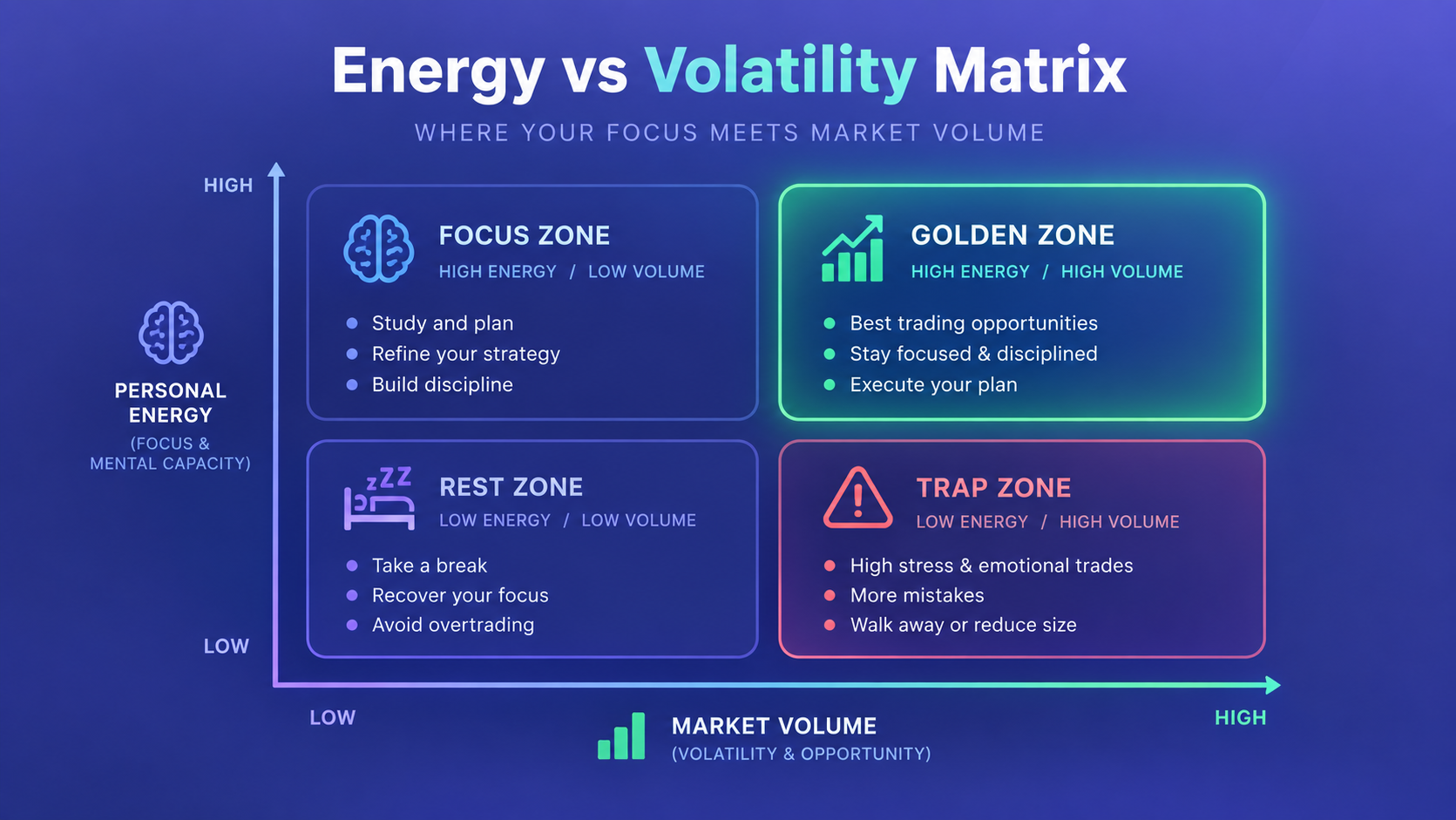
Here is the secret that transformed my trading account: The best trading hours are the intersection of peak market activity and peak human focus.
I created a simple notebook log for two weeks. Every time I placed a trade, I recorded three things:
- Time of day and market session.
- My physical energy level (on a 1 to 5 scale).
- The trade outcome (Win, Loss, or Breakeven).
The data shocked me. My win rate during the London open was nearly 68%. But when I traded late at night during the Sydney session, when I was tired and hungry, my win rate dropped to 22%. I was giving away all my morning profits at night!
Once I stopped trading after 4:00 PM, my account balance started growing steadily.
To dive deeper into market timing and forecast models, visit our Becoin Forecast Hub to match your schedule with daily market projections.
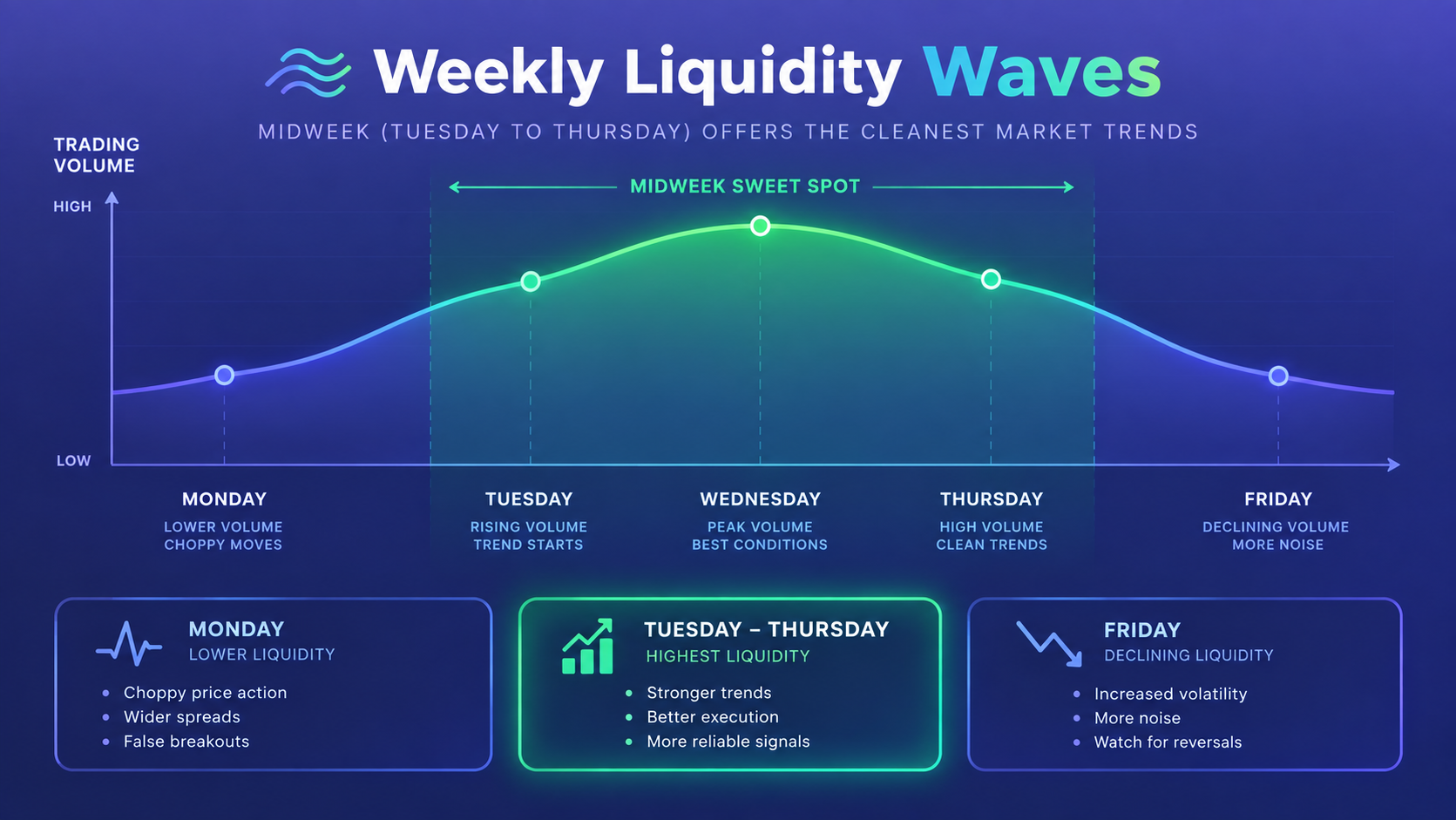
Scientific Proof: Why Session Volatility Matters
You do not have to take my word for it. Academic research proves that price patterns and volatility shift dramatically across trading hours.
A published research study on classic guide Come Into My Trading Room, Dr. Alexander Elder notes that fast-moving, high-emotion market hours offer the best trading signals for disciplined traders, whereas slow, flat markets usually result in wasted time and higher broker expenses.
Step 3: Pick the Right Broker for Your Schedule
Different platforms excel in different conditions. If you want to put your custom schedule to work, select a broker that matches your trading style and time zone.
Here are top platforms to start trading with low fees:
- Try short-term momentum trades on Deriv with clean charting tools.
- Trade market overlaps using IQ Option for intuitive navigation across currencies and assets.
- Explore rapid market movements on Pocket Option to practice timing fast trend shifts.
- Utilize streamlined order execution on Quotex for seamless session trading.
- Access global markets smoothly with Expert Option on desktop or mobile.
- Trade market trends with fast tools on Olymp Trade.
- Get started with competitive liquidity on Capital Core to practice your session strategy.
For step-by-step guidance on risk management, explore our comprehensive guide on Becoin Blog to refine your strategy before risking real capital.
Final Thoughts: Quality Beats Quantity
Finding your golden trading hours changes everything. You do not need to sit in front of charts all day to be a successful trader. In fact, trading fewer hours with maximum focus will protect your health and your capital.
Find the session overlap that fits your daily life, track your personal focus levels, and stay disciplined.
Ready to stop guessing and start trading with confidence? Join Becoin Premium today for expert market analysis, deep forecasts, and a distinct trading edge.

Deriv vs Binomo for Low-Risk Trading in 2026: Which Platform Is Better for Safer Growth?
Most beginners enter trading with one simple goal: avoid blowing up their account in the first week. That is exactly why low-risk trading matters more than fast profits. Two platforms that constantly appear in beginner discussions are Deriv and Binomo. Both allow small deposits, short-term trading, and beginner-friendly access. But when your focus is protecting […]

The Day I Stopped Trading and Finally Started Making Money
It was a rainy Tuesday morning, and I was staring at my screen with a familiar knot in my stomach. The previous three days had been a slow, agonizing slide into the red. I had given back two weeks of hard-earned profits in less than seventy-two hours. Every asset I clicked on looked like a […]

Deriv vs IQ Option for Beginners in 2026: Which Platform Is Better to Start With?
Choosing your first trading platform can decide whether you stay consistent or quit after blowing your first account. Most beginners do not fail because trading is impossible. They fail because they start on platforms that confuse them, encourage emotional trading, or make risk management difficult. Two names that often appear in beginner discussions are Deriv […]

Which Is Easier for Beginners: Binomo or IQ Option?
For most beginners, the hardest part of trading is not strategy. It is surviving the first few months without blowing the account from emotional decisions, overtrading, and poor risk management. That is why choosing the right platform matters more than many new traders realize. Two names dominate beginner conversations in binary and short-term trading: Binomo […]
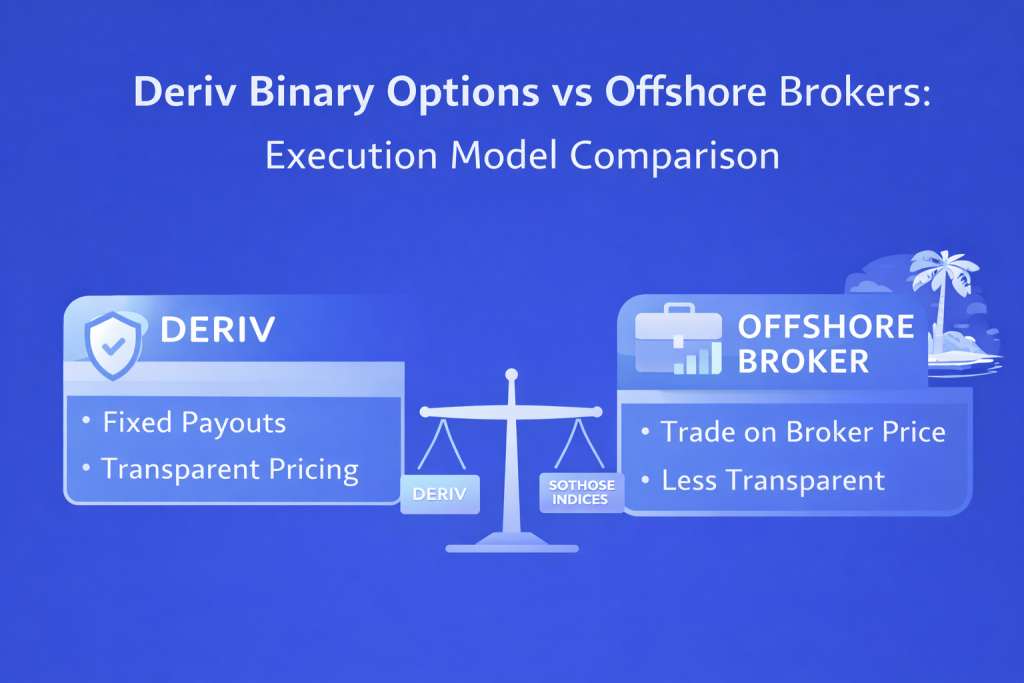
Deriv Day Trading vs Offshore Brokers: Execution Model Comparison
I did not start my trading journey thinking about execution models. Like most beginners, I started with charts, indicators, and the belief that if I could just find the right entry signal, profits would follow. My early trading notebook was full of screenshots of RSI signals, candlestick patterns, and support levels. What it did not […]
The Clock and the Candle: How I Stopped Guessing the Best Time to Trade Day Trading
I still remember the night I blew my third trading account. It was 11:30 PM. The house was completely quiet, the market charts on my screen were barely crawling, and I was forcing trades out of pure impatience. I kept staring at a flatline asset, placing one-minute positions, convinced that the market owed me a […]