WTI Crude Oil Forecast: USOIL Consolidates Near $82 on a 3Q Supply Deficit
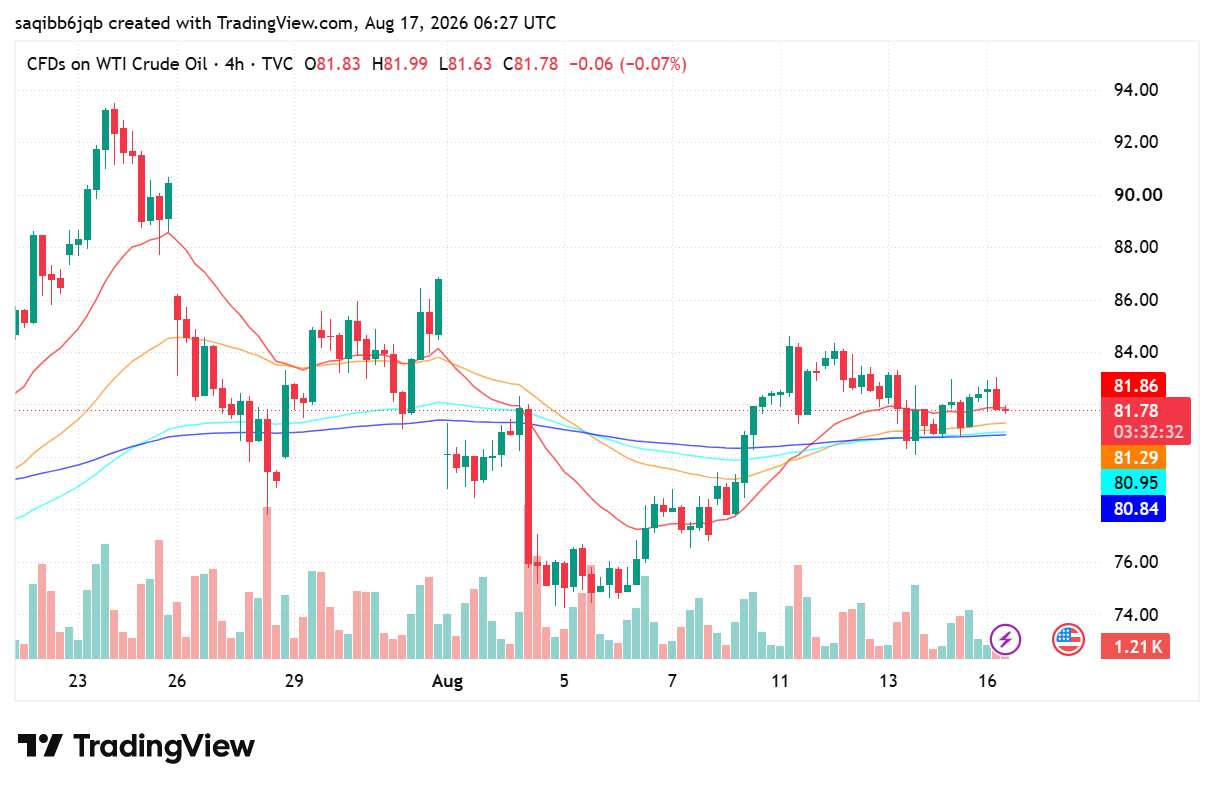
- WTI trades near $81.72, down about 0.8%, after a violent July that spanned almost $40 a barrel.
- The International Energy Agency now projects a third-quarter deficit of 1.8 million barrels per day, more than double its previous estimate.
- The $80.84 average is the pivot: above it the recovery holds, below it the early-August lows come back into play.
Fundamental Analysis: WTI Crude Oil
The oil market in August 2026 is defined by a supply shock that has not been resolved. Roughly 8.3 million barrels per day of Gulf output remains shut in, and disruption around the Strait of Hormuz has cut regional exports to about 15 million barrels per day, a monthly decline of 2.1 million. The IEA's August report puts full-year 2026 supply on track to fall 4.3 million barrels per day as Middle Eastern and Russian losses outpace gains from the Americas.
OPEC+ has limited capacity to offset this. July crude production reached 34.53 million barrels per day, but the core group ran roughly 4.58 million barrels per day below its own targets, which tells you the shortfall is physical rather than policy-driven.
Demand is the counterweight, and it is genuinely weak. Global consumption is forecast to contract by 1.6 million barrels per day in 2026, a steeper decline than earlier estimates, though the rate of contraction eases through the third quarter. The net result is a projected 1.8 million barrel per day deficit for 3Q26 that is draining inventory buffers, which is why prices spiked as high as $105 during July before mean-reverting.
Technical Analysis: WTI Crude Oil
The 4-hour chart shows the scale of that volatility: a decline from roughly $90 in late July to a $74.60 low on 4-5 August, then a sharp recovery into an $84.50 high on 11 August, and a fortnight of sideways trade since. Price is currently pinned against a tight average cluster at $80.84, $80.95, $81.29 and $81.87.
Resistance is $84.00, then the $86.00 shelf. Support begins at $80.84, then $80.00, with $76.00 as the last defence before the $74.60 low. A 4-hour close above $84.00 would confirm the deficit narrative is winning; a close below $80.00 would argue demand weakness has taken over.
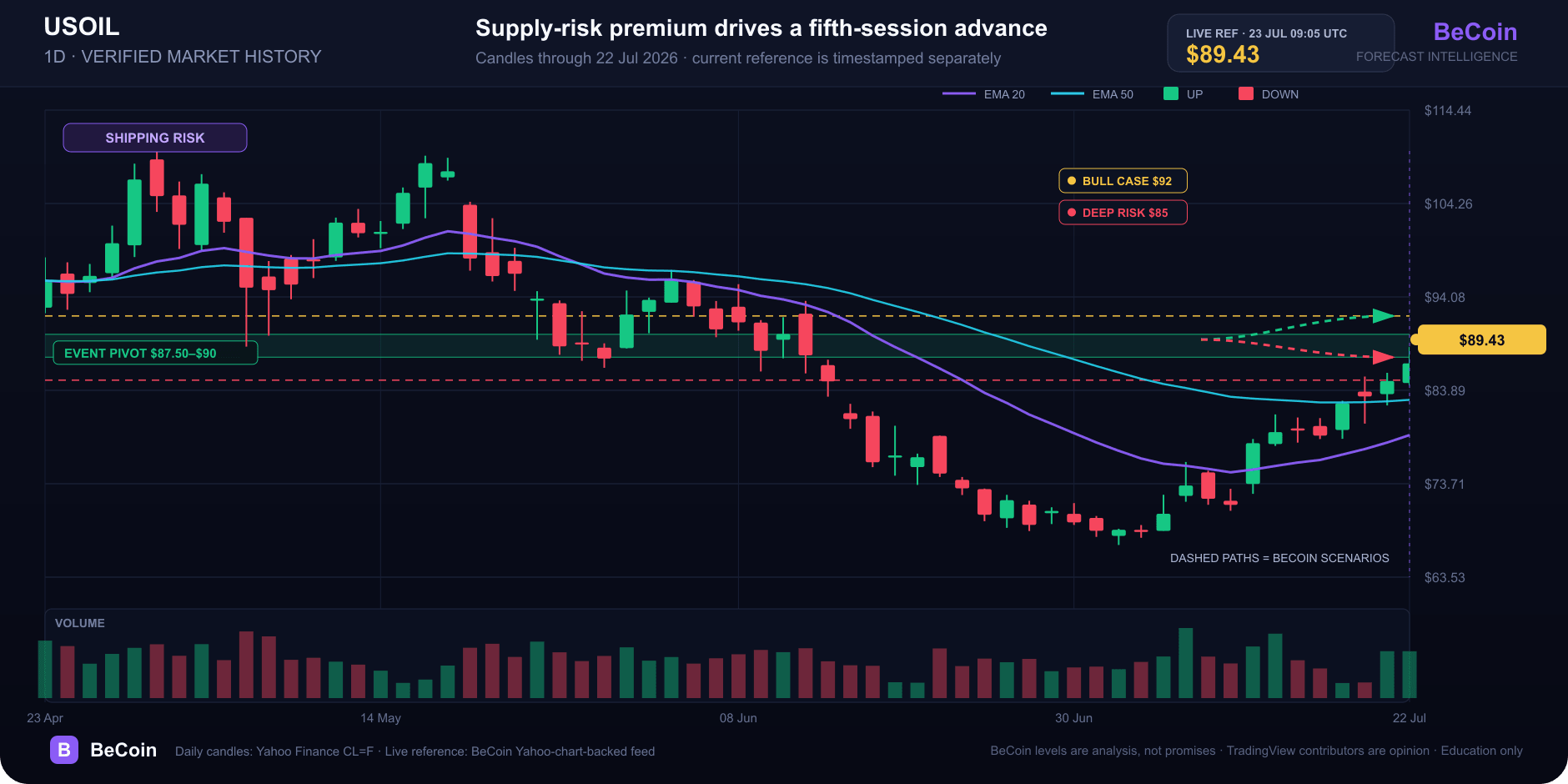
WTI reaches $89.43 as Brent clears $95 on renewed supply risk
WTI traded near $89.43 while Brent moved above $95 as Middle East shipping risk lifted crude for a fifth session. Key levels, catalysts and invalidation.
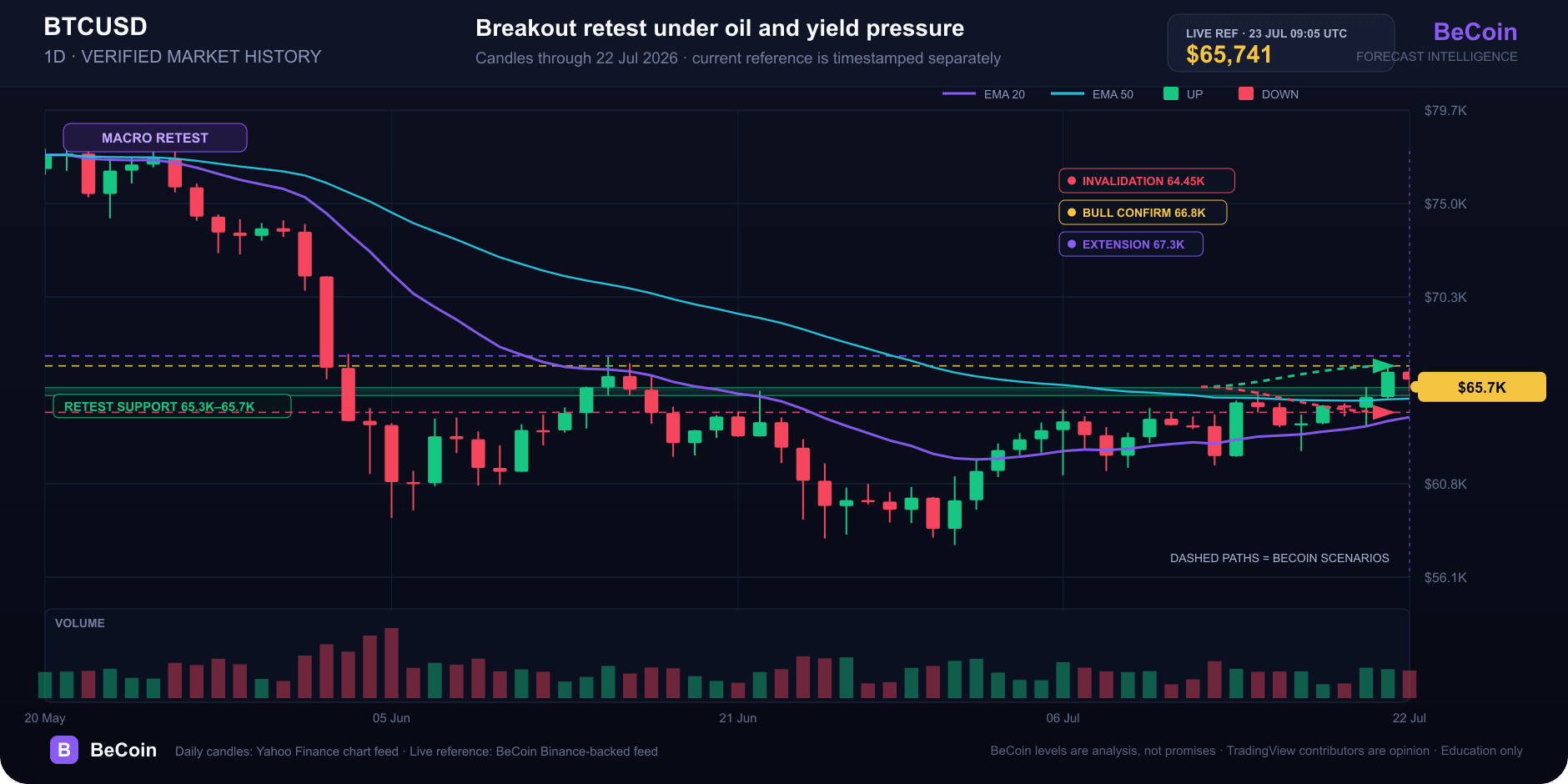
Bitcoin slips to $65,741 as oil and yields test the breakout
Bitcoin is near $65,741 as rising oil and Treasury yields test the $65.7K breakout floor. Here are the levels that confirm or invalidate the move.
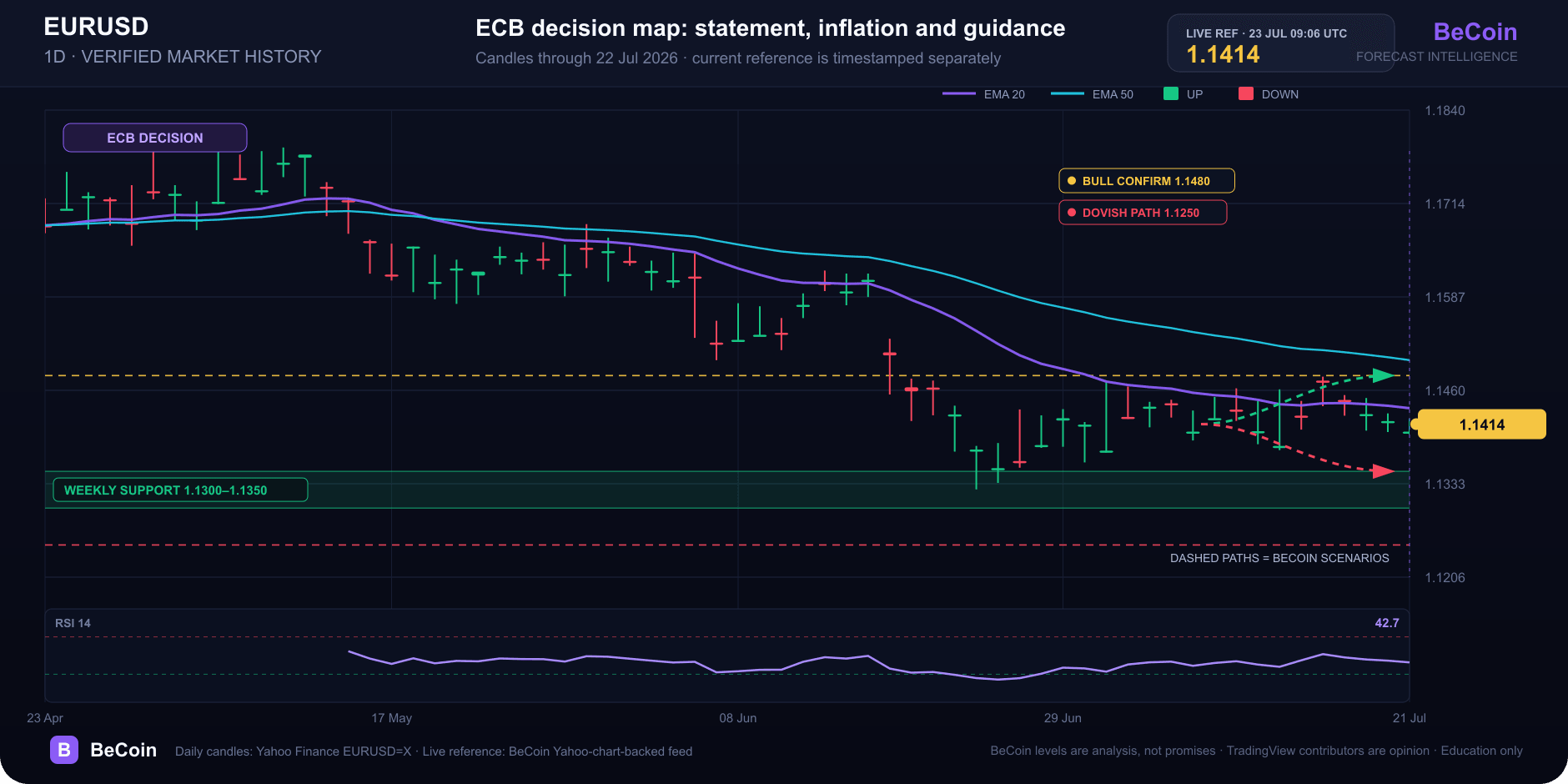
EUR/USD holds 1.1414 before the ECB decision: three scenarios
EUR/USD traded near 1.1414 before the ECB’s July decision. Here is what a hold, hawkish hold or surprise hike could mean for 1.1350 and 1.1480.
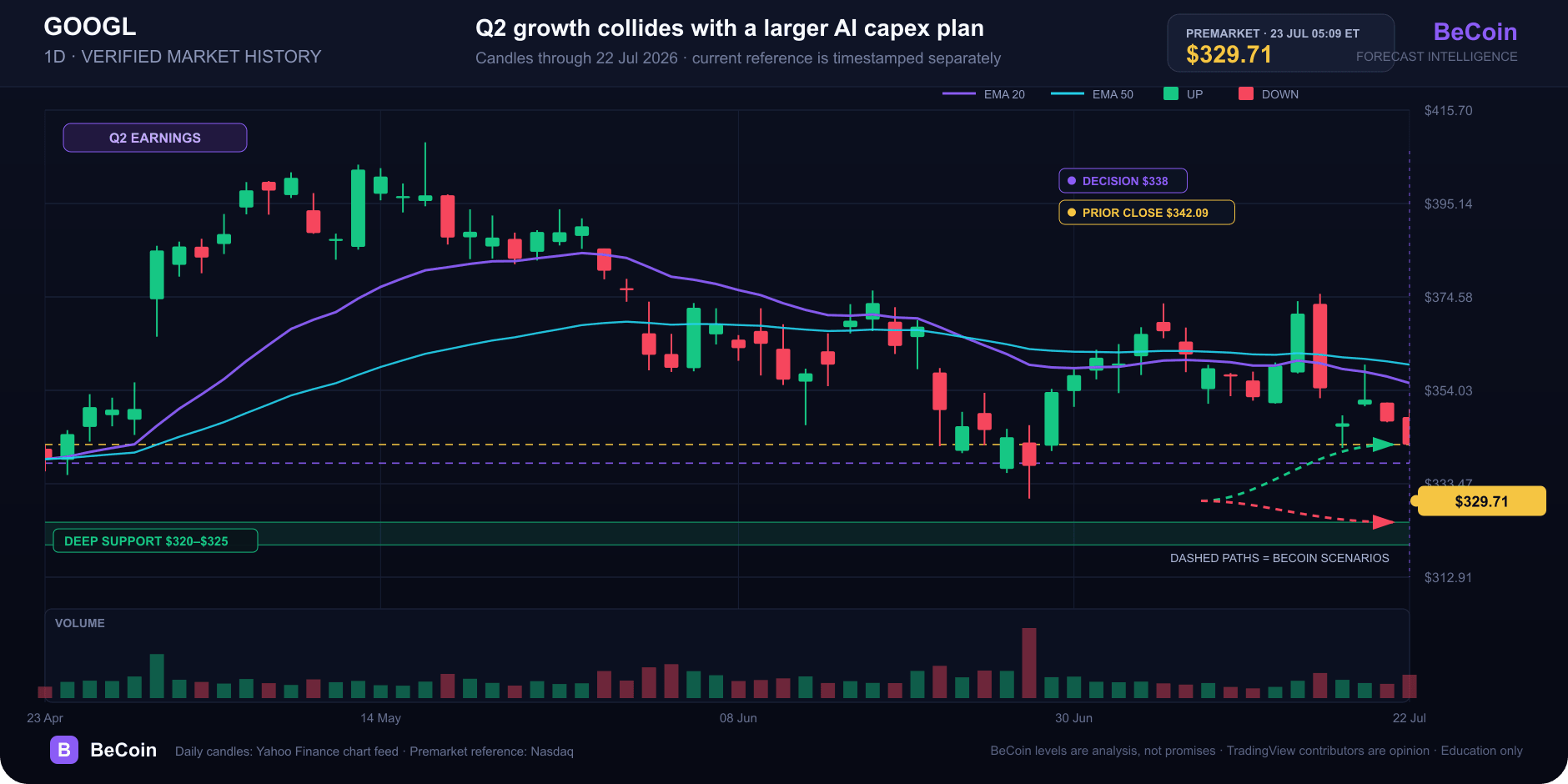
Alphabet falls to $329.71 premarket as AI spending eclipses cloud growth
Alphabet traded near $329.71 premarket after strong Q2 revenue and cloud growth collided with a much larger AI spending plan. What investors need to watch.

Trading Currency Strength Instead of Single Pairs
It was a Tuesday afternoon when I realized I was fighting a losing battle against a ghost. My screen was a chaotic web of indicators. I had the EUR/USD chart open, a moving average crossing over here, a relative strength index flashing oversold there, and a price action setup that looked textbook perfect. I clicked […]

How Liquidity Affects Day Trading Results
When I first started trading day trading, I believed success was all about finding the perfect indicator. I spent weeks testing moving averages, RSI settings, support and resistance levels, and dozens of YouTube strategies that promised easy wins. Some worked for a few trades, but most failed. What confused me was that the same setup […]