
When to Move Stop Loss to Breakeven and When Not To
When I first started trading, I hated seeing a green trade turn red. The second a trade moved into profit, I would rush to move my stop loss right to my entry price. It felt safe at that moment. But time after time, a tiny market bounce would knock me out for zero profit, only for the price to turn right around and rocket straight to my target without me.
Moving your stop loss to breakeven protects your starting money. But if you move it too fast, normal market moves will kick you out of great trades. There is no single magic pip or percentage rule that works every time. Instead, I learned that adjusting your stop loss requires balancing price progress, chart structure, market volatility, and your own trade psychology.
To help you get an edge and trade with clear market insights, check out Becoin Premium to get deep analysis and level up your risk strategy today.
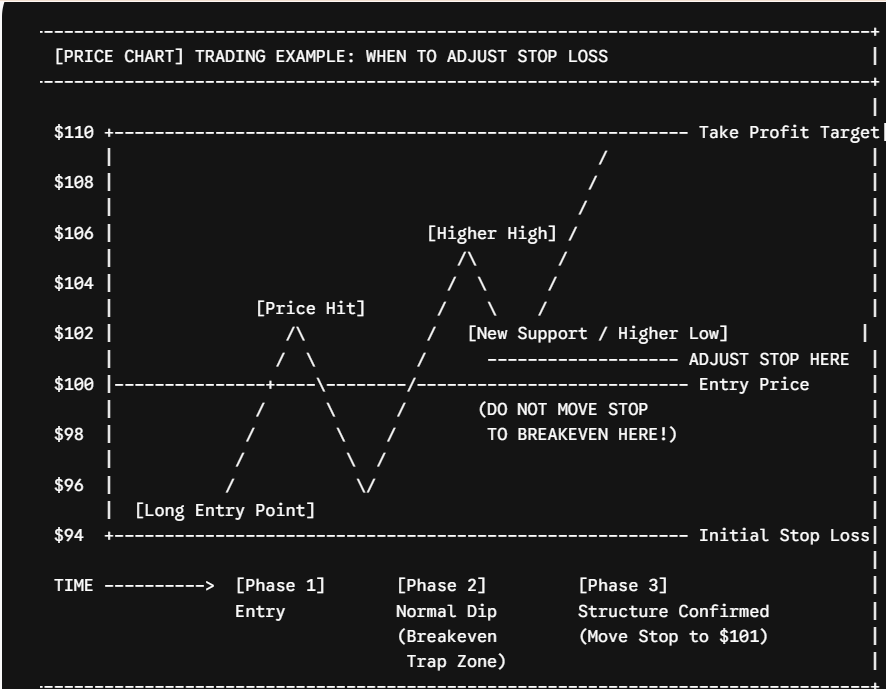
What Does Moving a Stop Loss to Breakeven Mean?
Moving a stop loss to breakeven means sliding your safety order right to your exact entry price. If the market falls back down, your trade closes automatically without losing a single dollar of your starting account balance.
Here is how the numbers work in real life:
- My Entry Price: $100
- My Starting Stop Loss: $96
- My Profit Target: $108
- My Initial Risk: $4 per share
If the price climbs to $103 and I move my stop to $100, my risk drops from $4 all the way to $0. I have removed my financial risk, but I have also changed how the trade behaves. I protected my cash, but I gave the trade much less space to move around.
| Benefits of Breakeven | Drawbacks of Breakeven |
|---|---|
| Completely removes original risk on your cash | Can kick you out during normal price bounces |
| Protects your balance from sudden bad market news | Can lower your total winning trades over time |
| Takes away trading stress and fear | Can reduce your total payout on huge winning trends |
| Simple to set up on your trade platform | Can trick you into making emotional moves too early |
The Mathematics of Moving to Breakeven
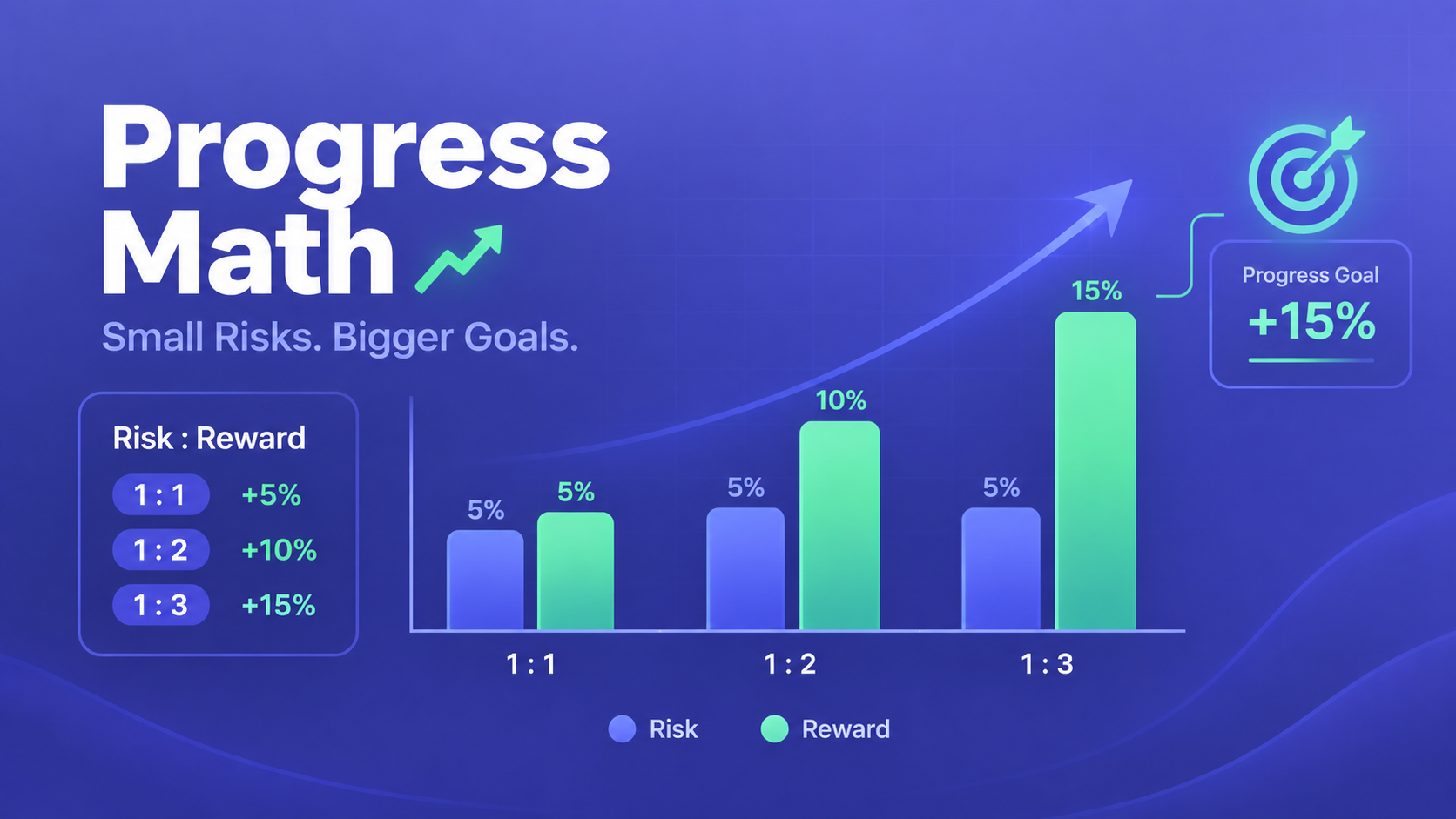
Instead of guessing when to adjust a trade, I use a simple math rule based on my risk to reward setup.

This math shows how far price needs to travel toward your goal before you should even think about moving your stop loss:
| Initial Risk to Reward Setup | Target Progress Needed Before Moving Stop |
|---|---|
| 1 : 1 | 50% of the way to target |
| 1.5 : 1 | 40% of the way to target |
| 2 : 1 | 33% of the way to target |
| 3 : 1 | 25% of the way to target |
A Practical Worked Example
Let us look at a swing trade setup I analyzed recently:
- Entry: $100
- Starting Stop Loss: $95 (Risk = $5)
- Profit Target: $110 (Reward = $10)
- Risk to Reward Setup: 1:2
Using our progress math, the minimum price point I need to reach before touching my stop is:

Once price hits $103.30, the trade passes its math test. But math is only part of the story. Before I slide my stop, I always look at the chart to make sure the price structure protects my new level.
Use Market Structure and ATR Before Moving the Stop
I never move my stop loss based only on a random dollar gain. I always check the chart pattern and market volatility first.
Chart Structure Adjustment
Imagine I buy a stock at $100 with a stop at $95. The price jumps to $103, pulls back slightly to $101.50 to form a higher low, and then pushes up toward $105.
If I moved my stop to $100 when price first hit $103, that normal dip down to $101.50 would have knocked me out of the trade for nothing. But if I wait for the higher low at $101.50 to form, I can move my stop safely to $101.00. This locks in profit while hiding my stop safely under price support.
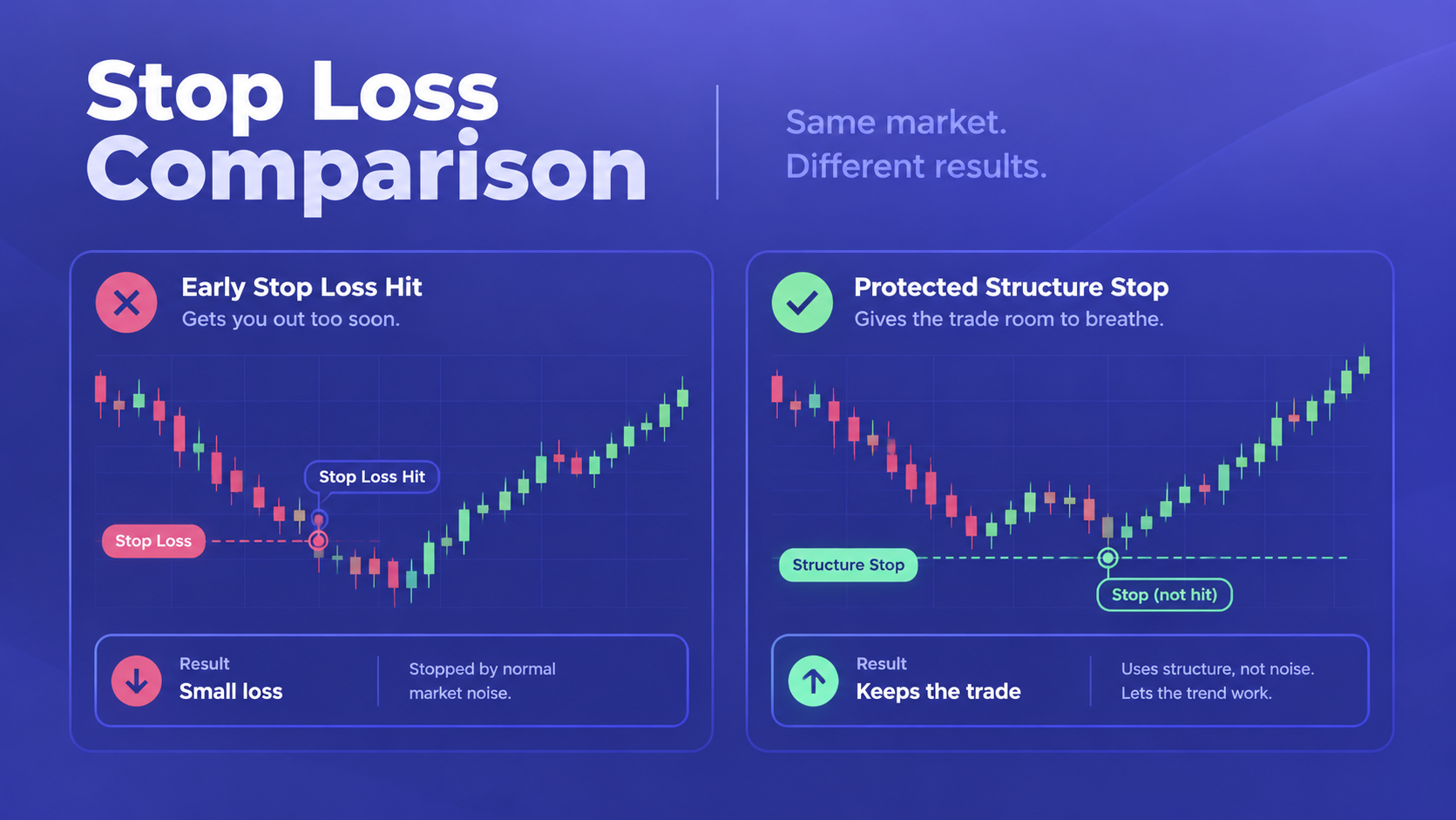
Factoring in Market Volatility (ATR)
The Average True Range tool measures how much a market moves back and forth every day. Moving your stop loss inside this normal wiggle zone is a fast way to get stopped out.
If the daily ATR on my chart is $2.00, a price dip of $1.00 is completely normal market breathing. Setting a breakeven stop just $0.50 away from the current price during active market hours almost guarantees an unwanted exit.
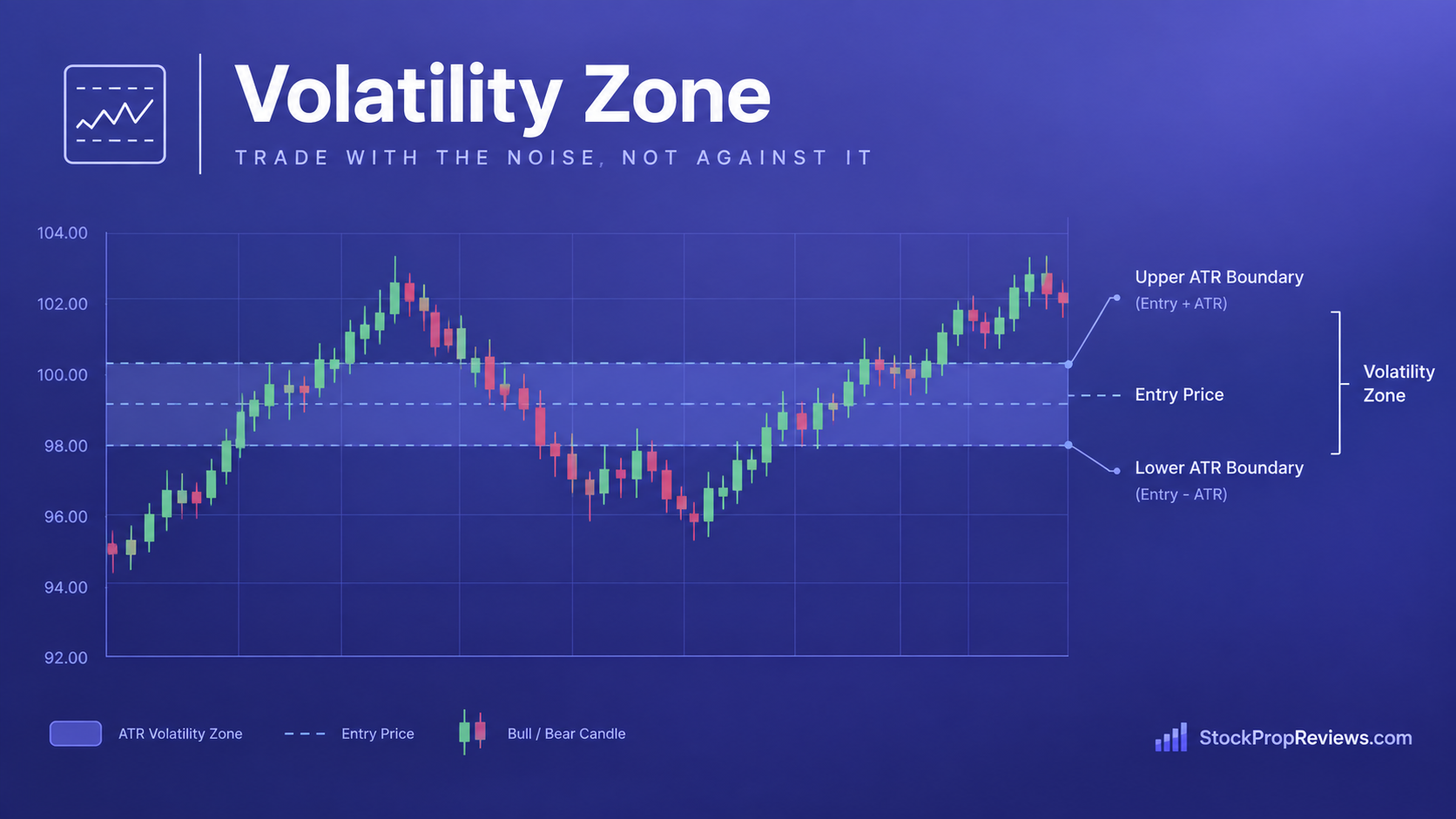
Common Approaches to Adjusting Stop Losses
Traders manage their active trades using a few distinct methods:
- Fixed Breakeven Rule: Move the stop right to entry as soon as price moves up by your starting risk amount. It is simple, but easy to trigger by accident.
- Partial Profit Rule: Close half your trade to lock in cash, then move the rest of your position toward breakeven.
- Structure Based Rule: Shift your stop behind clear chart levels like swing lows, support zones, or moving average lines.
- ATR Buffer Rule: Pick your new stop level on the chart, then add a little extra room based on the ATR score to let the trade breathe.
- Trailing Stop Rule: Move your stop continuously up behind the price as the market trends higher.
"Research in Risk Analysis shows that trade exit behavior is heavily influenced by risk perception and cognitive biases, demonstrating that traders often struggle to execute objective, rule-based stop-loss adjustments."
When testing these setups across live platforms, practicing on real trade screens helps you build discipline. You can test execution speeds on Deriv, practice trade setups on IQ Option, or evaluate short-term charts on Pocket Option.
How Trading Style Changes the Decision
How long you stay in a trade changes how much breathing room your stop loss needs:
| Trading Style | How to Manage Your Stop Loss | Main Risk to Avoid |
|---|---|---|
| Scalping | Moves super fast; uses tight profit goals and quick exits. | Getting eaten up by broker spreads and quick spikes. |
| Day Trading | Uses daily support lines and intraday volume zones. | Moving stops right before big scheduled news events. |
| Swing Trading | Needs wider room across multi-day price moves. | Getting knocked out by overnight price gaps. |
| Trend Following | Moves stop slowly behind major weekly chart levels. | Giving back open gains during normal market pullbacks. |
Traders testing these strategies across different brokers often compare options on Quotex, try out trading tools on ExpertOption, practice chart patterns on Olymp Trade, track volatility setups on Binomo, or check risk settings on CapitalCore.
Psychology, Risk Management, and the Breakeven Trap
The most common reason traders rush to breakeven is fear: "I am finally up $50, and I cannot stand seeing it go back to zero."
Managing your fear is not the same as managing a trade setup. Moving your stop loss early just to make yourself feel safe ruins your long-term trading profits.
Fear Moves vs Good Process
- Bad Reason: Moving your stop loss because you are scared to lose a temporary profit.
- Good Reason: Moving your stop loss because the price broke a real resistance line and formed a new support level.
Correct trade sizing fixes initial trading fear. If you feel nervous the moment a trade opens, your position size is likely too large for your account balance.
My Practical Breakeven Checklist
My 4 Step Decision Rule
- Define the Trade First: Write down your entry, stop, goal, and risk setup before buying.
- Wait for Real Progress: Let the price hit a real chart milestone before touching your order.
- Check Volatility Space: Make sure your new stop sits outside the normal market ATR range.
- Follow Your Plan: Move your stop only when your rules tell you to, never out of fear.
Pre-Adjustment Checklist
- Has the price made solid progress toward my goal?
- Has a clear support level formed on the chart?
- Is my new stop safe from normal market wiggles?
- Am I making this move based on my rules instead of fear?
FAQs
When should I move my stop loss to breakeven?
Move your stop loss only after the price makes real progress toward your goal and builds a new support level on the chart.
Is 1R a good time to move a stop loss to breakeven?
Moving to breakeven at 1R works great for fast day trades, but swing trades need more room so normal pullbacks do not stop you out early.
Should I use ATR when moving my stop loss?
Yes. Checking the ATR score ensures your new stop sits safely outside normal daily price movement.
Is a trailing stop better than moving to breakeven?
A trailing stop keeps locking in profits as a strong trend continues, while a breakeven stop only protects your initial entry price.
Why does my breakeven stop getting hit?
Your breakeven stop gets hit because you are moving it too fast out of fear, rather than waiting for a real support level on your chart.
For more trading ideas and guide updates, explore our recent posts on the Becoin Blog to sharpen your strategy today.
Ready to upgrade your trading strategy with actionable insights and deep technical breakdowns? Join Becoin Premium today to get the edge you need!
Capital Core Verification Process Explained: KYC, Restrictions, and Withdrawal Delays
I learned something the hard way with offshore-style brokers: the smoothest part is usually opening the account, funding it, and placing the first few trades. The real test starts when you try to move money back out. That’s exactly why I wanted to document the Capital Core verification process from a trader’s perspective, not from […]

Capital Core for US Traders: Can Americans Use It Safely?
I’ll be honest: when I first started digging into Capital Core for US traders, I wasn’t looking for hype. I was looking for a boring answer. Can I sign up from the US?Can I actually trade?And the real question nobody asks loudly enough: if I win, can I withdraw without drama? That last one matters […]

Simple Daily Trading Routine for Consistency
Most traders do not fail because of strategy alone. They fail because they are random. They trade when emotional, skip planning, increase risk after losses, and ignore review sessions. Consistency in trading usually comes from routine more than prediction. A simple daily trading routine helps you stay disciplined, reduce emotional mistakes, and improve decision making […]
Binomo Withdrawal Pending: Real Reasons, Timelines, and What to Do at Each Hour Mark
The first time I saw Binomo withdrawal pending on my screen, I stopped caring about my trades for the day. Not because the amount was huge. It wasn’t. What bothered me was the uncertainty. When you trade on a platform like Binomo, the real test isn’t the deposit button. It’s the withdrawal button. Depositing is […]

Best Capital Core Day Trading Strategy for 1-Minute and 5-Minute Trades
I did not build my short-expiry strategy on Capital Core from a perfect week, a flashy YouTube setup, or some “secret indicator” thread. I built it by making the same mistakes most traders make when they first touch 1-minute and 5-minute day trading. I entered too early. I forced trades because the candles looked exciting. […]

Chasing Safety in a High-Stakes World: My Quest for the Best Low-Risk Trading Platforms
I still remember the sinking feeling in my stomach when I lost my first tiny trading account. It wasn’t a massive fortune, but it was mine. That night, I realized a brutal truth about this industry: most beginners fail not because they lack passion, but because they dive into high-risk environments without a life jacket. […]