VWAP Trading for Day Trading
I still remember the exact trade that broke my spirit three years ago. It was 11:30 PM, and I was staring at a 5-minute EUR/USD chart with six different indicators plastered across my screen. The Relative Strength Index (RSI) said oversold, the Stochastic Oscillator had crossed upward, and price was sitting right on a 20-period Exponential Moving Average. Everything in my retail trading playbook screamed "CALL option." I clicked buy on a 5-minute binary contract, confident that the market was bound to bounce.
Five minutes later, my contract expired out of the money by less than half a pip. The market did not care about my moving average. It sliced through my support level like butter, wiping out three days of painstaking gains in a single candle.
In day trading, losing by one pip is identical to losing by a hundred pips. You get zero margin for error. That painful loss forced me to confront a brutal reality: traditional moving averages treat every price candle equally, whether ten thousand contracts were traded or just ten. They tell you where the price was, but they tell you nothing about where the real institutional money is defending its positions.
That night sent me down a rabbit hole into how institutional trading desks execute massive orders. That was the first time I discovered Volume Weighted Average Price (VWAP). Implementing VWAP completely restructured how I view short-term price action, transformed my contract timing, and gave me a repeatable edge in the day trading market.
What Is VWAP and Why Does It Rule Day Trading?
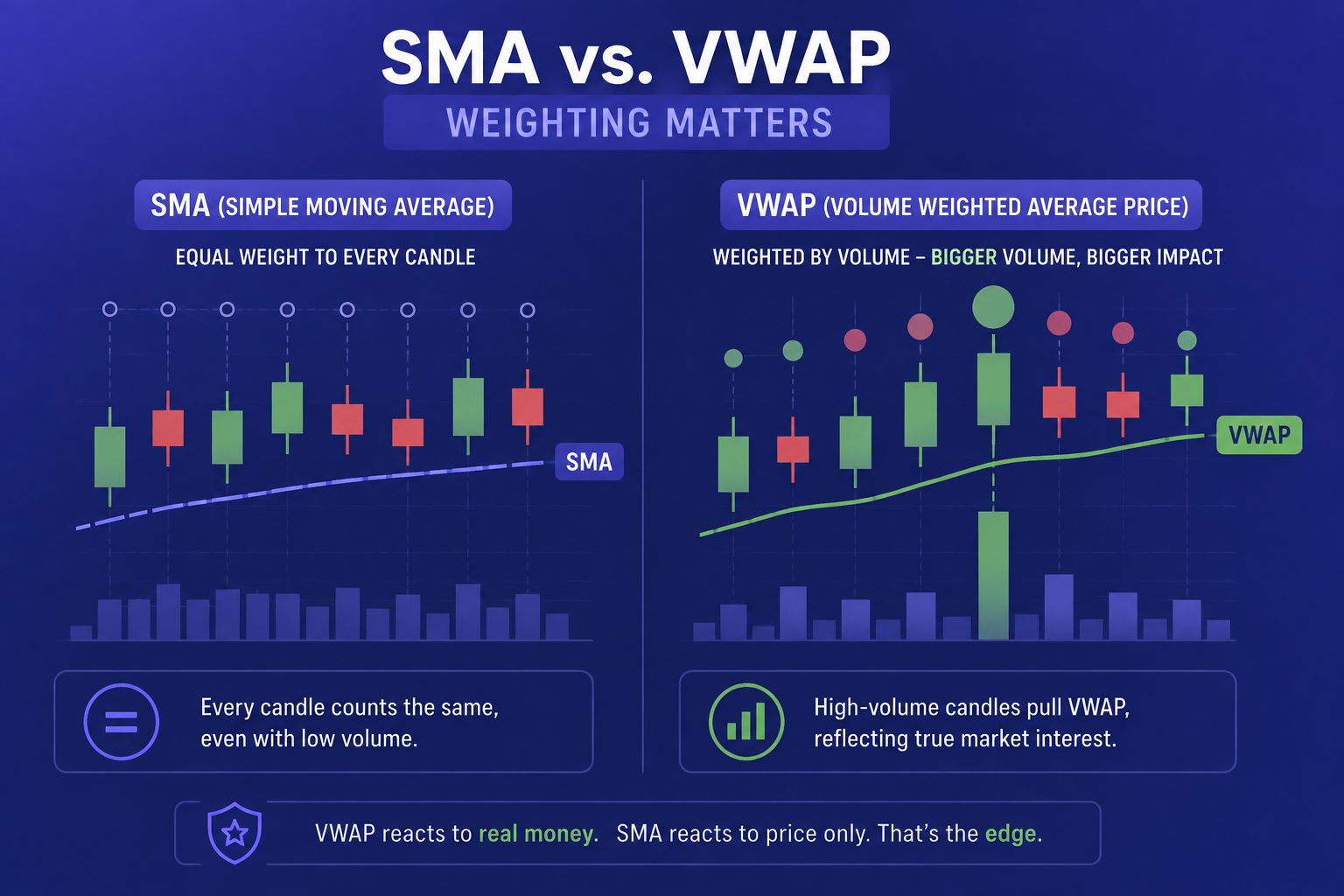
To understand why VWAP works so effectively, you first have to understand why standard moving averages constantly fail short-term traders. A simple 20-period moving average adds up the closing prices of the last 20 candles and divides by 20. It gives a 1:00 AM candle during low Asian session volume the exact same statistical weight as a 9:30 AM candle during the volatile New York open.
VWAP fixes this flaw entirely. By calculating the cumulative ratio of price multiplied by volume divided by total cumulative volume throughout the trading day, VWAP creates a dynamic benchmark representing true market value.
$$\text{VWAP} = \frac{\sum (\text{Price} \times \text{Volume})}{\sum \text{Volume}}$$
When institutional buyers or central banks enter the market, they cannot just hit a market order button without driving price against themselves. Algorithms execute their orders throughout the session, benchmarking success against the VWAP line. If an algorithm buys below VWAP, it secured a discount for its client. If it buys above VWAP, it overpaid.
Because institutional traders benchmark their performance against this single line, VWAP becomes a self-fulfilling magnet for price action. When price pulls back to VWAP during a strong trend, big players step in to defend their average entry price. For day traders, these defense zones offer high-probability bounce points perfect for short-duration CALL and PUT options.
When I analyze assets on platforms like IQ Option or chart custom assets inside Quotex, VWAP acts as my ultimate directional filter. If the price stays above VWAP, I only hunt CALL options. If price grinds below VWAP, I strictly look for PUT options.
My Two Go-To VWAP Day Trading Strategies
Over years of testing, I narrowed my approach down to two primary setups that work exceptionally well within 5-minute to 15-minute expiration windows.
Strategy 1: The VWAP Mean Reversion Snip (5-Minute Expiry)
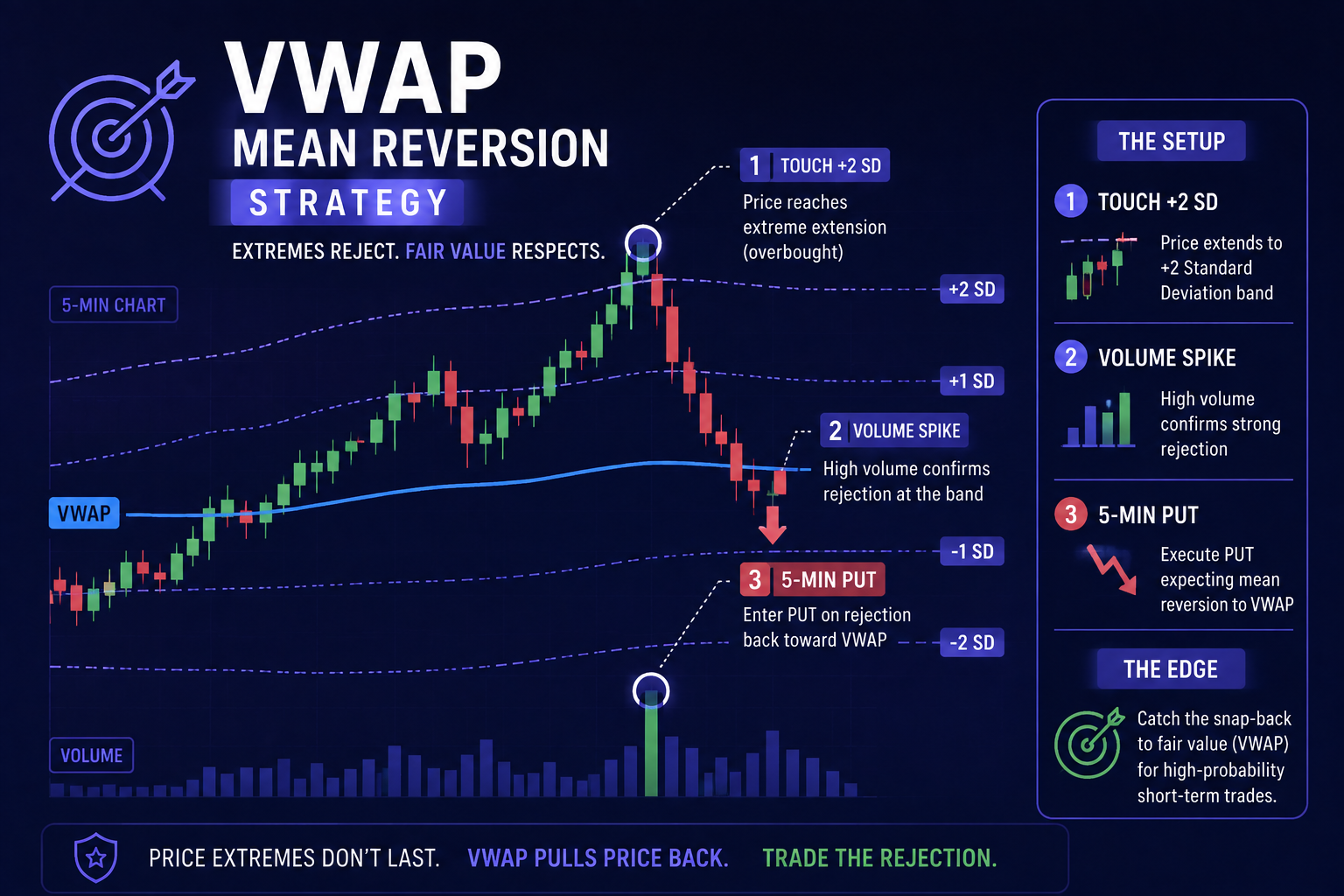
Markets spend roughly seventy percent of their time ranging. When price explodes away from the central VWAP line without fresh news, it becomes statistically overextended. I use standard deviation bands (+2 SD and -2 SD) plotted around the main VWAP line to spot these rubber-band moments.
Here is the step-by-step framework I follow for a PUT option setup:
- Identify Extreme Extension: Wait for price to push completely outside the +2 Standard Deviation band on a 1-minute or 5-minute candlestick chart.
- Watch for Volume Exhaustion: Look for a candle that exhibits a long upper wick combined with dropping tick volume, signaling that aggressive buyers are running out of steam.
- Wait for Rejection Confirmation: The moment a candle closes back inside the upper standard deviation band with a bearish color shift, enter a 5-minute PUT option targeting a return toward the central VWAP line.
When practicing this mean-reversion setup on a Capital Core account or testing execution speed on an ExpertOption demo platform, speed is critical. You are trading the snap-back to fair value, so entering immediately upon the candle close ensures maximum payout probability.
Strategy 2: The Institutional Reclaim Breakout (15-Minute Expiry)
During high-volatility sessions, mean reversion strategies can get run over by runaway momentum. That is where the VWAP Reclaim setup shines.
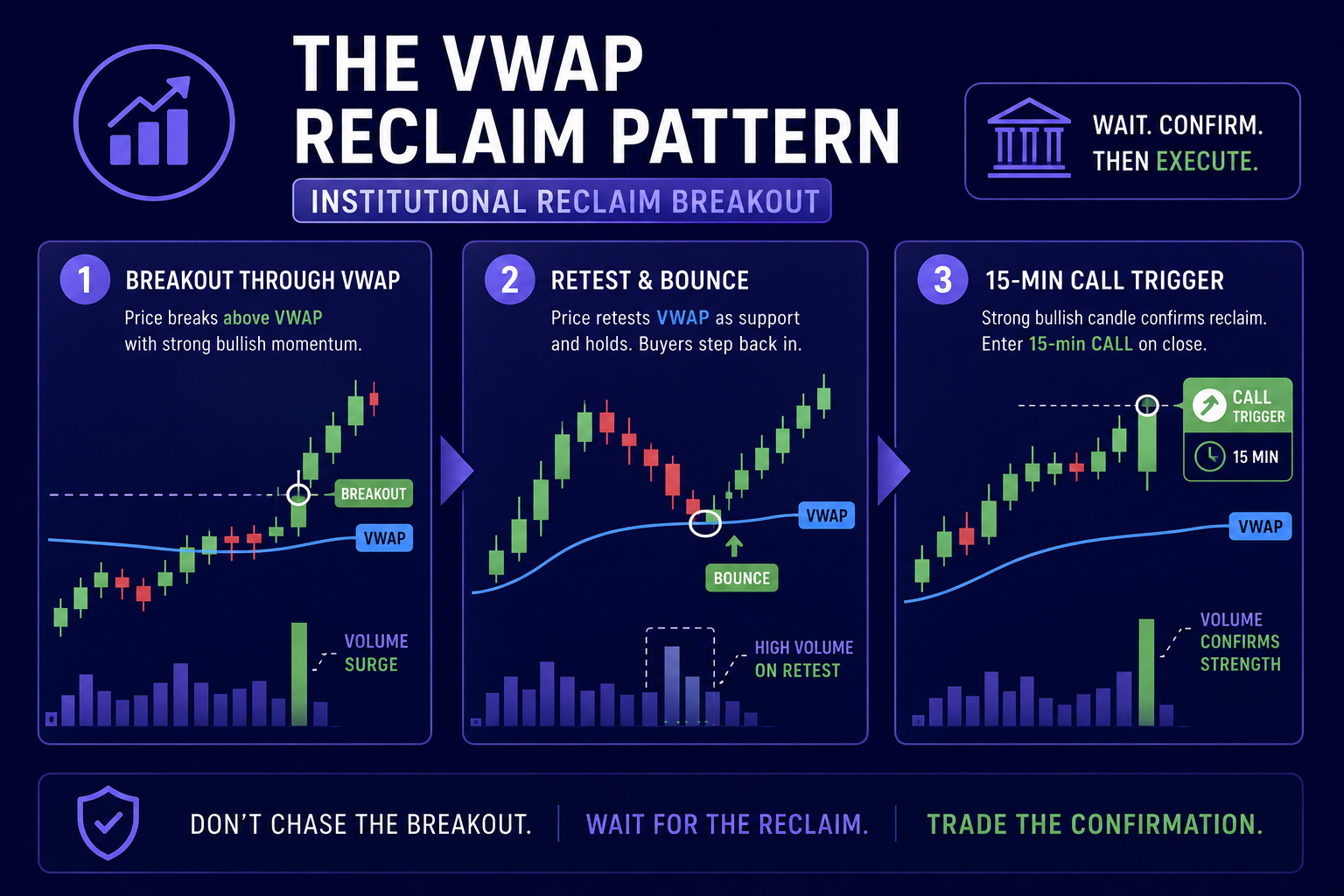
Picture this scenario: Price has been grinding below VWAP for two hours during the London session. Suddenly, a strong bullish impulse candle pierces straight through the VWAP line on heavy relative volume. This indicates that institutional buyers have stepped in to flip the market bias from discount to premium.
My entry rules for the VWAP Reclaim:
- Allow the initial breakout candle to close decisively above the VWAP line.
- Wait for a gentle retest pullback where price drops back down to touch the VWAP line from above.
- Confirm that VWAP holds as dynamic support with a strong bullish engulfing or hammer candle.
- Execute a 15-minute CALL option right as the confirmation candle closes.
Executing rapid contract fills on platforms like Pocket Option or trading forex currency pairs on Deriv during an active VWAP reclaim provides high win rates because you are riding alongside institutional momentum rather than fighting it.
Avoiding Common VWAP Binary Trading Traps
While VWAP is one of the most reliable indicators in my arsenal, relying on it blindly will still destroy your account if you ignore session context. Here are three expensive mistakes I made early on so you do not have to repeat them:
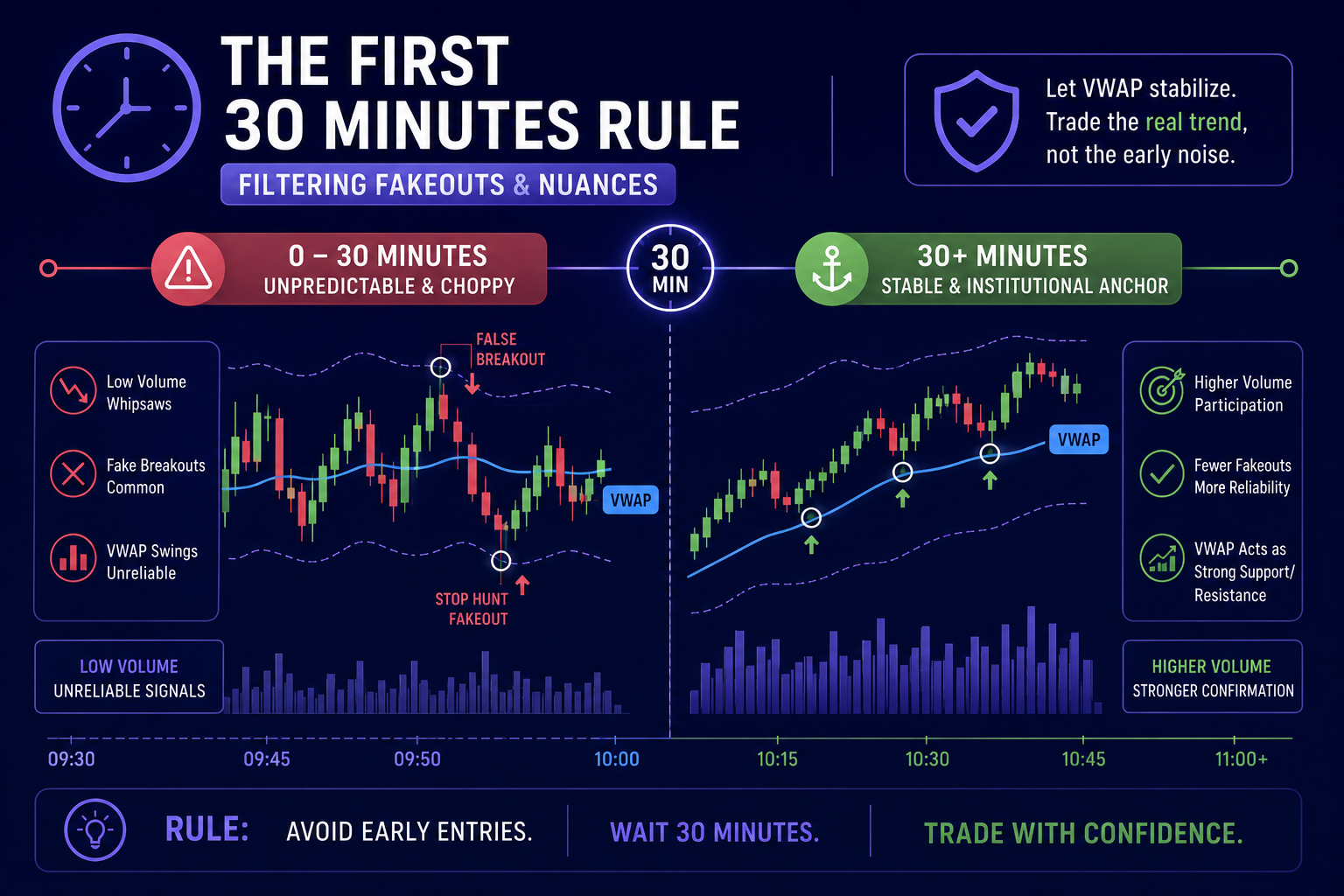
Trapping Yourself in the First 30 Minutes
VWAP resets at the start of every trading day or session open. During the first thirty minutes of trading, cumulative volume is extremely low. A single large block trade can cause the VWAP line to swing wildly up and down, generating false breakout signals. I never trade VWAP setups during the first half hour of a market open. Let the volume build up so the indicator establishes a stable baseline.
Ignoring Macro Catalyst Releases
When high-impact economic news releases hit the calendar (such as US Non-Farm Payrolls or Consumer Price Index data), technical levels cease to matter temporarily. Price will cut right through VWAP standard deviation bands like they do not exist. Always check macro schedules before monitoring intraday trends on Olymp Trade or placing live day trades.
Confusing Tick Volume with Real Volume
Most spot day trading brokers provide tick volume (the frequency of price changes) rather than true centralized exchange volume. While tick volume tracks real volume with roughly ninety percent correlation on liquid pairs like EUR/USD or GBP/USD, it can diverge during low-liquidity hours. Cross-referencing your charts with real futures volume feeds or tracking daily institutional bias via the BeCoin Forecast Hub helps filter out artificial broker spikes.
For broader technical strategy breakdowns and foundational guides, exploring educational articles on the BeCoin blog will keep your market context sharp.
Mastering Your Day Trading Edge
Day trading is not about predicting the future with one hundred percent certainty. It is about stacking microscopic statistical edges in your favor over hundreds of trades. Standard technical indicators often leave retail traders vulnerable because they ignore the fuel that actually moves prices: institutional trading volume.
By incorporating VWAP into your daily routine, you stop guessing where support and resistance might form. You start seeing where institutional desks are actively defending their capital. Whether you are placing fast 5-minute reversion trades or waiting for 15-minute trend reclaims on Binomo, VWAP grounds your execution in volume-backed reality.
If you are ready to stop trading in the dark and want to align your trades with real-time institutional analysis, join us at BeCoin Premium. You will gain access to in-depth market forecasts, high-probability trade setups, and actionable insights designed to give you a definitive edge in day trading and financial markets.

How Understanding Market Structure Saved My Day Trading
I remember the exact moment my trading account hit zero for the third time in a single month. It was a rainy Tuesday evening, and I was staring at a 1-minute chart on my laptop screen. The price had been moving up aggressively. It looked like a flawless rocket ship to the moon. I clicked […]
Deriv Copy Trading (DBot & Signal Services): Can Automation Beat Manual Trading?
When I first started trading on Deriv, everything I did was manual. Every entry, every exit, every mistake. I would sit in front of charts watching price ticks move on synthetic indices, trying to time trades perfectly. Some days I would catch a streak of wins and feel like I had finally figured it out. […]

Trading Currency Strength Instead of Single Pairs
It was a Tuesday afternoon when I realized I was fighting a losing battle against a ghost. My screen was a chaotic web of indicators. I had the EUR/USD chart open, a moving average crossing over here, a relative strength index flashing oversold there, and a price action setup that looked textbook perfect. I clicked […]

The Day I Lost My First Ten Dollars: My Hunt for the Best Mobile Trading App for Beginners
I still remember the exact shape of the cloud outside my window when my first live trade ended in the red. It was a crisp morning, and I was sitting on my couch with a lukewarm cup of coffee, staring at a flashing line on my smartphone screen. I had just deposited ten bucks, convinced […]

Deriv vs IQ Option for Synthetic Indices: Which Platform Is Better in 2026?
Synthetic indices have become one of the most talked about trading categories among beginners and experienced traders alike. Unlike forex or crypto markets that depend on real world events, synthetic indices operate 24/7 using algorithm driven price movements. That means traders can access opportunities at any time without waiting for market openings or major news […]
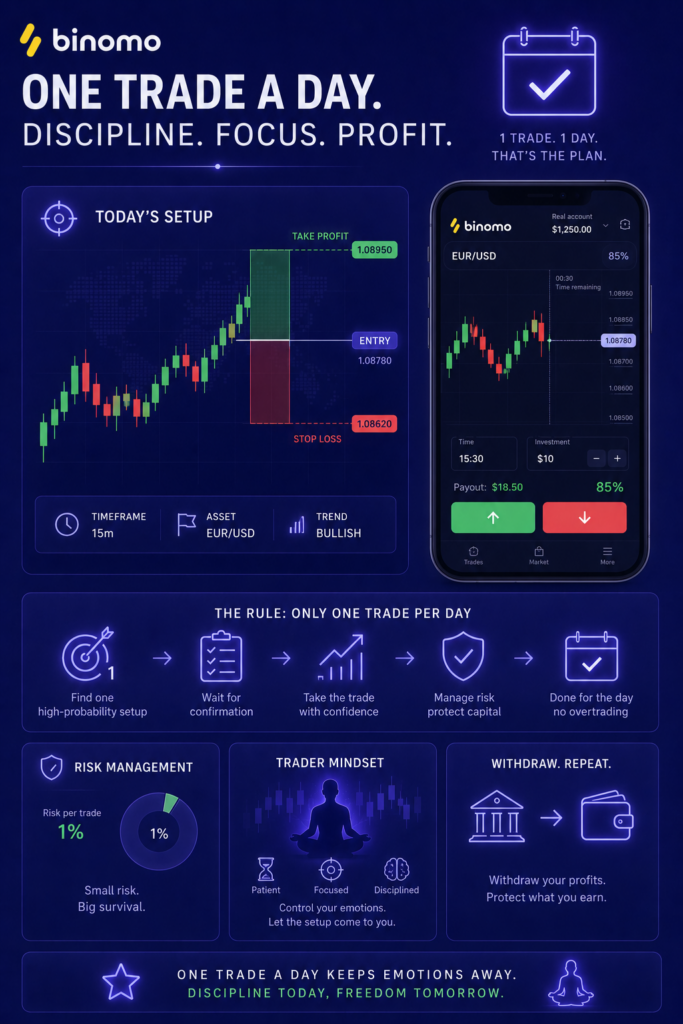
Best Broker for One Trade a Day Strategy in 2026
Most traders lose money because they trade too much. They enter random setups, chase candles, overreact emotionally, and turn a simple strategy into pure gambling. That is exactly why the one trade a day strategy is becoming more popular among smart traders in 2026. Instead of sitting in front of charts all day, this approach […]