Platinum (XPT/USD): Platinum Retreats Toward $1,700 as Profit-Taking Tests Bulls
- Platinum is pulling back: XPT/USD recently fell more than 2% as traders locked in profits.
- The long-term supply story remains supportive: South African production constraints and structural deficits remain important.
- $1,700 is the key pivot: Reclaiming it would improve momentum, while $1,680 and $1,650 are important downside levels.
Platinum Fundamental Analysis
Platinum is experiencing a period of profit-taking after a powerful rally earlier in the year, with prices recently falling toward the $1,700–$1,720 area.
Fresh market data showed platinum around $1,718 on August 13, down approximately 2% as speculative long positions were reduced. Concerns about weaker automotive demand and rising electric-vehicle penetration have also weighed on the metal's short-term outlook.
However, the fundamental story remains more complicated than the recent decline suggests.
Platinum continues to benefit from a structural supply deficit. Production is heavily concentrated in South Africa, where mining companies face operational challenges including electricity constraints, ageing infrastructure, rising costs and disruptions.
That makes the supply side relatively inflexible.
Even if prices rise sharply, additional mine production cannot be brought online quickly because new platinum projects require years of investment and development.
Demand is more mixed.
The automotive industry remains one of platinum's largest consumers, particularly through catalytic converters. The transition toward electric vehicles therefore represents a long-term demand risk because battery-electric vehicles do not use the same quantities of platinum-group metals.
At the same time, platinum has growing applications in hydrogen technologies and other industrial processes. Palladium substitution is another potential source of demand because manufacturers can sometimes replace more expensive metals with platinum in specific applications.
The recent decline therefore appears to be more of a short-term positioning adjustment than a complete fundamental reversal.
Broader precious-metal sentiment is also relevant. Gold recently reached a more than two-month high after softer U.S. inflation reduced expectations for a September Federal Reserve rate hike, although the metal subsequently retreated as traders took profits.
A weaker dollar and lower interest-rate expectations would generally remain supportive for platinum.
For now, the fundamental outlook is cautiously bullish over the medium term, but short-term momentum has weakened.
Platinum Technical Analysis
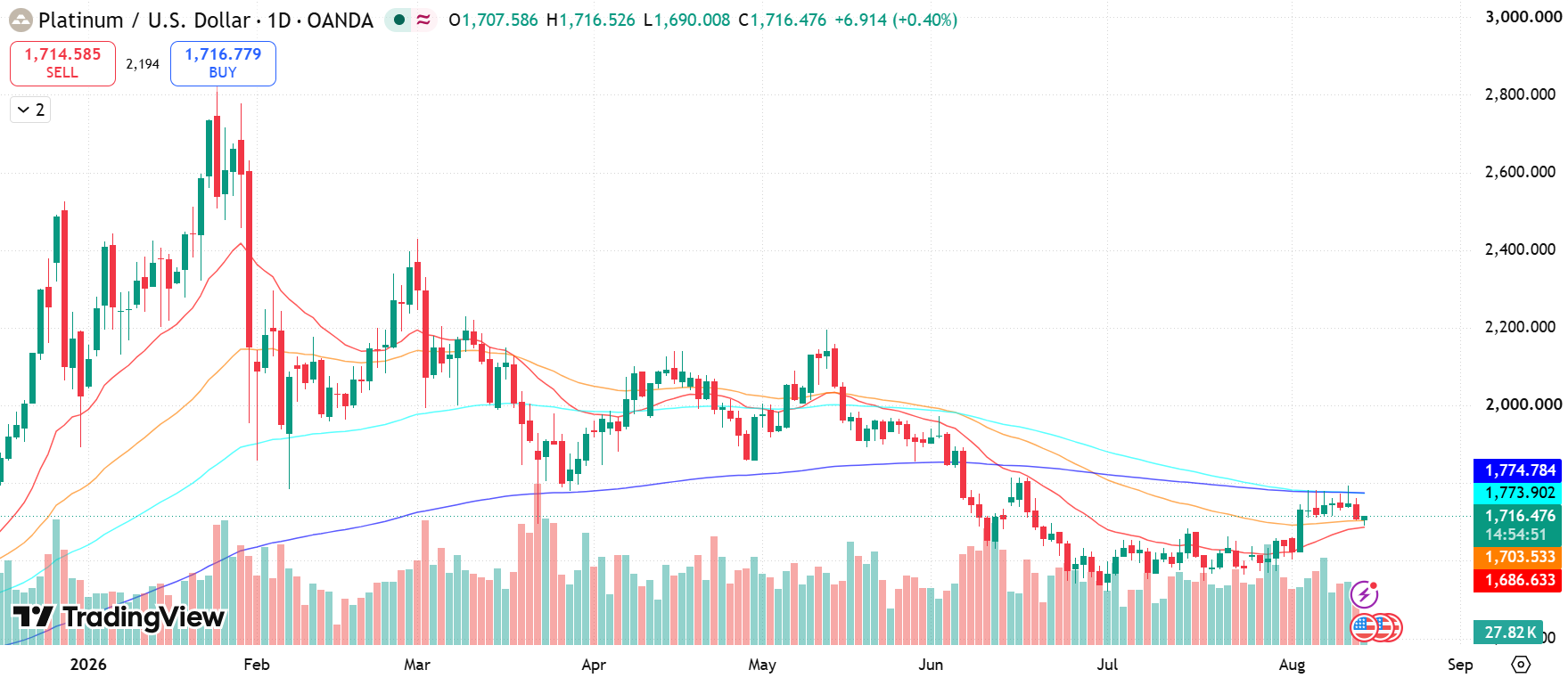
Platinum recently fell to around $1,718, with the August 13 decline reflecting profit-taking and weaker speculative positioning.
The most important immediate level is $1,700.
A recovery and daily close above $1,700 would improve the short-term structure and could put $1,760–1,765 back into focus.
Above that, the next major resistance sits around $1,875–1,900.
A move through $1,900 would represent a much stronger bullish signal and could reopen the path toward $2,050–2,100.
The downside is equally important.
The first support area is around $1,680–1,700. If this zone fails, platinum could retreat toward $1,620–1,650.
The deeper structural support remains around $1,580–1,600. Previous technical analysis identified $1,607–1,620 as an important support region, while a sustained break below approximately $1,530–1,550 would significantly damage the broader recovery structure.
The current technical picture is therefore neutral-to-bullish above $1,680 but vulnerable below it.
The key signal is whether buyers can reclaim $1,700. If they do, platinum could begin rebuilding upward momentum. If sellers keep price below that level, deeper consolidation becomes increasingly likely.
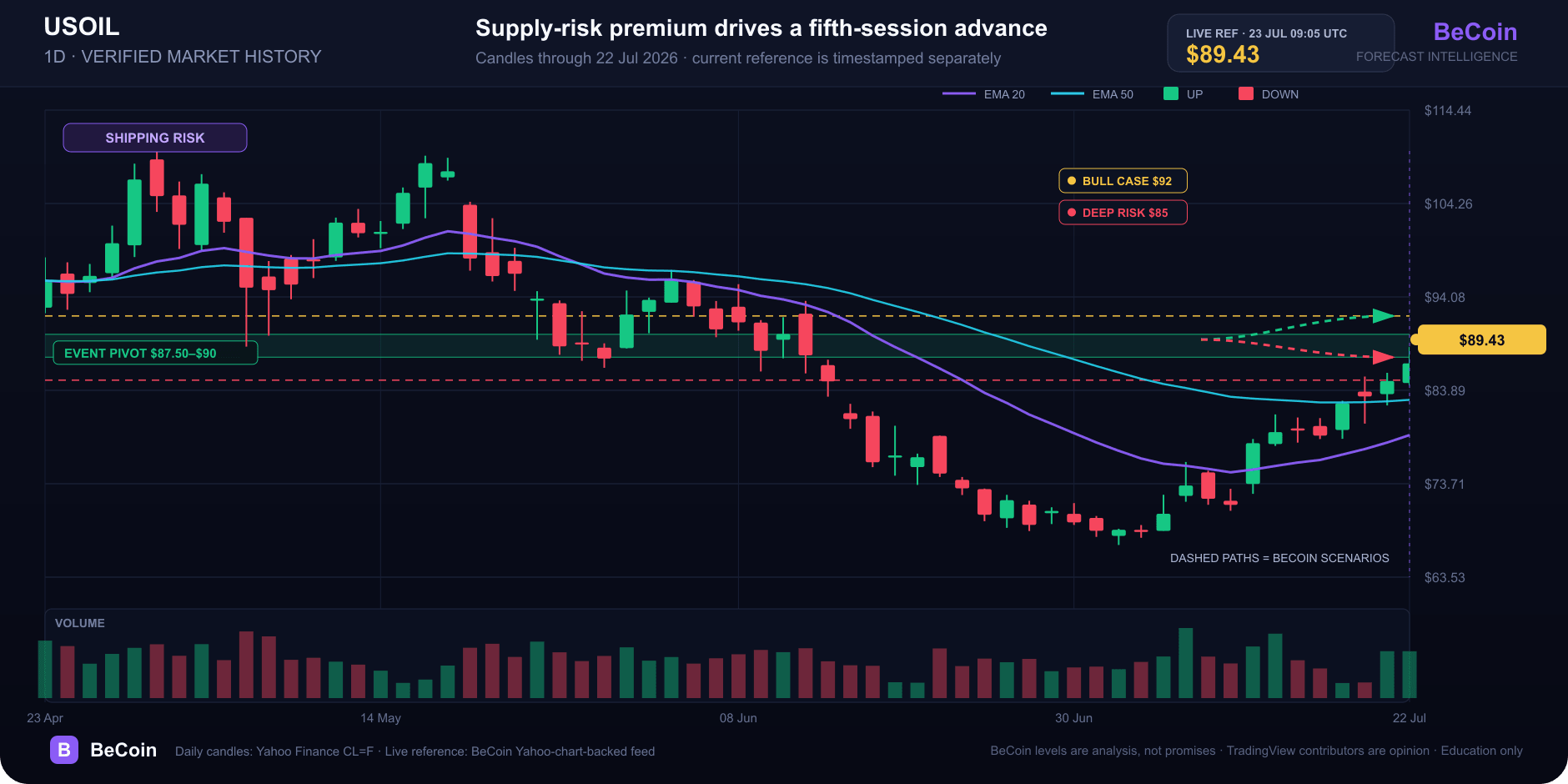
WTI reaches $89.43 as Brent clears $95 on renewed supply risk
WTI traded near $89.43 while Brent moved above $95 as Middle East shipping risk lifted crude for a fifth session. Key levels, catalysts and invalidation.

How Liquidity Affects Day Trading Results
When I first started trading day trading, I believed success was all about finding the perfect indicator. I spent weeks testing moving averages, RSI settings, support and resistance levels, and dozens of YouTube strategies that promised easy wins. Some worked for a few trades, but most failed. What confused me was that the same setup […]
IQ Option vs Deriv Chart Comparison
The Night I Realized My Charts Were Lying to Me It was three in the morning, the exact hour when the market looks either like a goldmine or a psychological hazard. I was sitting in front of two monitors, a lukewarm mug of coffee in hand, watching a critical support level on EUR/USD. On my […]

Binomo Demo vs Real Account: What Changes After You Deposit (KYC, Payout, Support, Limits)
I spent far too long thinking my Binomo demo results meant I was “ready.” On demo, everything felt clean. My entries looked sharp. My timing looked better than it probably was. I could reset virtual balance, test ideas, and convince myself I had control. Then I made my first real deposit, and that’s when I […]
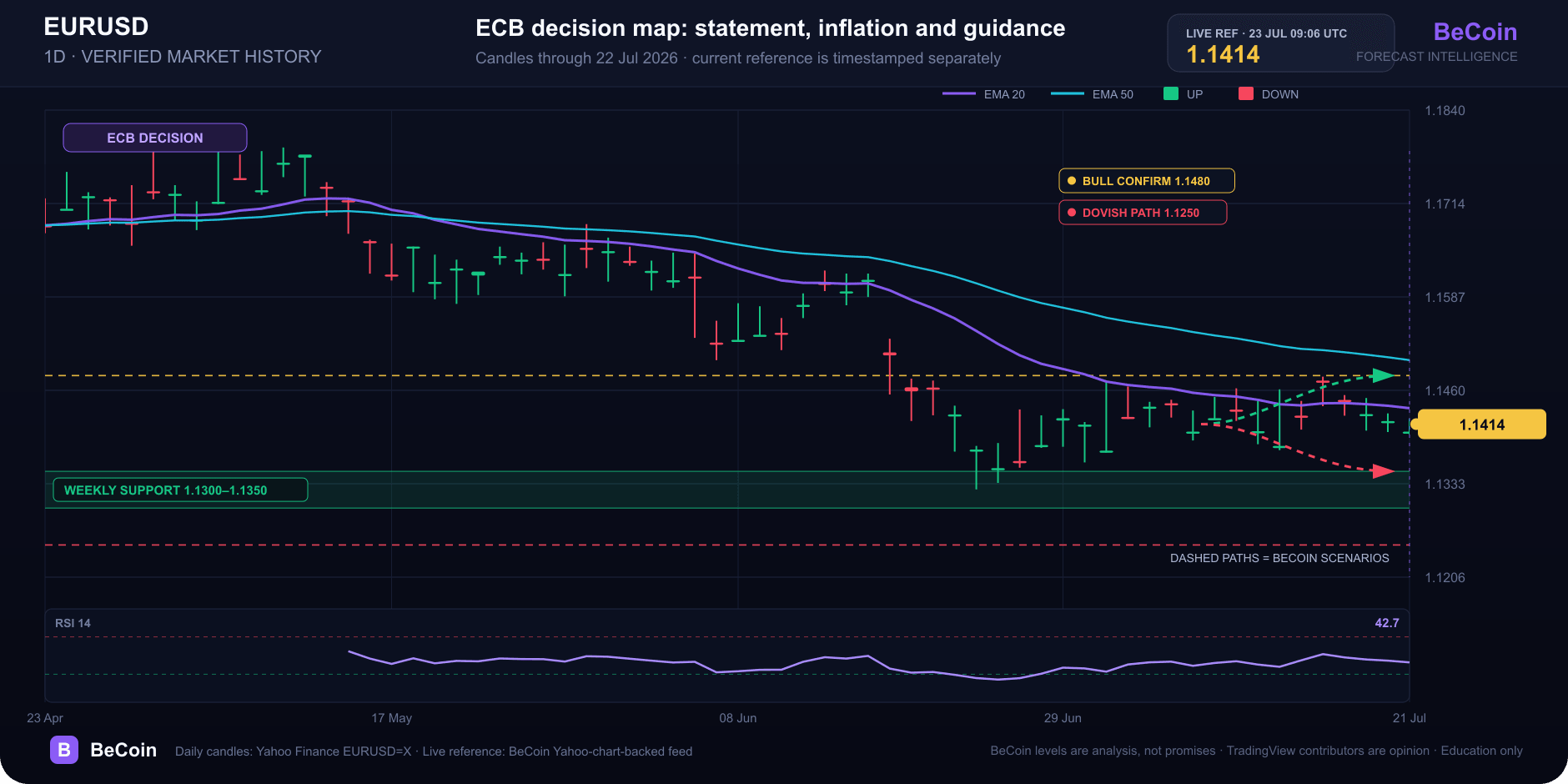
EUR/USD holds 1.1414 before the ECB decision: three scenarios
EUR/USD traded near 1.1414 before the ECB’s July decision. Here is what a hold, hawkish hold or surprise hike could mean for 1.1350 and 1.1480.
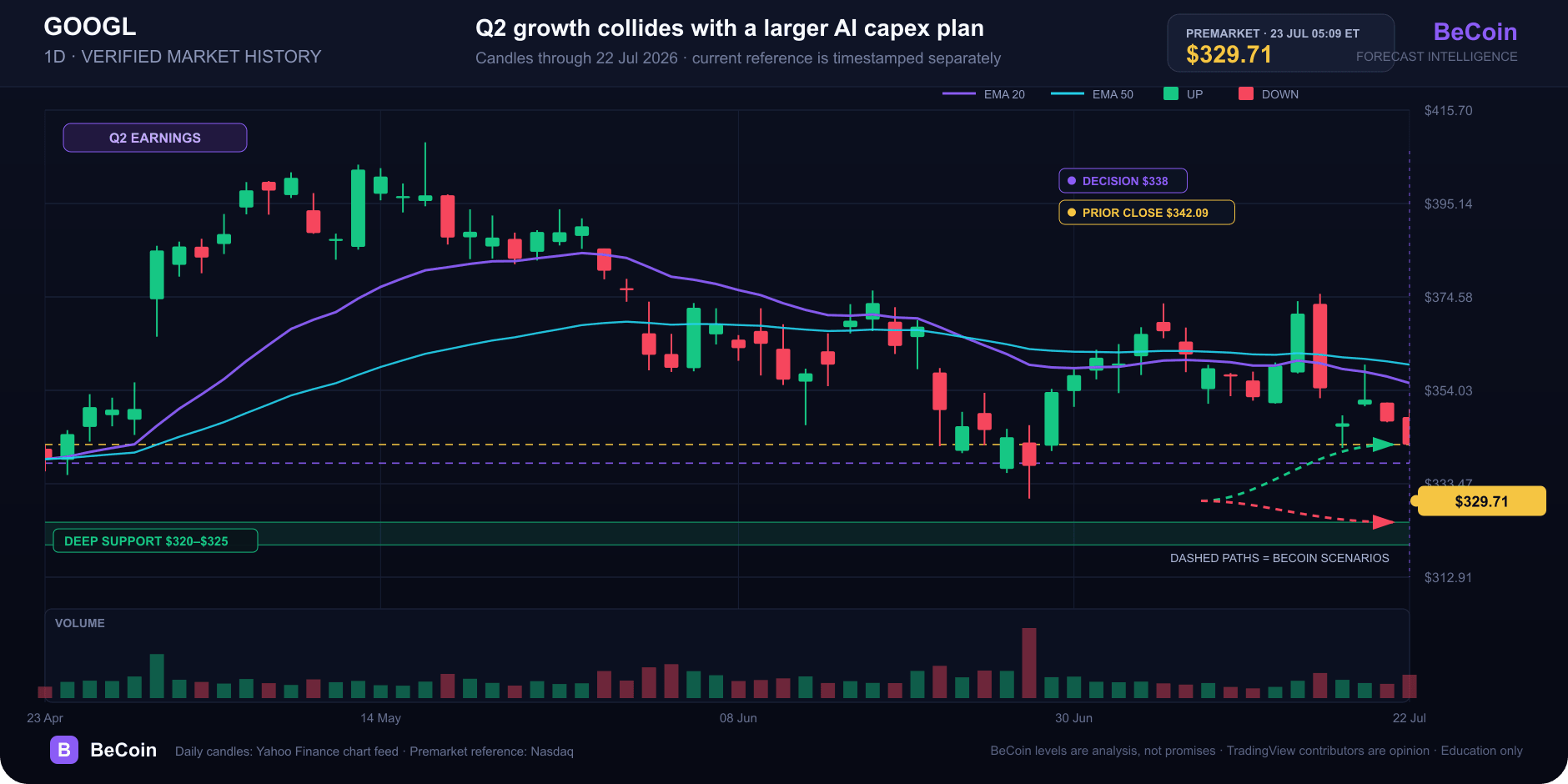
Alphabet falls to $329.71 premarket as AI spending eclipses cloud growth
Alphabet traded near $329.71 premarket after strong Q2 revenue and cloud growth collided with a much larger AI spending plan. What investors need to watch.