
How to Build a Personal Trading Playbook
I still remember the exact trade that broke me. It wasn't my largest financial loss, but it was the one that stripped away any illusion that I knew what I was doing.
It was a Tuesday afternoon. The market was grinding inside a tight consolidation range on the 15-minute chart. I had been watching the screens for three hours, getting increasingly restless. I wanted a trade. More accurately, I needed a trade to justify the time I had spent staring at candles.
When a sudden green candle spiked above the resistance level, I jumped in with market orders. No waiting for a candle close, no calculating position size, no clear stop-loss target. Within four minutes, the spike reversed—a classic liquidity sweep—and sent the price cascading downward. I panic-sold at the exact bottom, right before the price bounced back into the middle of the range.
Sitting back in my chair, staring at the red balance entry, I realized something critical: I was playing a game without any rules. I was relying entirely on gut feeling, reactive impulses, and arbitrary indicators.
That was the moment I stopped looking for the "magic strategy" and began building my Personal Trading Playbook.
What Is a Personal Trading Playbook?
Many traders confuse a trading system with a trading playbook. A system is a set of rigid mechanics: "Buy when Indicator A crosses Indicator B." A playbook, however, is your personal repository of high-probability market setups, structured around your risk tolerance, psychological traits, and schedule.
Think of it as a master key for specific market environments. An NFL team doesn't execute the exact same play on every single down. They read the defense, assess the yardage, check the weather, and call a specific play designed for that precise situation.
Building a trading playbook transforms your approach from reacting to price to executing documented setups. When you operate from a playbook:
- You stop chasing low-conviction setups out of boredom.
- You know your exact risk parameters before opening any position.
- You eliminate emotional decision-making in the middle of a trade.
- You create a clear, measurable history of what actually works for your trading style.
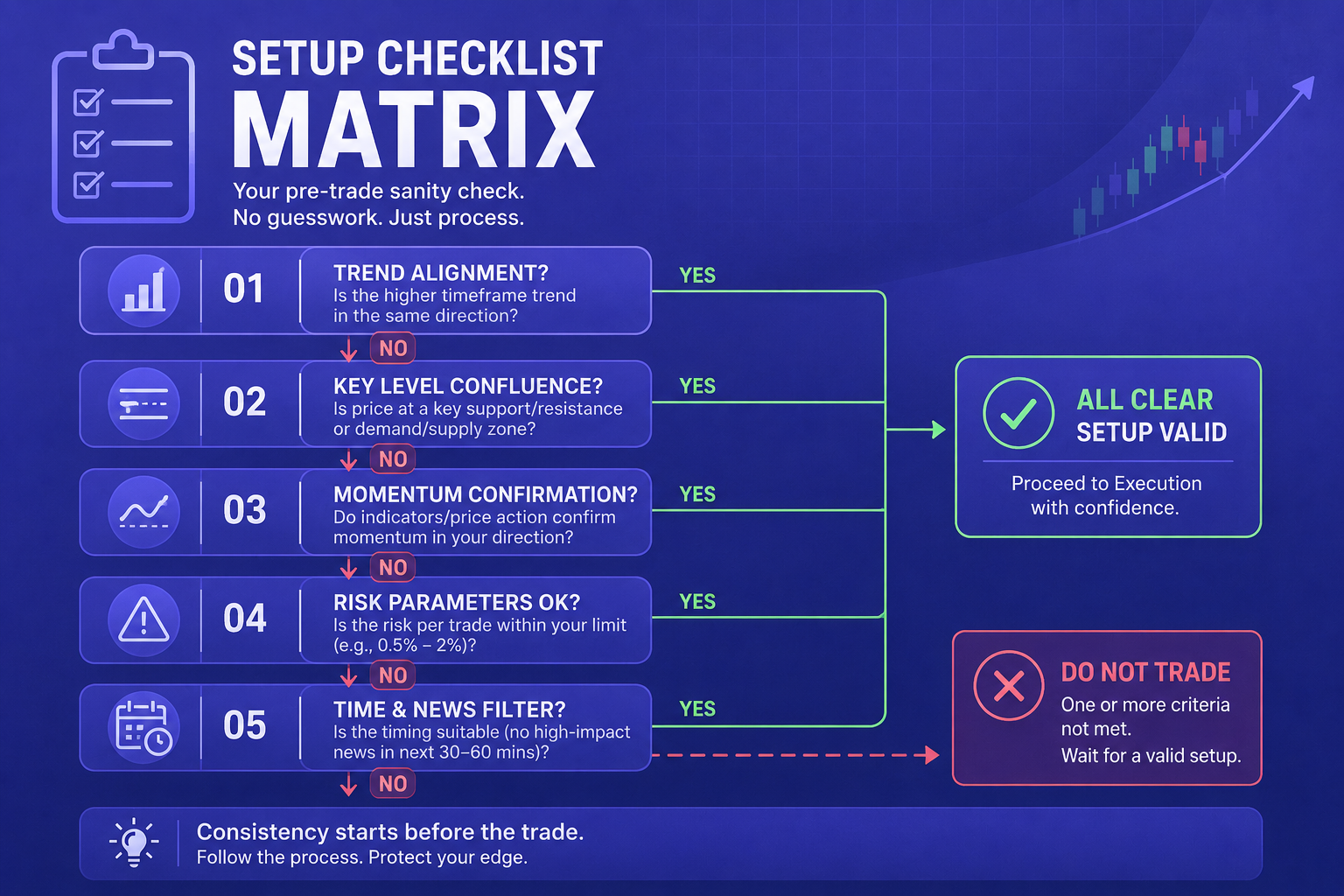
Step 1: Defining Your Core Setups
The first section of your playbook must focus on identifying setups that provide a statistical edge. You don't need fifty different setups to be profitable; two or three thoroughly mastered patterns are more than enough.
When I started documenting my setups, I categorized them by market condition:
- Trend Continuation PlayThis setup focuses on joining an established movement after a healthy retracement.
- Context: Clear higher highs and higher lows on the 1-hour or 4-hour timeframe.
- Trigger: Price pulls back to a key support level or dynamic moving average, showing rejection candles on lower timeframes.
- Execution: Entry on the break of the local counter-trend structure.
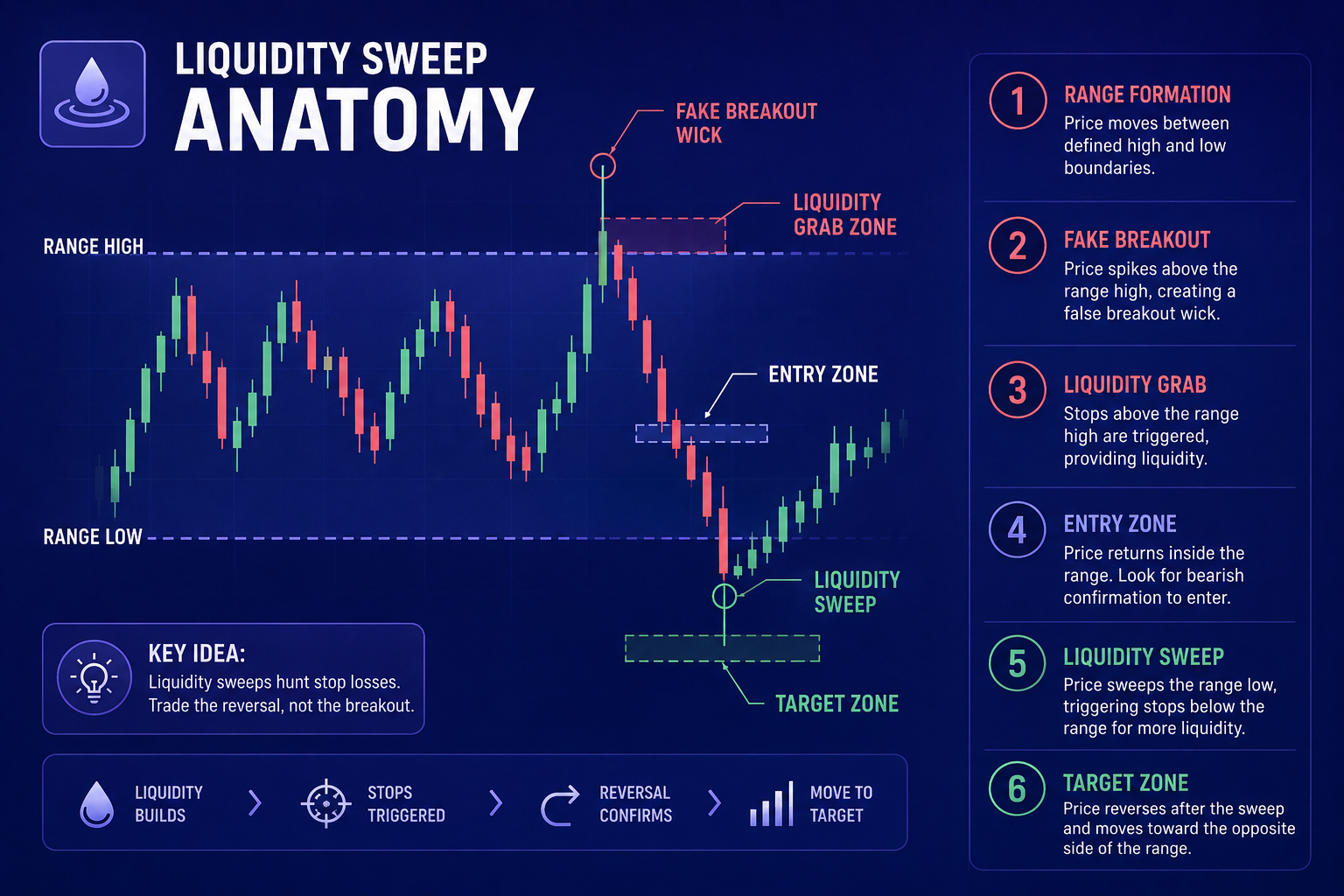
- Range Liquidity SweepDesigned for sideways markets where price frequently grabs liquidity above or below structural boundaries.
- Context: Defined support and resistance levels tested at least twice.
- Trigger: Price pushes aggressively outside the range boundary, clears stops, and immediately closes back inside the range.
- Execution: Entry on the candle close back within the range boundary, targeting the opposite side of the channel.
To practice identifying these setups across different market conditions, it helps to test your execution on reliable platforms. If you prefer low latency and flexible charting tools, you can experiment on IQ Option or practice your entry timing using Binomo.
Step 2: Establishing Execution Rules
Having a setup is only half the battle. The second half is defining how you interact with that setup in real time. Your execution protocol acts as a gatekeeper, keeping you out of subpar trades.
For every single setup in your playbook, write out strict parameters for the following variables:
TimeframesWhich timeframe determines the trend context, and which timeframe handles your trade execution? For instance, you might use the 4-hour chart for bias and the 15-minute chart for entry triggers.
Risk LimitsNever leave position sizing to guesswork. Define your maximum account risk per trade (typically 1% to 2%). Calculate your position size strictly based on your stop-loss distance rather than choosing arbitrary lot sizes.
Invalidation PointsWhere is your thesis proven wrong? A proper stop-loss isn't just an arbitrary dollar amount; it belongs at a technical level where the setup is logically invalidated.
Profit TargetsDetermine whether you will scale out at key liquidity zones or hold for a fixed risk-to-reward ratio (such as 1:2 or 1:3).
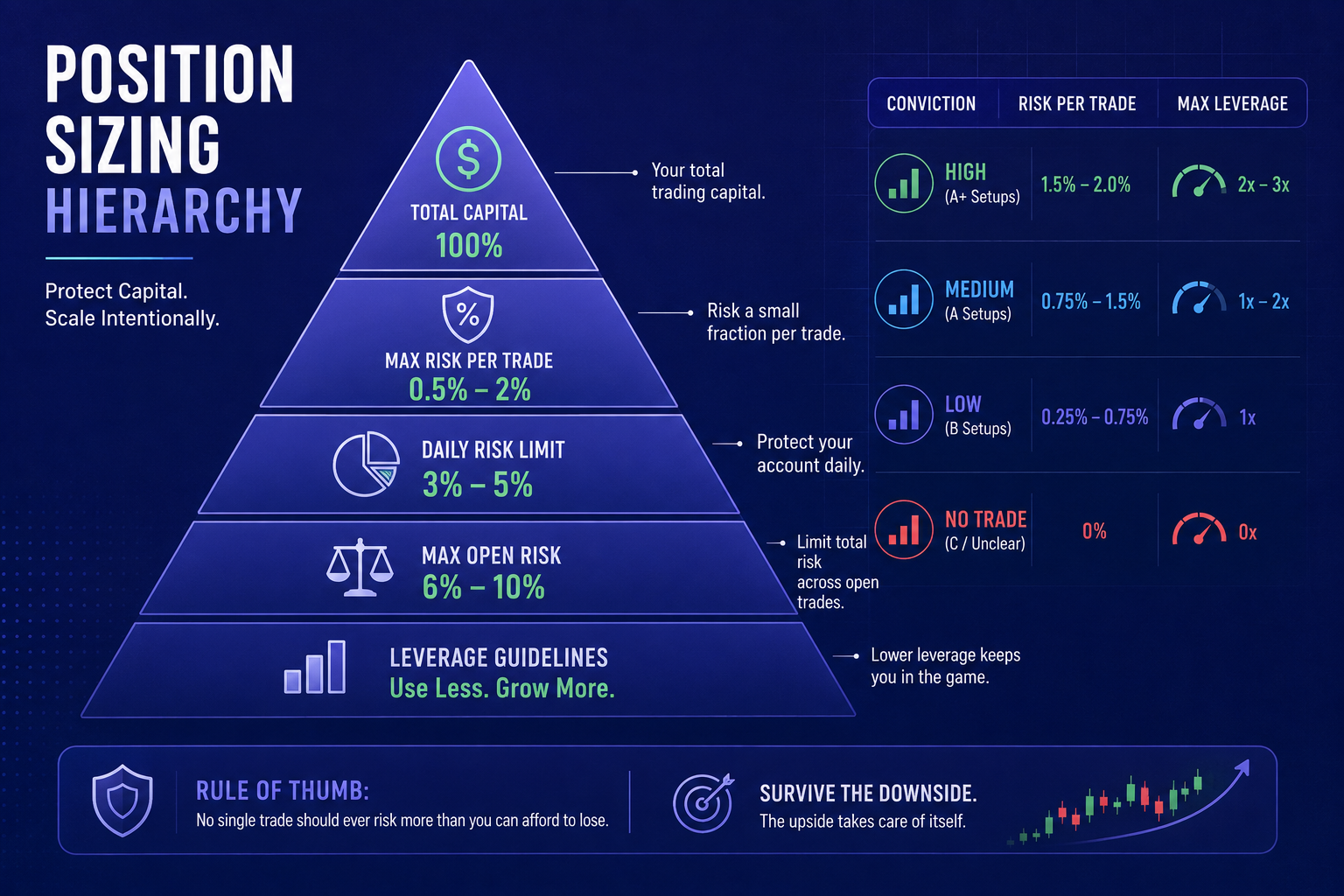
Step 3: Integrating Infographics to Visualise Strategy
Visual guides speed up your decision-making during fast-moving market conditions. Instead of reading text while a setup forms, a quick visual reference allows you to verify your criteria instantly.
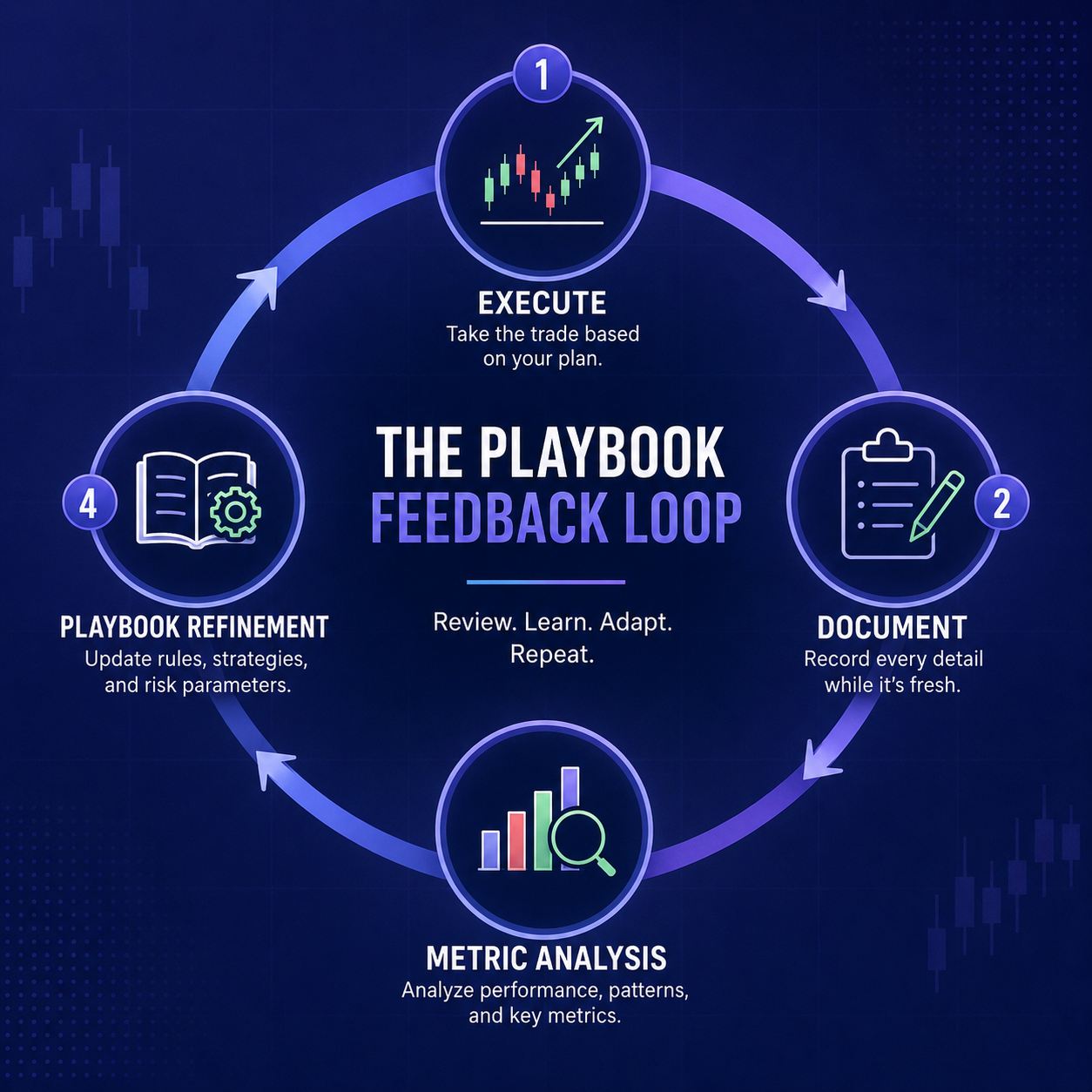
Step 4: Journaling and Continuous Refinement
A playbook is not a static document. It is a living system that adapts as you collect real performance data.
Every trade you take based on your playbook should be documented with screenshots of the setup before entry, during the trade, and after exit. Over a sample size of 30 to 50 trades, patterns will emerge in your data.
You might discover that your Trend Continuation setup has a 65% win rate during the New York trading session, but performs poorly during the Asian session. Or you may find that your risk-to-reward ratio on Range Liquidity Sweeps is far higher when you wait for a specific candlestick confirmation pattern.
With these data-driven insights, you can refine your playbook rules, stripping away parameters that perform poorly and doubling down on what generates consistent returns. For deeper perspectives on refining trade logs and analyzing market structure, review the tutorials available on the Becoin Blog.
Eliminating the Psychological Drag
The greatest advantage of a personal trading playbook isn't necessarily technical—it's psychological. Most trading anxiety stems from uncertainty:
- "Should I take this trade?"
- "Should I move my stop loss?"
- "Is this market going to reverse on me?"
When you have a fully documented playbook, execution becomes systematic. You simply check your rules: if the setup meets all criteria, you take the trade. If it misses even one criterion, you sit on your hands without feeling regret or fear of missing out.
You stop measuring success by the outcome of a single trade and start measuring it by how closely you followed your playbook rules.
Elevate Your Trading Edge
Building a playbook takes time, discipline, and systematic effort, but it is the definitive boundary between trading as a high-risk gamble and trading as a structured business.
If you are ready to stop guessing and start executing with precision, get access to professional market insights, institutional-grade analytics, and structured trading setups. Join the community and gain an actionable edge in the market today with the Becoin Premium Plan, or stay ahead of emerging price trends using the real-time projections on the Becoin Forecast Hub.
Can You Start Trading with $10 on Deriv?
A lot of beginners enter trading with the same question: “Is $10 actually enough to start trading on Deriv?” The short answer is yes. But the real answer is more complicated. You can start with $10 on Deriv, but whether you can survive, learn, and grow that account depends entirely on your expectations, discipline, and […]
Deriv vs IQ Option for Synthetic Indices: Which Platform Is Better in 2026?
Synthetic indices have become one of the most talked about trading categories among beginners and experienced traders alike. Unlike forex or crypto markets that depend on real world events, synthetic indices operate 24/7 using algorithm driven price movements. That means traders can access opportunities at any time without waiting for market openings or major news […]
How I Learned to Sit on My Hands During Choppy Markets
I remember the morning vividly. It was a Tuesday. The coffee on my desk was still piping hot, the charts on my screen were blinking, and I was feeling incredibly confident. I had just finished reading about how market open hours create the best trading opportunities, and I was ready to hunt for a clean […]
The Rookie Dashboard: My Raw Hunt for the Best Beginner Broker in 2026
We have all been there. It is late at night, your morning coffee is hours away, and you are staring at a screen pulsing with bright green and red lines. You have twenty dollars burning a hole in your digital wallet and a sudden, burning desire to conquer the financial markets. That was me exactly […]

Which Broker Is Better for Weekend Trading?
It was a chilly Saturday morning, and while the rest of the world was sleeping in or catching up on shows, I was staring at a completely frozen screen. My usual EUR/USD chart looked like a heart monitor flatlining. The traditional markets were closed. The banks were shut down. For a long time, that was […]