
Can You Start Trading with $10 on Deriv?
A lot of beginners enter trading with the same question:
“Is $10 actually enough to start trading on Deriv?”
The short answer is yes.
But the real answer is more complicated.
You can start with $10 on Deriv, but whether you can survive, learn, and grow that account depends entirely on your expectations, discipline, and strategy.
Most beginners lose their first small deposit because they treat trading like gambling. They overtrade, chase losses, and use unrealistic position sizes. The platform itself is not usually the problem. The lack of structure is.
In this guide, I’ll break down:
- Whether $10 is truly enough
- What trading styles work with tiny balances
- Which platforms are better for low deposits
- The mistakes that destroy small accounts
- Realistic income expectations
- How to build consistency slowly instead of blowing accounts repeatedly
If you are completely new to trading, you should first read this beginner-focused guide on the realistic amount of money needed to start trading because most social media influencers give completely unrealistic expectations.
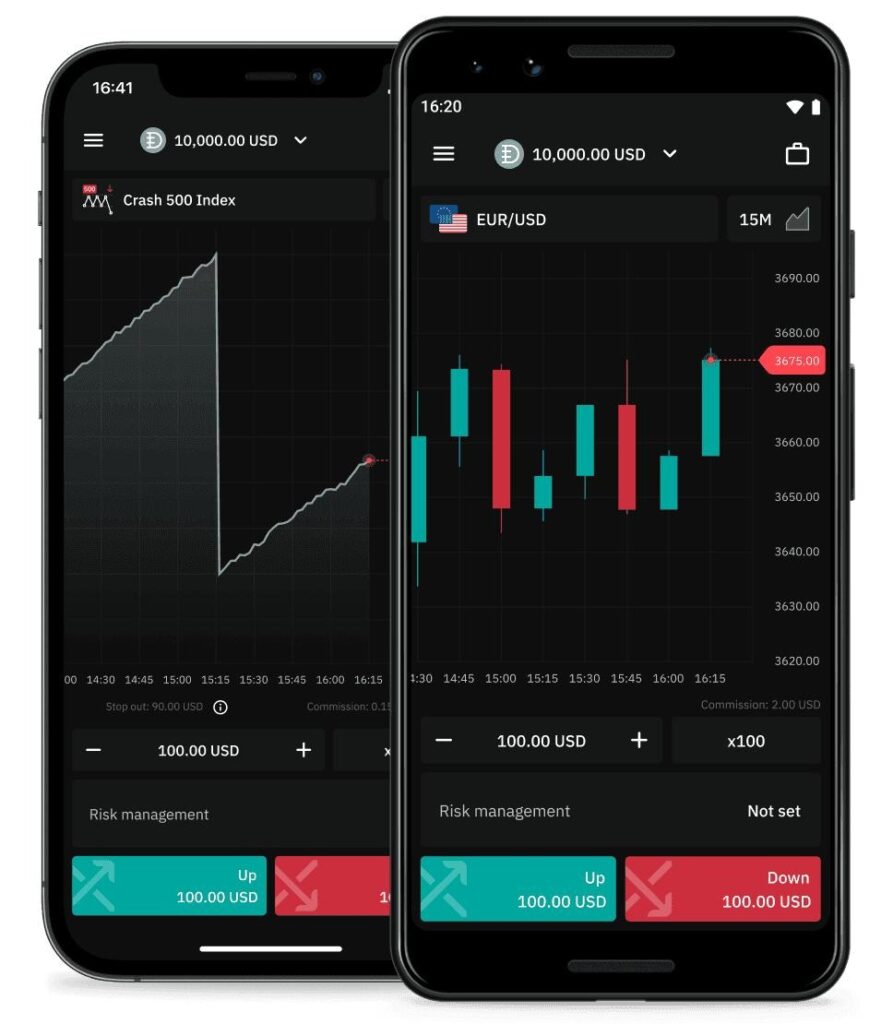

Is $10 Enough to Start Trading on Deriv?
Technically, yes.
Practically, it depends on how you trade.
Deriv allows very small position sizes, especially on synthetic indices and certain CFD products. That flexibility is one reason many beginners use it.
The main advantage of starting with $10 is not profit potential.
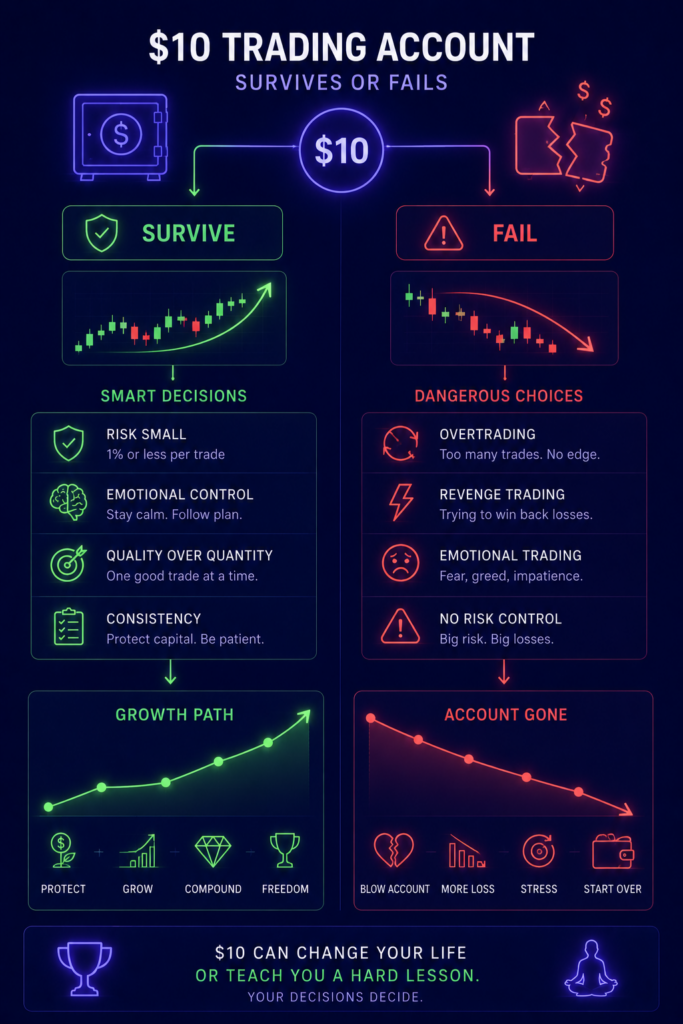
It is survival.
A small deposit lets beginners:
- Learn platform mechanics
- Understand emotional control
- Practice risk management
- Experience real market pressure
- Avoid losing large amounts early
This is why many experienced traders recommend starting tiny rather than depositing hundreds immediately.
But there’s a major problem.
Most people expect a $10 account to become $1,000 quickly.
That mindset destroys accounts faster than bad strategies.
What Happens to Most $10 Accounts?
Most small accounts die because of one thing:
Overleveraging.
A beginner sees a small balance and thinks:
“I need to grow this fast.”
So they increase trade size aggressively.
One bad trade suddenly wipes out 20% to 50% of the account.
Then emotions take over.
Revenge trading starts.
Risk management disappears.
Within hours or days, the account is gone.
This is exactly why most traders lose money is important before risking real funds.
The problem is not always the broker.
The problem is unrealistic expectations.
The Realistic Goal of a $10 Trading Account
A $10 account should not be treated as an income machine.
It should be treated as a training account with real emotions involved.
That distinction matters.
The real objective should be:
- Learning execution
- Protecting capital
- Building discipline
- Practicing consistency
- Developing patience
If you can manage a $10 account properly, you have a much higher chance of managing a larger account later.
If you cannot protect $10, you probably will not protect $1,000 either.
Which Trading Style Works Best for Small Accounts?
Not all trading styles work with tiny balances.
Scalping aggressively usually destroys small accounts because transaction frequency increases emotional mistakes.
High-risk martingale systems are even worse.
For small deposits, slower and more controlled trading usually works better.
Some traders focus on:
- One trade per day
- Strict risk percentage
- Low volatility setups
- Synthetic indices with controlled exposure
- Demo-to-real transition practice
If you like slow and disciplined trading, this guide on the best brokers for one trade a day strategies is worth reading.
Can You Make Real Profits with $10?
Yes.
But not life-changing profits.
That is where many YouTube videos become misleading.
A skilled trader might grow a $10 account steadily over time, but the process is usually slow unless extreme risk is involved.
For example:
- 5% growth on a $10 account is only $0.50
- 10% growth is $1
- Even doubling the account only reaches $20
This is why professional traders focus more on consistency than account flipping.
Small accounts are mainly useful for:
- Learning
- Testing discipline
- Building confidence
- Developing routines
This article on building a consistent trading routine explains how disciplined traders approach the market differently from emotional beginners.
Best Risk Management for a $10 Account
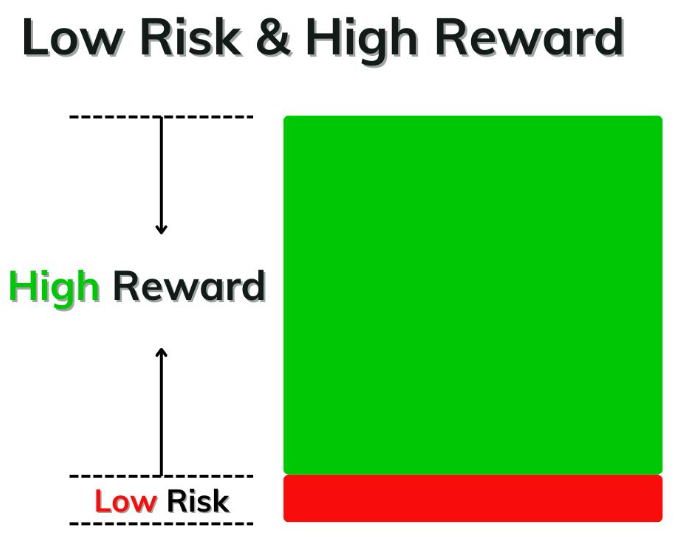
Risk management becomes even more important when capital is limited.
A common beginner mistake is risking half the account on one trade.
That creates emotional pressure immediately.
Instead, many disciplined traders risk only a tiny percentage per setup.
The idea is simple:
Protect survival first.
Growth comes later.
The following concept is the foundation of sustainable trading:
- $10 account
- 2% risk
- Maximum loss per trade = $0.20
That may sound boring, but boring is often profitable in trading.
For deeper understanding, read this guide on risk management for small trading accounts.
Is Deriv Better Than IQ Option or Binomo for Small Deposits?
This depends on what type of trader you are.
Some beginners prefer the flexibility of Deriv because of synthetic indices and customizable trading conditions.
Others prefer simpler interfaces like IQ Option or Binomo because the learning curve feels easier.
If you want a direct comparison, these detailed breakdowns help:
- Deriv vs IQ Option for beginners
- Deriv vs Binomo for safer low-risk trading
- Binomo vs IQ Option for small accounts
- Which platform is easier for beginners
Interface quality also matters more than people think because clean design reduces beginner confusion.
This comparison of the cleanest broker interfaces for beginners explains this in detail.
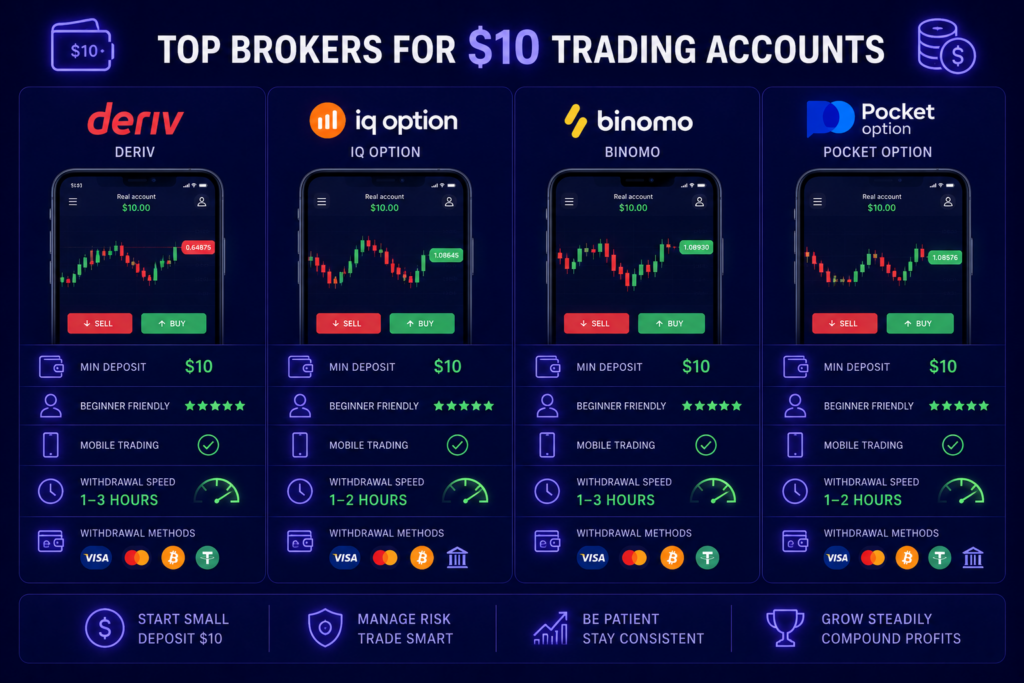
Which Brokers Allow Small Deposits?
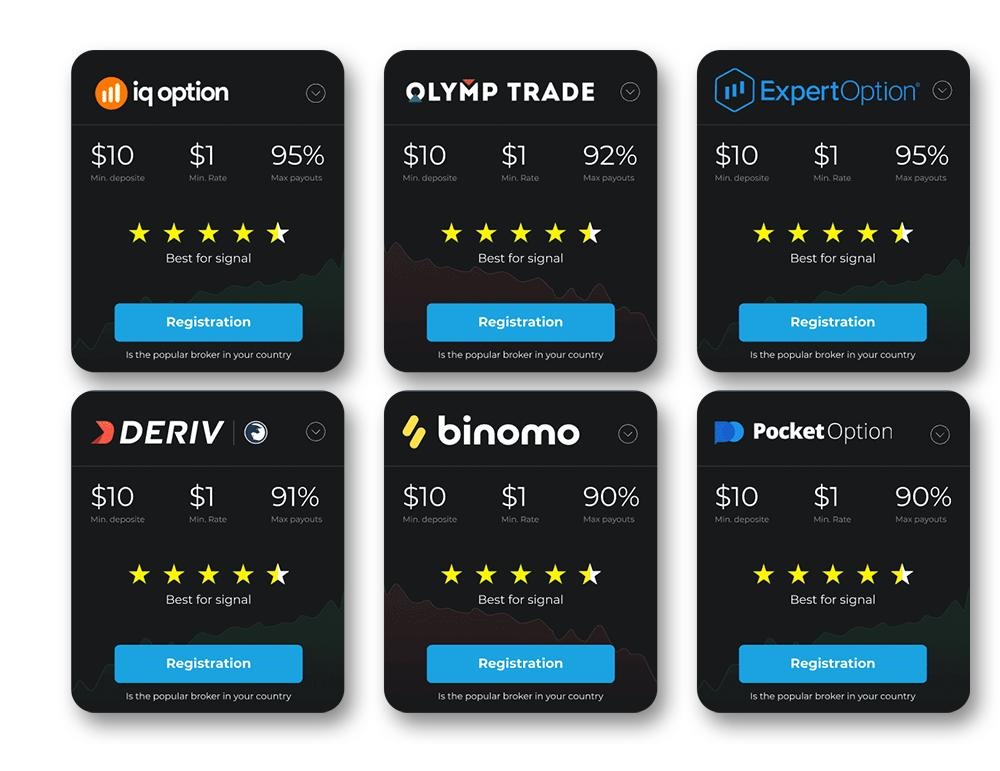
Many modern brokers now support low-entry trading.
Some of the most popular among beginners include:
Deriv
Known for synthetic indices, flexible trade sizing, and strong customization.
IQ Option
Popular among beginners because of its clean interface and simplified experience.
Pocket Option
Frequently used by traders who prefer quick execution and low minimum deposits.
Binomo
Beginner-oriented platform with simple navigation and mobile accessibility.
ExpertOption
Often chosen by traders looking for lightweight mobile trading.
Olymp Trade
Popular among beginners because of educational tools and a simplified interface.
CapitalCore
An emerging platform attracting traders interested in smaller account entry.
You can also explore this full breakdown of the best brokers for $10 deposits.
The Biggest Mistakes Beginners Make with Small Accounts
Small balances create psychological pressure.
Beginners often feel they must “force” profits quickly.
That creates dangerous habits:
- Overtrading
- Revenge trading
- Ignoring stop losses
- Entering random trades
- Switching strategies constantly
- Increasing risk after losses
This detailed guide on the biggest beginner mistakes explains why these habits destroy accounts so quickly.
One of the smartest things a beginner can do is focus on survival first instead of fast profits.
Are Withdrawals Reliable on Small Accounts?
Withdrawal reliability matters more than beginners realize.
A broker may look attractive until you actually try withdrawing profits.
That is why many traders research payout speed heavily before depositing.
You should read:
- Fastest withdrawal brokers tested
- Real withdrawal speed comparison
- Safest brokers for small deposits
If you trade from Pakistan, this regional guide on the best brokers for Pakistani traders is also useful.
Should Students Start with $10?
Honestly, small deposits make the most sense for students and beginners.
Students usually have:
- Limited disposable income
- Less emotional experience with risk
- More curiosity than consistency initially
Starting tiny reduces financial damage while learning.
This article on the best brokers for students explores this topic in more depth.
Is No-KYC Trading Safe for Small Accounts?
Some beginners search for brokers without KYC because they want faster withdrawals or easier onboarding.
But this area carries risks.
While some platforms allow limited activity before verification, avoiding identity verification completely can create withdrawal problems later.
Before choosing that route, read this breakdown on brokers without KYC and the real risks involved.
Final Verdict: Can You Really Start Trading with $10 on Deriv?
Yes.
You absolutely can.
But success depends less on the platform and more on your mindset.
A $10 account should be treated as:
- A learning phase
- A discipline-building phase
- A psychology training phase
- A risk-management practice account
Most beginners fail because they expect instant income.
The traders who survive long term usually think differently.
They focus on:
- Consistency
- Patience
- Controlled risk
- Emotional stability
- Long-term growth
That is the real edge in trading.
And that is exactly why many traders eventually join communities focused on deeper analysis and structured learning instead of random signal chasing.
If you want serious market breakdowns, disciplined trading insights, and deeper strategy analysis beyond basic beginner content, you can explore the BECoin Premium Membership.

How Much Money Do You Really Need to Start Trading? A Realistic Beginner’s Guide for 2026
One of the most common questions beginners ask is: How much money do I need to start trading? It sounds like a simple question, but the answer depends on what you actually mean by start trading. Are you trying to learn? Are you hoping to grow savings over time? Are you trying to create a […]

I Started with $10 on Quotex – Day 1 Results (Real Case Study)
Most beginner traders ask the same question:Can you actually grow a small account like $10? Instead of theory, I decided to test it in real conditions. This is a Day 1 case study of trading with $10 on Quotex, documenting everything from setup to execution, mistakes, emotions, and actual results. No hype, no fake screenshots, […]
Biggest Beginner Mistakes That Kill Trading Accounts
Trading looks simple from the outside. Open an account, place a few trades, and grow your balance. But reality is different. Most beginners do not lose because markets are impossible. They lose because they repeat the same avoidable mistakes. A small account can survive bad market conditions. What usually kills it is poor decision-making, emotional […]

Which Broker Has the Cleanest Interface? Real Comparison for Beginners in 2026
Looking for the cleanest trading interface in 2026? Compare Binomo, IQ Option, Quotex, Deriv, and more based on speed, layout, usability, mobile experience, and beginner friendliness. When most beginners choose a broker, they focus on bonuses, payouts, or deposit methods. But after testing multiple platforms for months, I realized something surprising: A messy interface can […]

Which Broker Has Faster Withdrawals? Real 2026 Comparison for Traders
When most beginners choose a broker, they focus on bonuses, signals, or flashy interfaces. But after trading for a while, you realize one thing matters more than almost anything else: How fast can you actually withdraw your money? A broker can look perfect until your first withdrawal request gets stuck in “processing” for three days. […]

Deriv vs Binomo for Low-Risk Trading in 2026: Which Platform Is Better for Safer Growth?
Most beginners enter trading with one simple goal: avoid blowing up their account in the first week. That is exactly why low-risk trading matters more than fast profits. Two platforms that constantly appear in beginner discussions are Deriv and Binomo. Both allow small deposits, short-term trading, and beginner-friendly access. But when your focus is protecting […]