
EUR/USD Forecast: Euro Holds 1.1664 Below the 1.1700 Ceiling
- EUR/USD trades at 1.1664, down 0.12% on the day, holding the ground it took last week but unable to clear 1.1700.
- A 9-3 split on the Federal Reserve, with three officials arguing for a rate rise rather than a cut, has left the dollar without a settled direction.
- The 1.1623 moving average is the level that decides whether the breakout consolidates or unwinds.
Fundamental Analysis: EUR/USD
The Federal Reserve left the funds rate at 3.50%-3.75% on 29 July, a fifth consecutive hold, but the vote broke 9-3 with three members preferring a quarter-point increase. That is the widest division on the committee in decades, and it matters more than the decision itself: the dollar is no longer trading against a predictable easing path but against genuine disagreement. US inflation slowed for a second month to 3.4% in July, with core at 2.5%, which gives the majority room to wait without giving the hawks a reason to stand down.
The euro is not the passive side of this pair. The European Central Bank raised its rate by a quarter point in June to 2.40% and held in July, and euro area inflation ran at 2.9% in July with core at 2.5%. Energy is the complication on both sides of the Atlantic, running at 10.3% annually in the bloc and keeping services inflation sticky at 3.3%. A central bank that has already tightened once this year and is watching energy feed through is not one the market can comfortably fade.
That leaves two hawkish-leaning central banks and very little to separate them. Futures price only around eight basis points of tightening for September, roughly a one-in-three chance of a move, so the rate differential is doing less work than usual. The Jackson Hole symposium runs from 27 August, and the new Fed chair's first address there on 28 August is the event traders are positioning around. Until it lands, this pair has more reason to range than to trend.
Technical Analysis: EUR/USD
The 4-hour chart shows a grind higher that began near 1.1380 at the start of August and spent most of the month working through a shallow 1.1500 to 1.1560 shelf. The impulsive leg arrived on 19 and 20 August, when price cleared that shelf and ran to 1.1700 in two sessions. Since then it has done nothing but consolidate, with the fast average at 1.1663 flattening beneath price and the slower averages stacked below at 1.1623, 1.1576 and 1.1535 in a clean bullish sequence.
Resistance is the 1.1700 high, and the sequence of upper wicks there suggests supply rather than a pause. Support sits first at 1.1623, where the second average now sits, then at 1.1576. A close beneath 1.1535 would break the stacked structure and invalidate the read that this is consolidation within an uptrend rather than a completed move.
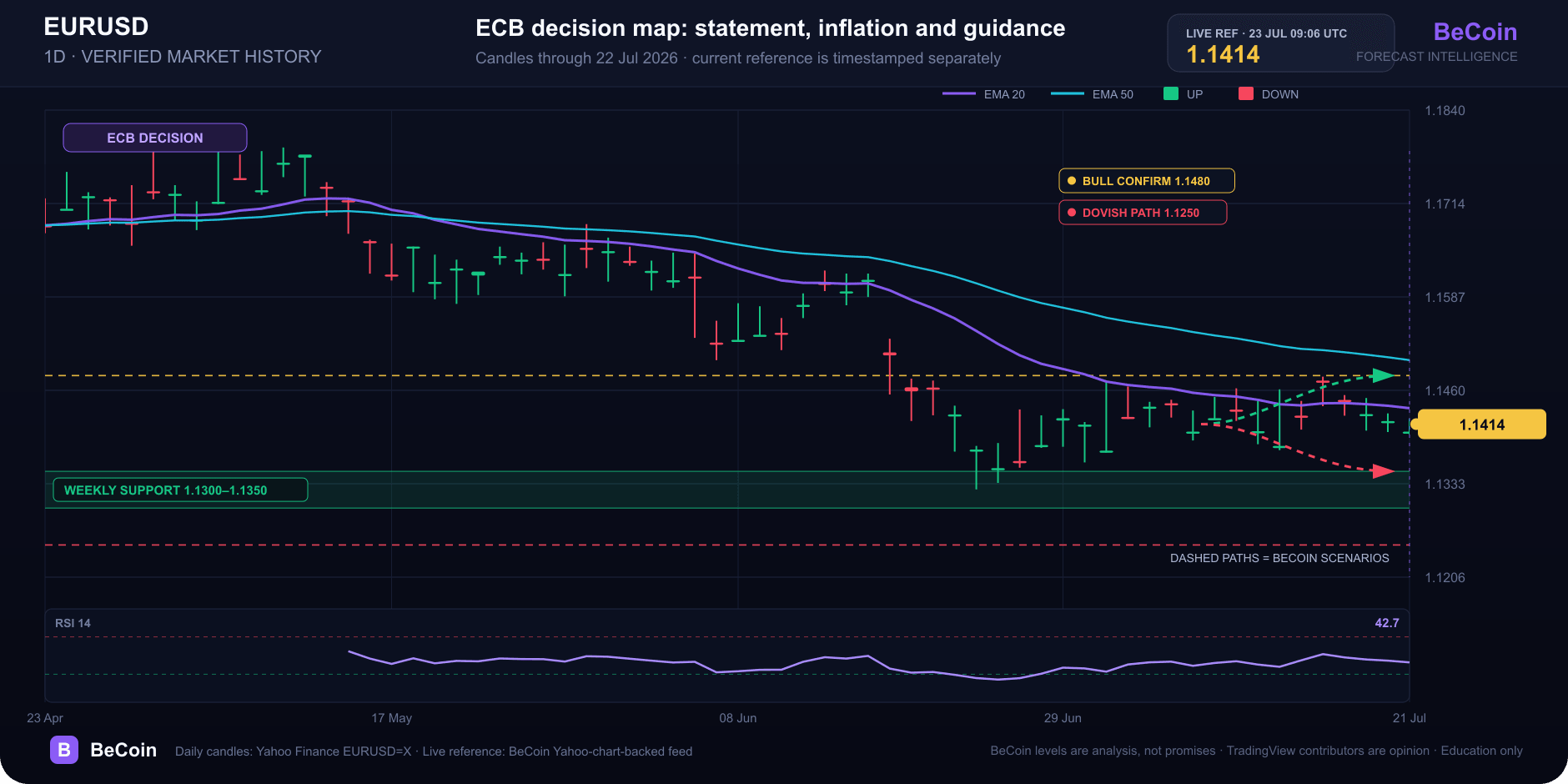
EUR/USD holds 1.1414 before the ECB decision: three scenarios
EUR/USD traded near 1.1414 before the ECB’s July decision. Here is what a hold, hawkish hold or surprise hike could mean for 1.1350 and 1.1480.

Trading Currency Strength Instead of Single Pairs
It was a Tuesday afternoon when I realized I was fighting a losing battle against a ghost. My screen was a chaotic web of indicators. I had the EUR/USD chart open, a moving average crossing over here, a relative strength index flashing oversold there, and a price action setup that looked textbook perfect. I clicked […]

Finding the Best Trading Broker for Side Income: My Raw, First-Hand Journey to Consistent Daily Wins
Six months ago, I sat at my kitchen table staring at an accumulation of household bills, realizing my primary salary was no longer cutting it. I didn’t want a second job that required clocking into a physical location or taking endless boss mandates after hours. I needed a flexible, scalable side income. That night, I […]

Finding My Perfect Workspace: The Search for the Best Broker for My Daily Trading Routine
The alarm goes off at 6:00 AM. By 6:30 AM, I am sitting in front of my monitors with a steaming mug of black coffee. The house is completely quiet, the market is preparing its next major move, and my charts are completely bare. This is my daily sanctuary. For a long time, this morning […]

Which Broker Is Better for Weekend Trading?
It was a chilly Saturday morning, and while the rest of the world was sleeping in or catching up on shows, I was staring at a completely frozen screen. My usual EUR/USD chart looked like a heart monitor flatlining. The traditional markets were closed. The banks were shut down. For a long time, that was […]
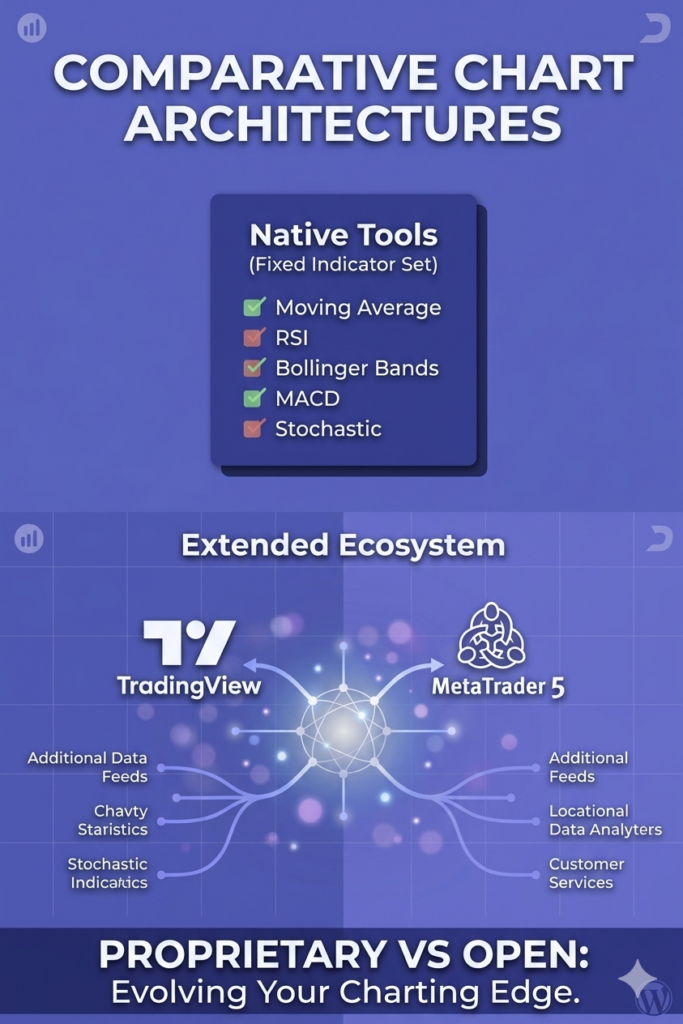
IQ Option vs Deriv Chart Comparison
The Night I Realized My Charts Were Lying to Me It was three in the morning, the exact hour when the market looks either like a goldmine or a psychological hazard. I was sitting in front of two monitors, a lukewarm mug of coffee in hand, watching a critical support level on EUR/USD. On my […]