
Crude Oil Slides as Iran Diplomacy Eases Supply Fears Despite OPEC+ Output Increase
Crude oil prices fell sharply on Monday after U.S. President Donald Trump announced that planned military action against Iran had been postponed in favor of renewed diplomatic negotiations. The shift toward talks eased immediate concerns over disruptions to Middle East oil supplies, prompting traders to unwind part of the geopolitical risk premium that had driven prices sharply higher throughout July. Brent crude dropped to around $83.30 per barrel, while U.S. West Texas Intermediate (WTI) slipped below $80, marking one of the largest single-day declines in recent weeks.
The market reaction came despite OPEC+'s decision to raise production quotas by 188,000 barrels per day beginning in September. While the additional supply would normally pressure prices, analysts note that the increase is unlikely to have an immediate impact because ongoing disruptions around the Strait of Hormuz and Bab el-Mandeb continue to restrict exports from several producers. As a result, the market remains highly sensitive to geopolitical headlines, with any setback in U.S.-Iran negotiations capable of reigniting supply concerns.
From a technical standpoint, Brent crude has pulled back after failing to sustain momentum above the $90.00 region and is now testing support near $83.00. This level coincides with an important short-term demand zone that could determine the next directional move. A sustained close below $83.00 may accelerate selling toward $80.00, while a successful rebound could see prices retest $86.50 before challenging resistance around $90.00 once again. Momentum indicators have softened following the sharp decline, although the broader medium-term uptrend remains intact as long as prices remain above the 50-day Exponential Moving Average (EMA).
Looking ahead, traders will closely monitor developments in U.S.-Iran negotiations, shipping activity through the Strait of Hormuz, and any further comments from OPEC+ officials. With geopolitical risks still elevated and global crude exports vulnerable to disruption, volatility is expected to remain high even as diplomatic efforts temporarily ease fears of a broader supply shock.
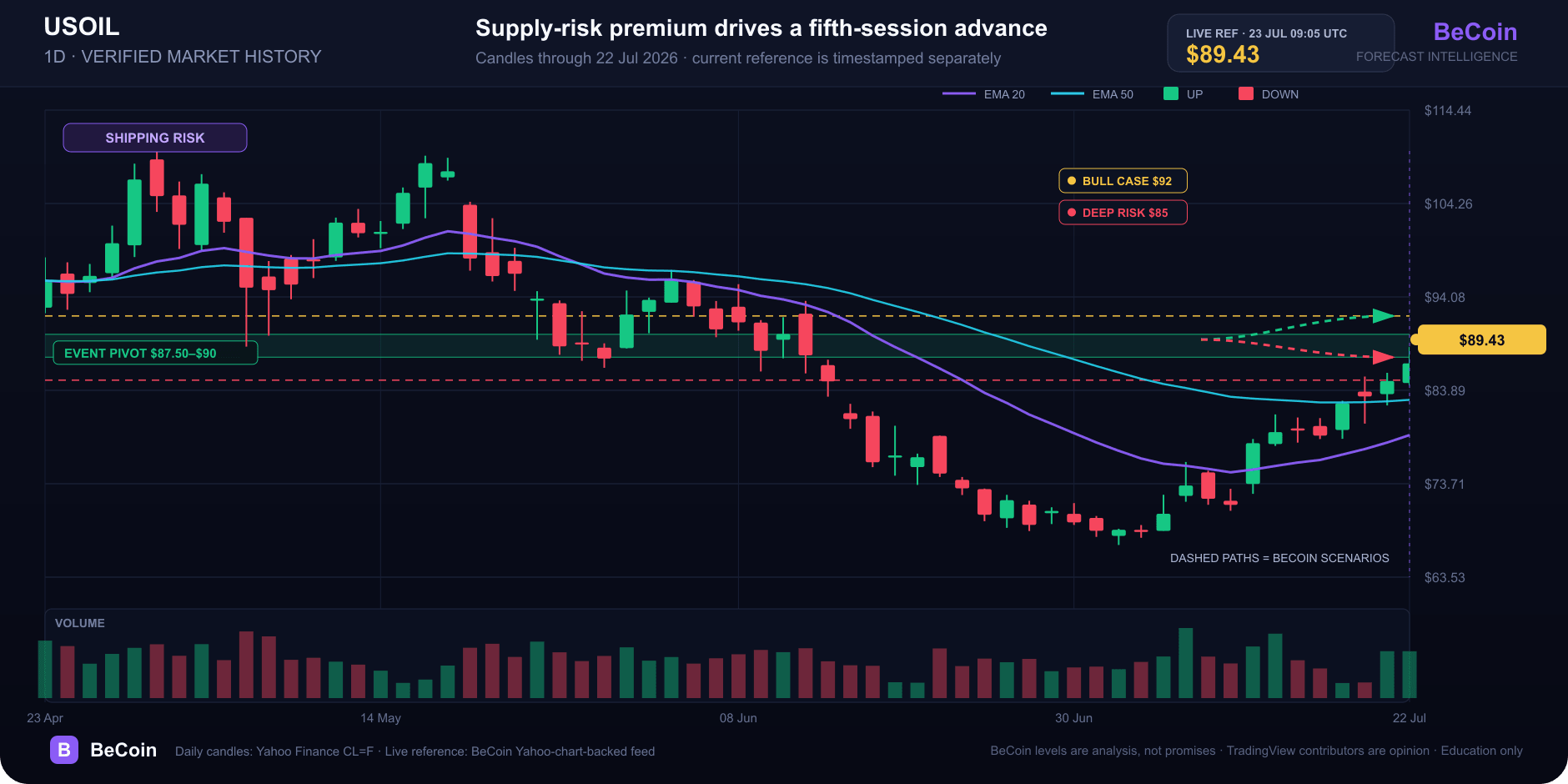
WTI reaches $89.43 as Brent clears $95 on renewed supply risk
WTI traded near $89.43 while Brent moved above $95 as Middle East shipping risk lifted crude for a fifth session. Key levels, catalysts and invalidation.

Trading Currency Strength Instead of Single Pairs
It was a Tuesday afternoon when I realized I was fighting a losing battle against a ghost. My screen was a chaotic web of indicators. I had the EUR/USD chart open, a moving average crossing over here, a relative strength index flashing oversold there, and a price action setup that looked textbook perfect. I clicked […]
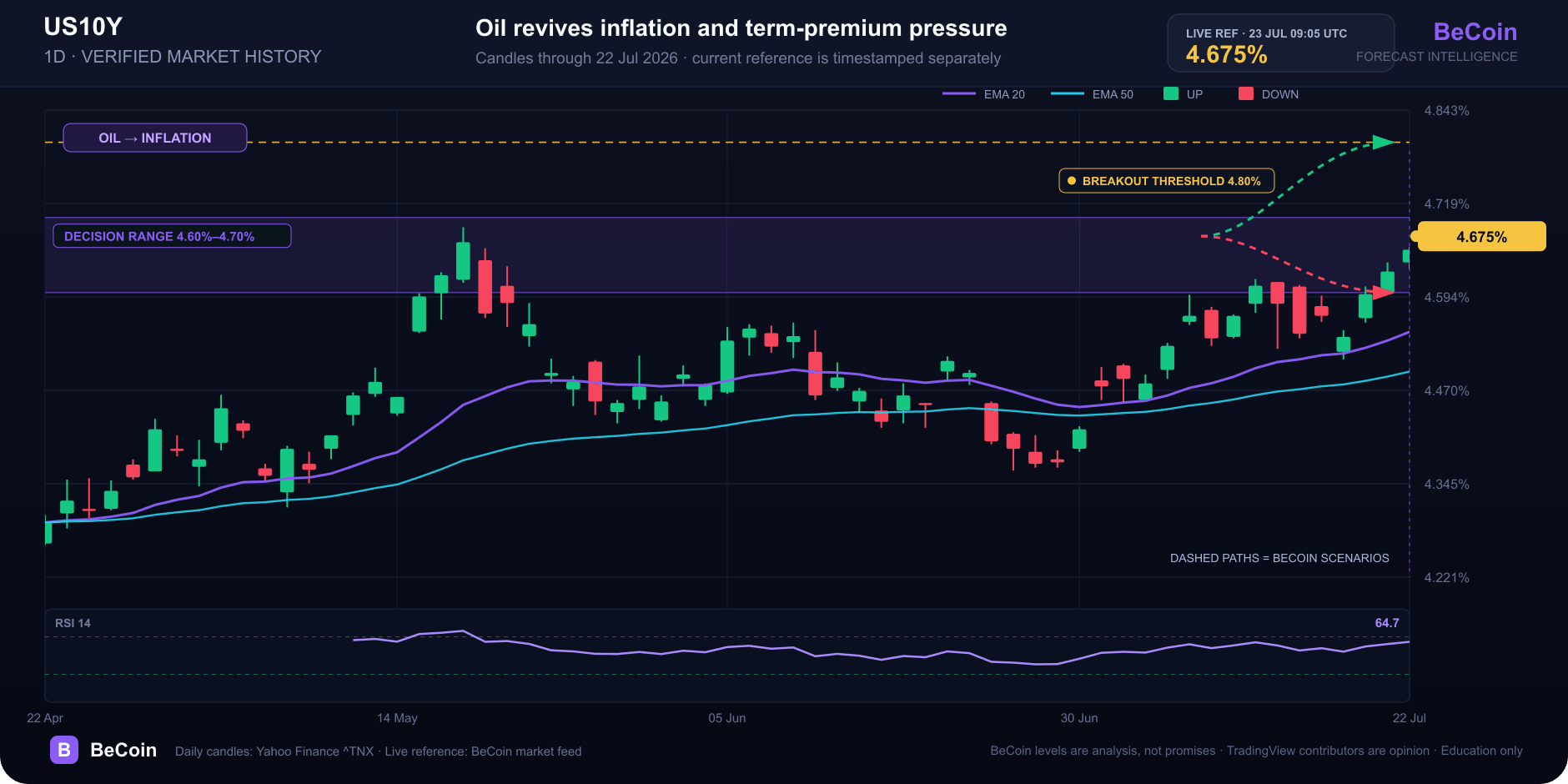
US 10-year yield reaches 4.675% as oil revives inflation pressure
The US 10-year yield reached 4.675% as oil prices rose and markets awaited labor data. What 4.70%, 4.80% and a reversal below 4.60% would mean.

How Understanding Market Structure Saved My Binary Options Trading
I remember the exact moment my trading account hit zero for the third time in a single month. It was a rainy Tuesday evening, and I was staring at a 1-minute chart on my laptop screen. The price had been moving up aggressively. It looked like a flawless rocket ship to the moon. I clicked […]

The Day I Stopped Trading and Finally Started Making Money
It was a rainy Tuesday morning, and I was staring at my screen with a familiar knot in my stomach. The previous three days had been a slow, agonizing slide into the red. I had given back two weeks of hard-earned profits in less than seventy-two hours. Every asset I clicked on looked like a […]

The Best Broker Without Complicated Features (And Why Simplicity Wins)
Most traders don’t fail because they lack knowledge. They fail because their platform buries them in noise before they even place their first trade. Here’s what actually works. It Started With a Confession From a $10 Trader A reader messaged us a few months back. He had been trying to trade for three weeks, had […]