Covered call income strategy: calculate option premium before opening the trade
I still remember my first covered call trade. I had held 100 shares of a tech stock for months. The price moved sideways, leaving my capital idle. A friend suggested selling a call option to collect cash up front.
I logged into my platform and sold a contract without doing any calculations. I collected a quick $150. Two weeks later, the stock surged past my target price. My shares were sold automatically, capping my profit, while my stock plummeted right after during an earnings report. That bitter experience taught me a vital lesson: never open an option trade without calculating your premium income and risk boundaries first.
What Is a Covered Call?
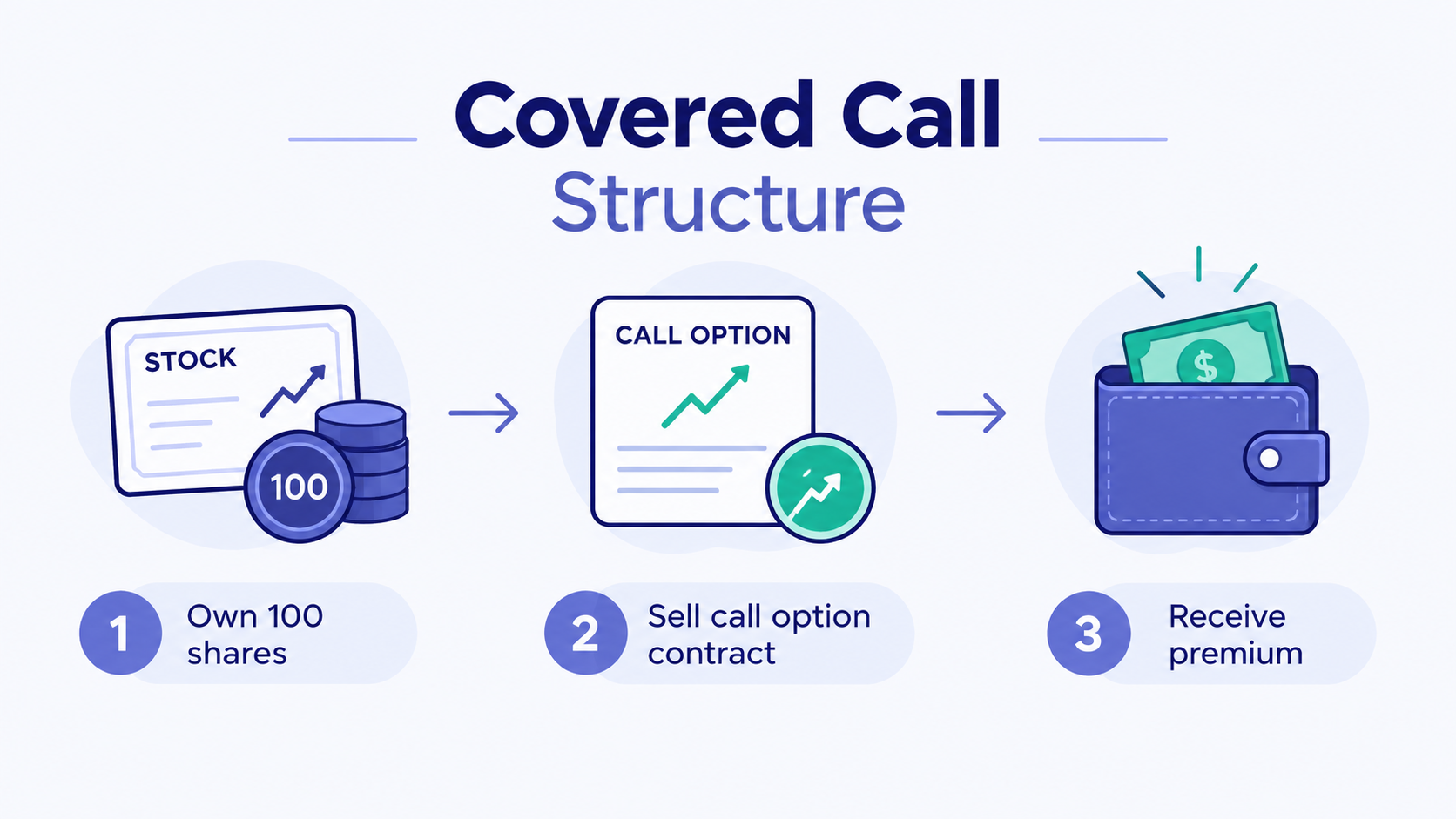
A covered call is an income strategy where you own 100 shares of a stock and sell a call option against those shares.
Think of it like renting out a house you own:
- The Stock is the house you own.
- The Option is the rental agreement.
- The Premium is the rent money paid directly to your account.
When you sell a call option, the buyer pays you cash today. In return, you agree to sell your 100 shares at a fixed price (the strike price) if the stock rises above that level before the expiration date
How to Calculate Option Premium Income Step-by-Step
Before clicking the order button, calculate your potential earnings and protection level using these simple formulas:
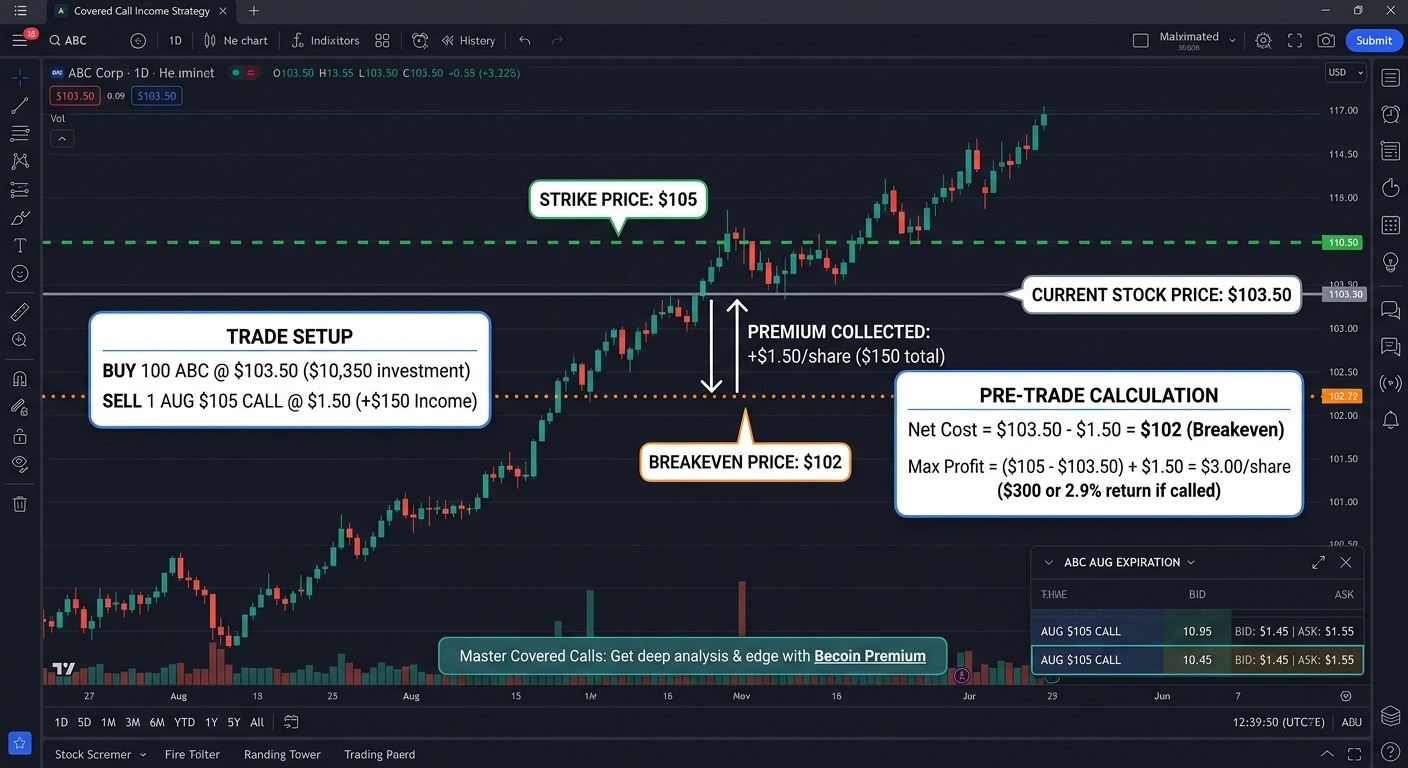
1. Total Cash Premium Collected
Options trade in standard contracts representing 100 shares.
$$\text{Total Premium} = \text{Premium per Share} \times 100$$
If the option quote shows $2.50 per share, your cash payout is:
$$\$2.50 \times 100 = \$250$$
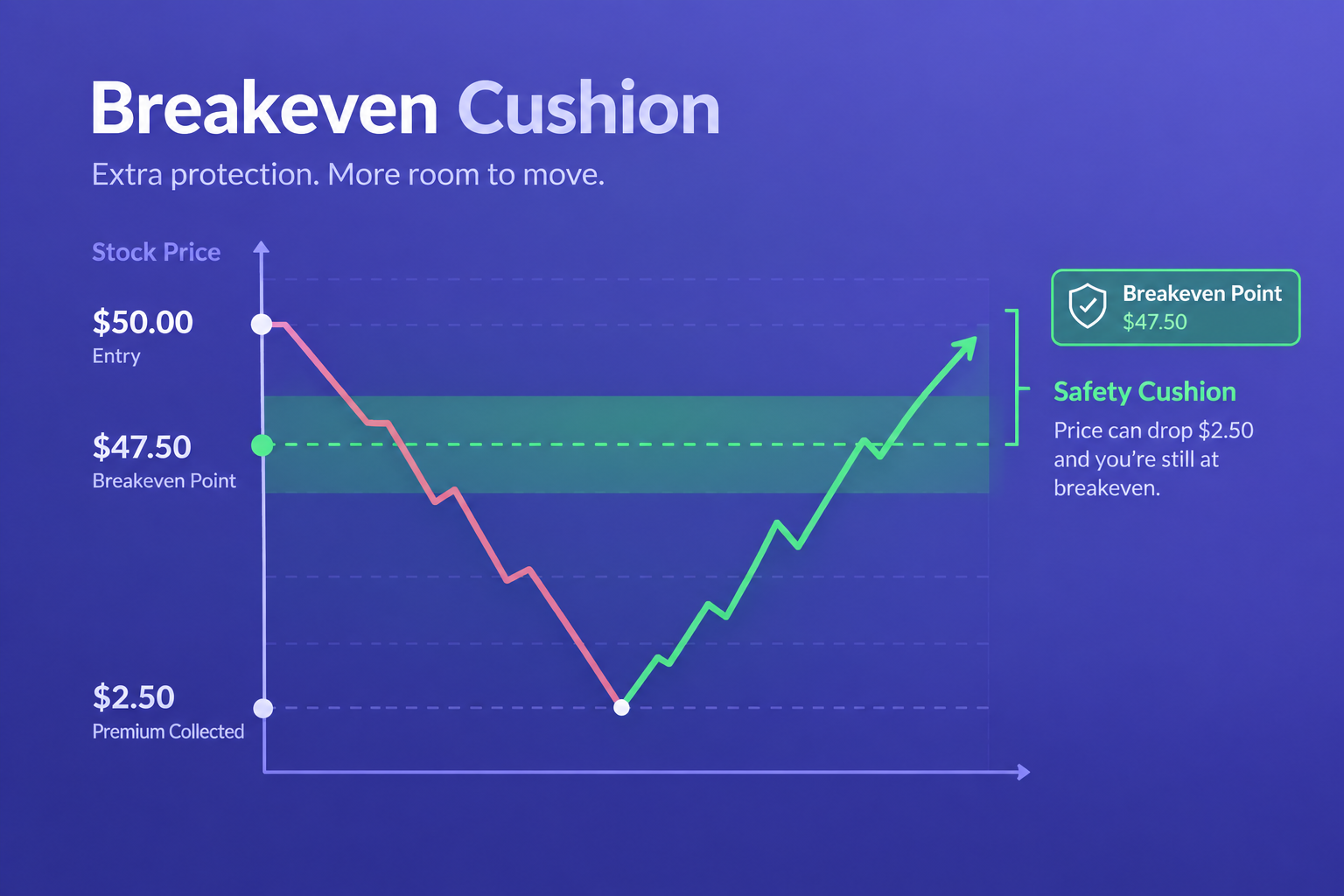
2. Downside Breakeven Price
The cash you receive lowers your net entry cost, shielding you from minor stock drops.
$$\text{Breakeven Price} = \text{Current Stock Price} - \text{Premium Received per Share}$$
If you bought shares at $50.00 and collected $2.50 in premium:
$$\$50.00 - \$2.50 = \$47.50$$
Your stock can fall to $47.50 before you experience a net loss.
3. Return If Flat (Static Yield)
This metric shows your return if the stock price remains unchanged until expiration:
$$\text{Static Return} = \left( \frac{\text{Premium per Share}}{\text{Stock Price}} \right) \times 100$$
$$\left( \frac{\$2.50}{\$50.00} \right) \times 100 = 5\%$$
4. Maximum Return If Called Away
If the stock climbs above your strike price, your shares will be sold at that strike. Your total profit combines stock gain with option premium:
$$\text{Max Profit per Share} = (\text{Strike Price} - \text{Stock Price}) + \text{Premium Received}$$
If your strike price is $55.00:
$$\text{Max Profit per Share} = (\$55.00 - \$50.00) + \$2.50 = \$7.50$$
$$\text{Total Return} = \left( \frac{\$7.50}{\$50.00} \right) \times 100 = 15\%$$
What Determines Option Premium Prices?
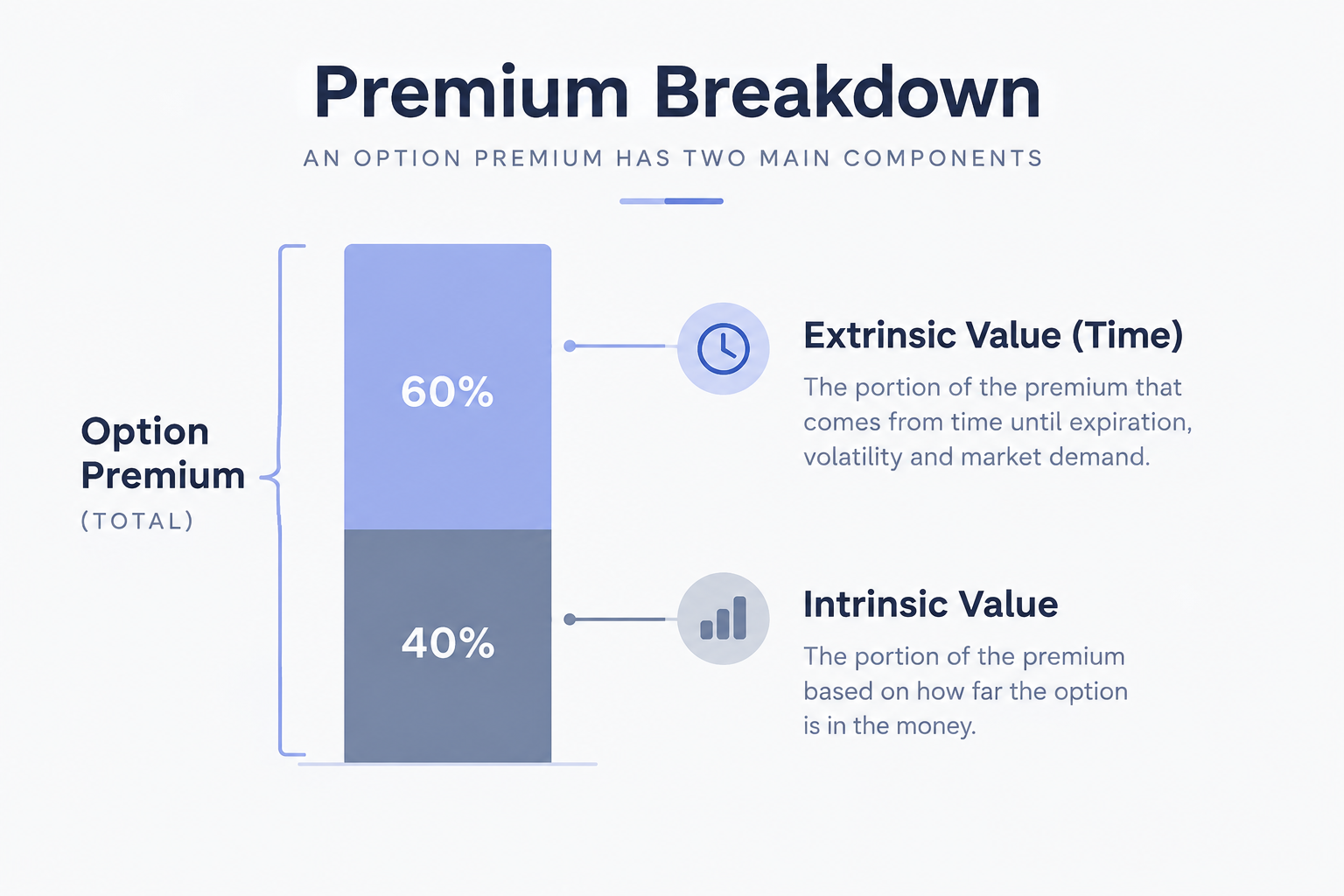
To predict earnings potential, focus on two main pricing drivers:
- Time Value (Theta): Options lose value as expiration approaches. Shorter expiration dates (30 to 45 days) experience faster time decay, allowing sellers to capture premiums efficiently.
- Implied Volatility (Vega): Highly volatile assets offer higher option premiums because market participants anticipate larger price swings.
"According to financial expert Simon Vine in his publication on Options: Trading Strategy and Risk Management, properly calculating option premiums before trade execution is essential for managing downside risk and accurately assessing true strategy yield."
Popular Platforms for Asset and Option Trading
To trade options or manage market assets efficiently, consider these reliable brokers:
- Deriv for synthetic indices and flexible options.
- IQ Option or IQ Option Alternative for intuitive trading tools.
- Quotex for quick-execution market positions.
- ExpertOption for user-friendly social trading environments.
- Olymp Trade for accessible multi-asset accounts.
- Capital Core for modern financial market execution.
- Binomo for straightforward market trading options.
For further reading on strategy development, check out our insights on the Becoin Blog.
Master Your Edge in the Markets
Calculating option premiums before trading prevents costly mistakes, clarifies your income potential, and keeps downside risk in check.
Ready to refine your trading strategy with deeper analytical tools and market forecasts? Join Becoin Premium today for real-time market insights and high-conviction analysis.
Best Broker Without KYC (2026) — Truth + Risks Before You Choose
If you’re searching for the best broker without KYC, you likely want speed, low friction, and fast access to trading. But here’s the reality: Most traders don’t lose because of strategy.They lose because they choose the wrong platform early. No-KYC brokers can help you start quickly — but they also introduce hidden risks around withdrawals, […]

The Best Broker Without Complicated Features (And Why Simplicity Wins)
Most traders don’t fail because they lack knowledge. They fail because their platform buries them in noise before they even place their first trade. Here’s what actually works. It Started With a Confession From a $10 Trader A reader messaged us a few months back. He had been trying to trade for three weeks, had […]

Safest Broker for Small Deposits in 2026
Looking for the safest broker for small deposits in 2026? Discover beginner-friendly trading platforms with low minimum deposits, reliable withdrawals, risk controls, and the best options for starting safely with limited capital. Starting trading with a small amount of money sounds easy until you actually deposit real funds. Most beginners quickly realize that choosing the […]
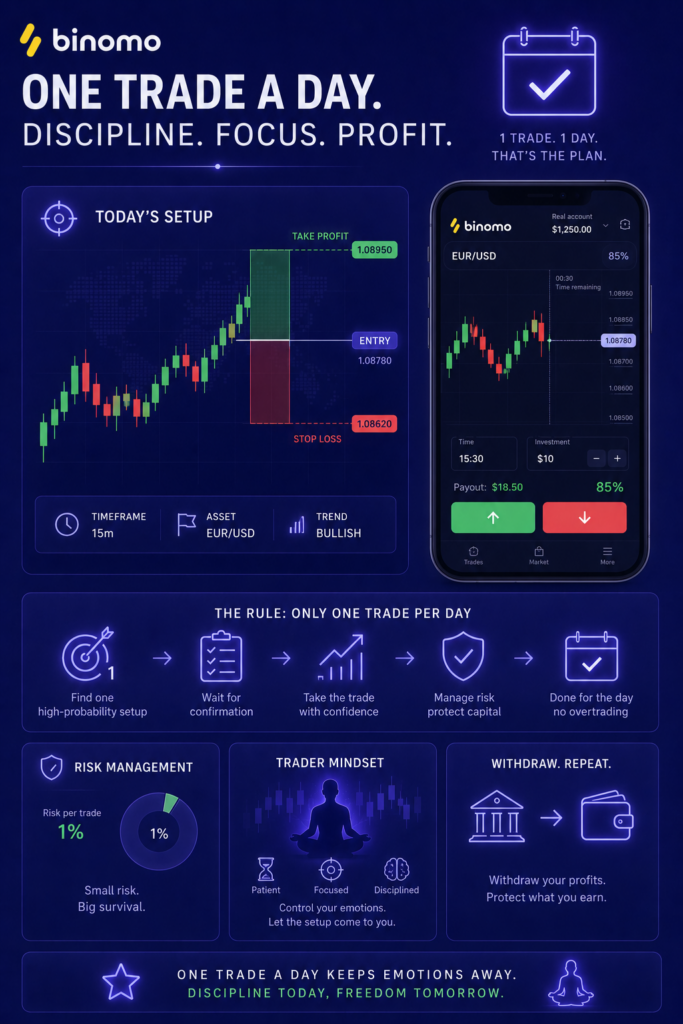
Best Broker for One Trade a Day Strategy in 2026
Most traders lose money because they trade too much. They enter random setups, chase candles, overreact emotionally, and turn a simple strategy into pure gambling. That is exactly why the one trade a day strategy is becoming more popular among smart traders in 2026. Instead of sitting in front of charts all day, this approach […]

Safest Trading Platforms (Risk Breakdown) – Real Comparison for 2026
Choosing a trading platform isn’t about features — it’s about avoiding hidden risk. Most traders compare brokers like Quotex vs Pocket Option vs Deriv vs Olymp Trade expecting a clear winner. Instead, they find conflicting reviews, promotional claims, and no real explanation of how these platforms behave when money is on the line. The real […]

Capital Core for US Traders: Can Americans Use It Safely?
I’ll be honest: when I first started digging into Capital Core for US traders, I wasn’t looking for hype. I was looking for a boring answer. Can I sign up from the US?Can I actually trade?And the real question nobody asks loudly enough: if I win, can I withdraw without drama? That last one matters […]