Asset Rotation Strategies for Day Traders
I still remember the afternoon my trading account nearly hit zero. It was a Tuesday, right in the middle of the New York session, and EUR/USD was moving like a flatlining heartbeat. Frustrated by the lack of movement, I kept forcing trades, convinced that a massive breakout was just one candle away. It wasn’t. I lost four trades in a row, not because my strategy was flawed, but because I was trying to force a high-volatility strategy on an asset that had gone completely dormant.
That was the day I realized a harsh truth. Most day traders do not lose money because their indicators are wrong. They lose because they marry a single asset and refuse to divorce it when market conditions change.
If you want to survive in this game, you have to learn how to move with the money. This is my personal playbook on asset rotation strategies, designed specifically for day traders who are tired of feeding the market unnecessary losses.
The Trap of Asset Loyalty
When I first started out, I was obsessed with major currency pairs. I thought that master traders only focused on EUR/USD or GBP/USD. I learned the hard way that markets go through distinct phases: trending, volatile, and choppy. A strategy that works beautifully during a highly liquid London morning session will tear your account to pieces during a quiet Asian afternoon.
In day trading, time is our greatest enemy or our greatest ally. Because we deal with fixed expiries, we need immediate movement in our predicted direction. If an asset is consolidating in a tight five-pip range, your probability of success plummets.
That is why I stopped being a currency-only trader. I began to view the market as a rotating wheel of opportunities. When the forex market slows down, volume moves elsewhere. If you know where that volume is going, you can position yourself to catch clean, predictable impulses instead of guessing in a sideways market.
Phase One: Rotating by Market Sessions and Volatility
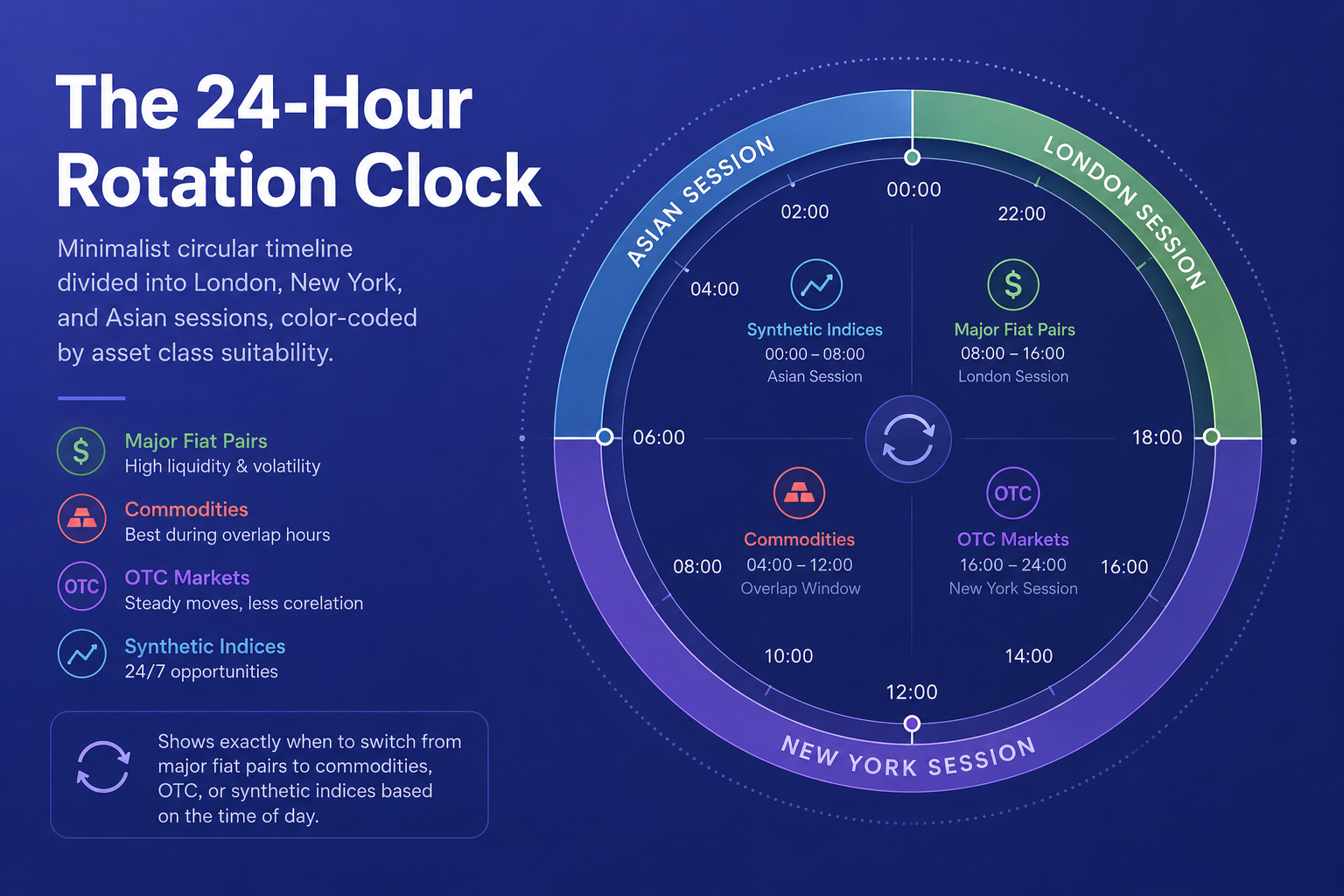
The first layer of my rotation strategy revolves entirely around the clock. The global market has a rhythm, and understanding this rhythm is what separated my profitable months from my losing ones.
During the overlapping hours of the London and New York sessions, standard currency pairs are highly active. This is when price action strategies thrive. The candles are large, the trends are defined, and support and resistance levels behave logically.
However, when the New York session closes and the Asian session takes over, standard major currencies often lose their momentum. Instead of sitting on my hands or forcing bad trades, I rotate my focus. This is the exact time I shift toward assets that thrive in different structural environments.
For instance, during these quieter hours, commodity-linked currencies like AUD/USD or NZD/USD can show cleaner minor trends due to regional economic activity. Alternatively, if the entire fiat market feels sluggish, I rotate completely out of traditional currencies and move into alternative asset classes that provide synthetic or algorithmic volatility.
Phase Two: Embracing Synthetic Indices and OTC Markets
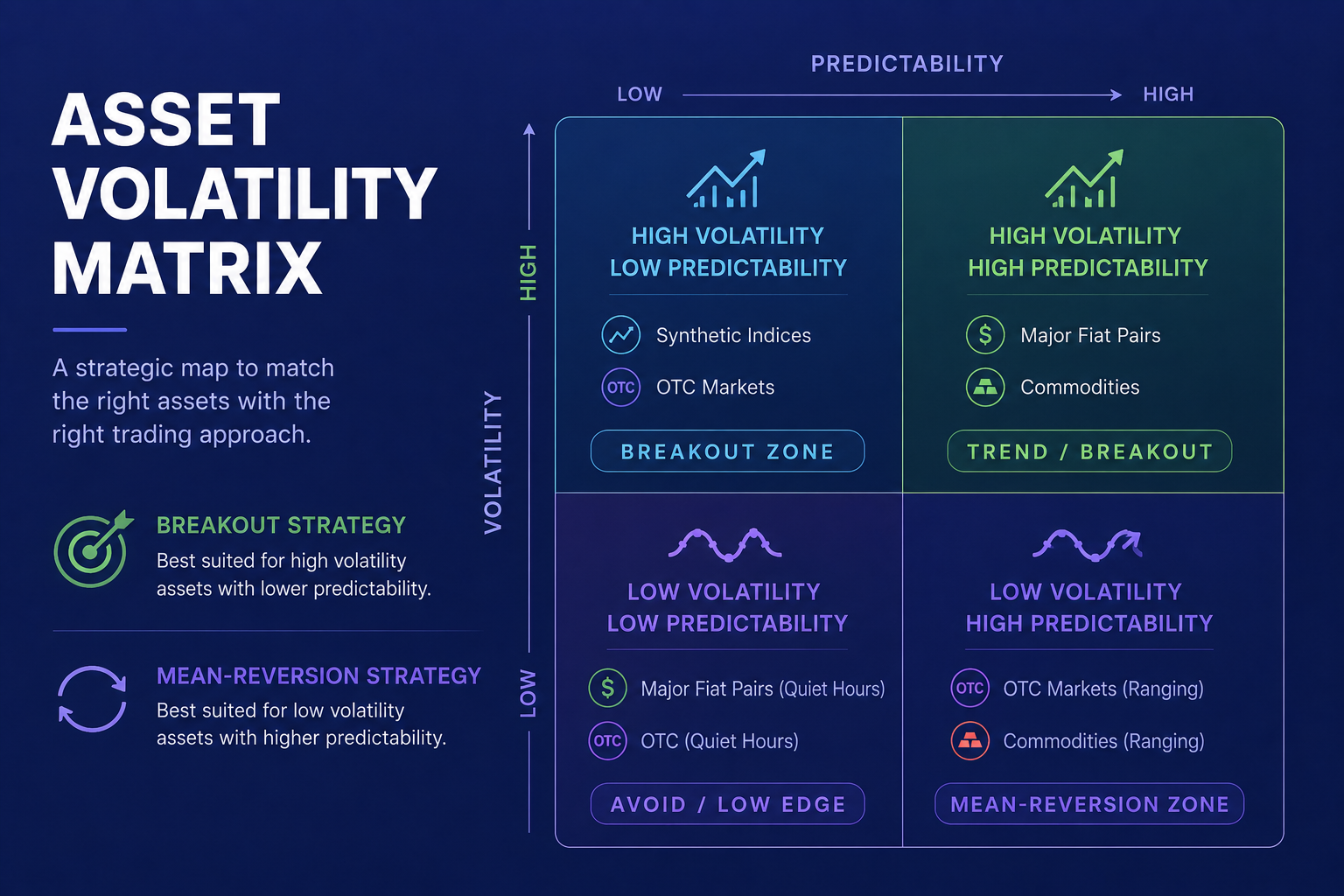
For a long time, I was skeptical about anything that wasn’t a traditional currency pair. I thought Over-The-Counter (OTC) assets and synthetic indices were gimmicks. I was wrong. When used correctly within a structured rotation plan, they can keep you profitable when traditional markets are untradeable.
Synthetic indices mimic real-world market volatility but run around the clock, completely independent of global news events or bank holidays. When the traditional forex markets are closed on weekends or during heavy, unpredictable news drops like NFP (Non-Farm Payroll), rotating a portion of your focus to synthetics can provide highly technical, uninterrupted charts.
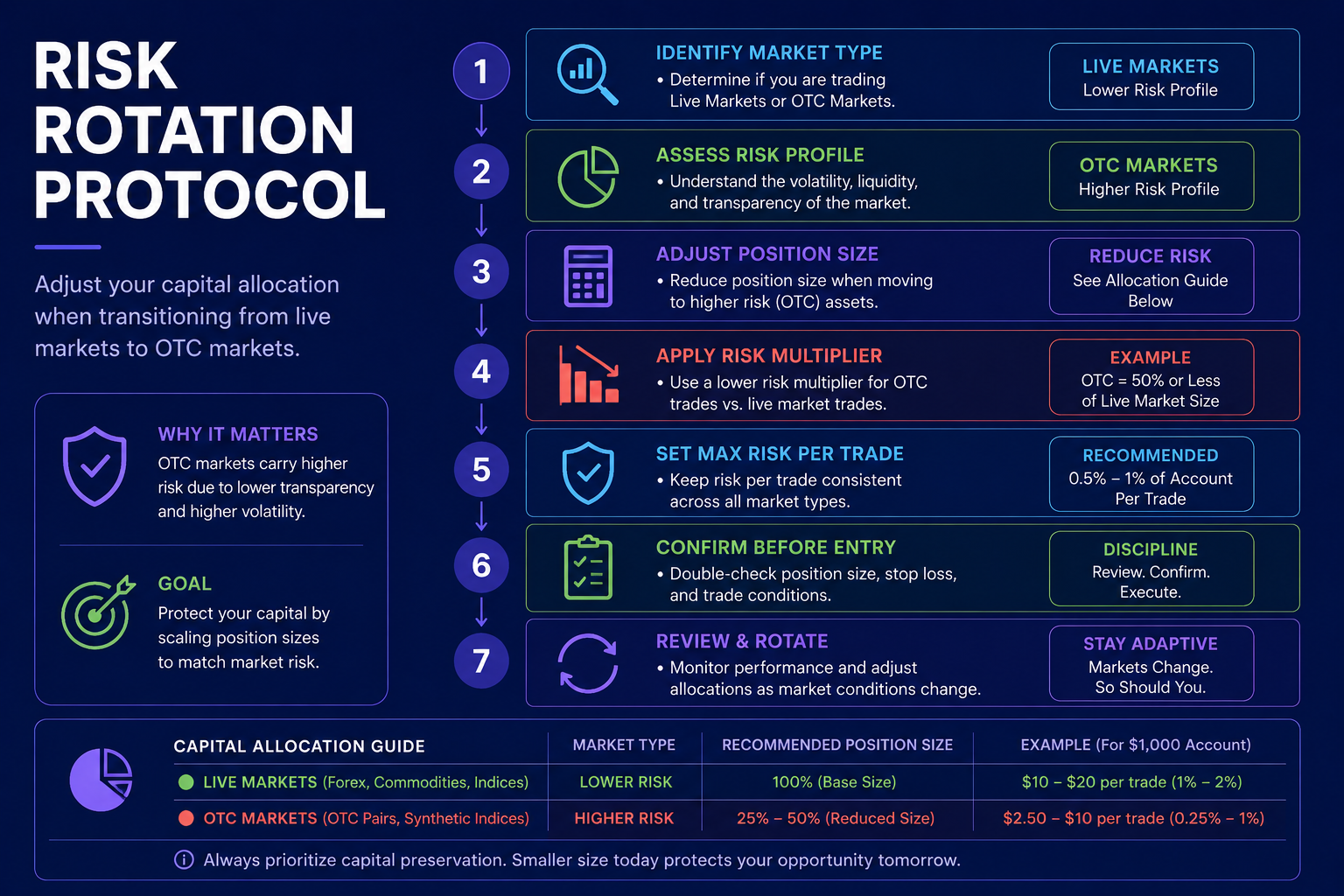
The key to rotating into these markets is adjusting your risk parameters. Synthetic markets move fast, and their structural patterns can differ slightly from traditional fiat pairs. Whenever I transition my trading session from a standard currency pair to a synthetic index, I always look for platforms that offer clean charting environments. If you want to see how different platforms handle these unique assets, you can read my comprehensive breakdown on Deriv vs IQ Option for synthetic indices to see which setup handles fast-paced data streams more efficiently.
Similarly, OTC pairs provided by major brokers can offer excellent trending opportunities during the weekend when standard markets are locked. The trick is to treat OTC assets with the exact same technical discipline you would use on a live live-market chart.
Phase Three: The Correlation and Strength Rotation
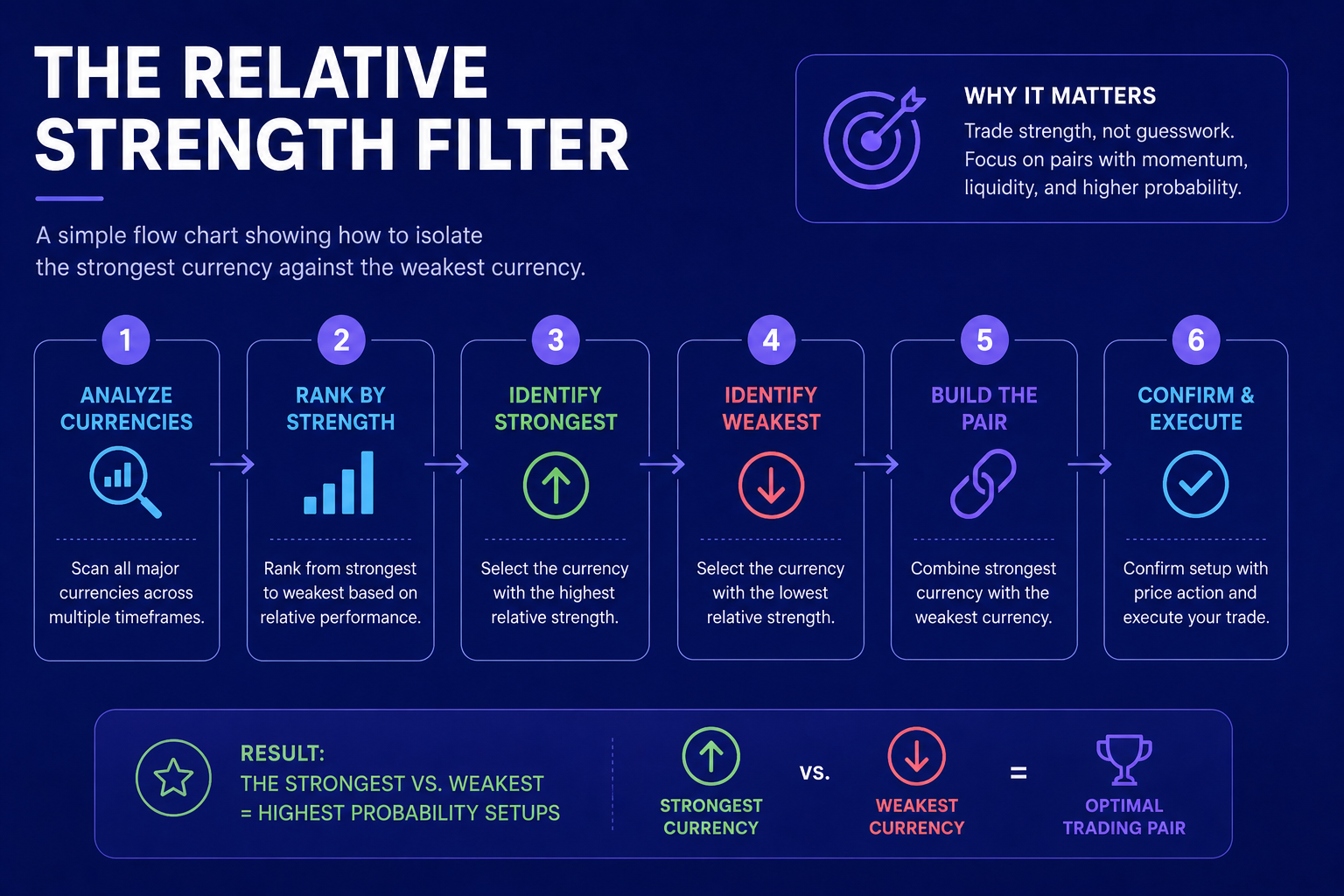
Another highly effective way I rotate assets is by analyzing relative strength rather than staring blindly at a single chart. If I notice that the US Dollar is exceptionally strong, I don't just trade EUR/USD. I scan the dashboard to find the absolute weakest currency relative to that strong Dollar.
If the Euro is holding its ground but the Japanese Yen is collapsing, then trading USD/JPY yields a much cleaner, more aggressive trend than trading EUR/USD. By rotating your attention to the pair with the highest divergence in strength, you dramatically increase the likelihood of your day trade closing deep in the money.
This requires keeping a bird's-eye view of the market. I use currency strength meters and basic correlation matrices to see where money is actively flowing. If two assets are highly correlated and moving identically, trading both simultaneously doubles your risk exposure. Instead, rotate to an uncorrelated asset to diversify your open positions and protect your capital base.
Setting Up Your Rotation Workspace
To execute an asset rotation strategy successfully, your trading environment needs to be highly organized. You cannot afford to spend twenty minutes clicking through dozens of tabs looking for a setup while an expiry window closes.
I structure my workspace with distinct profiles. I have a profile for major fiat pairs during peak liquidity hours, a profile for cross-currency pairs during mid-day lulls, and a profile dedicated to alternative assets and OTC options for late nights and weekends.
Your choice of broker plays a massive role in how smoothly you can pull this off. You need an interface that allows for rapid switching between asset classes without lag or delayed execution. For those starting with smaller capital who need a responsive workspace that accommodates fast switches, checking out the details on the safest broker for small deposits can help you find a platform that won't freeze when you decide to jump from forex to commodities.
Choosing the Right Execution Partners
An elegant strategy is completely useless if your execution platform lets you down. Over the years, I have tested dozens of platforms to see how well they handle rapid asset rotation.
When my strategy demands lightning-fast shifts between traditional currency pairs and global indices, I often utilize the clean execution speeds found through IQ Option. Their multi-chart layout is highly intuitive for monitoring asset correlations simultaneously.
On the other hand, if I want a highly streamlined experience without unnecessary analytical clutter, focusing purely on raw price action, platforms like Pocket Option or Quotex offer highly stable environments for executing fast-paced short-term rotation strategies.
For traders who prefer traditional web-based simplicity combined with robust reliability during different regional sessions, exploring alternatives like ExpertOption,Olymp Trade, or Capital Core can provide the necessary asset depth to ensure you always have an open, liquid market to trade no matter what time your local session begins.
Final Thoughts: Stop Fighting the Market
The day I stopped forcing the market to adapt to me and instead adapted myself to the market was the day my trading became a professional business. Asset rotation is not about chasing every single moving candle on your screen. It is about identifying where conditions are mathematically stacked in your favor and gracefully moving your capital to that sector.
If you are tired of guessing which assets are ready to move and want to skip the trial-and-error process of scanning charts for hours on end, you don't have to navigate these shifting markets alone. Gain a clear, data-driven edge by accessing institutional-grade market forecasts and deep-dive technical insights via the Becoin Forecast Hub.
Ready to fully upgrade your trading precision and stop letting erratic market sessions dictate your win rate? Join the inner circle, unlock advanced algorithmic rotation tools, and secure your competitive advantage today by subscribing to the Becoin Premium Tariff Plan.
Deriv vs IQ Option for Synthetic Indices: Which Platform Is Better in 2026?
Synthetic indices have become one of the most talked about trading categories among beginners and experienced traders alike. Unlike forex or crypto markets that depend on real world events, synthetic indices operate 24/7 using algorithm driven price movements. That means traders can access opportunities at any time without waiting for market openings or major news […]
I Started with $10 on Quotex – Day 1 Results (Real Case Study)
Most beginner traders ask the same question:Can you actually grow a small account like $10? Instead of theory, I decided to test it in real conditions. This is a Day 1 case study of trading with $10 on Quotex, documenting everything from setup to execution, mistakes, emotions, and actual results. No hype, no fake screenshots, […]
Capital Core $100 Challenge: Can a Small Account Survive Day Trading?
There’s a reason I wanted to do a Capital Core $100 challenge instead of another flashy “flip a tiny account” stunt. I was tired of the fantasy version of small-account trading. You know the one. A trader deposits a small amount, catches a hot streak, posts a few winning screenshots, and suddenly the whole story […]

Capital Core for US Traders: Can Americans Use It Safely?
I’ll be honest: when I first started digging into Capital Core for US traders, I wasn’t looking for hype. I was looking for a boring answer. Can I sign up from the US?Can I actually trade?And the real question nobody asks loudly enough: if I win, can I withdraw without drama? That last one matters […]
Best Capital Core Day Trading Strategy for 1-Minute and 5-Minute Trades
I did not build my short-expiry strategy on Capital Core from a perfect week, a flashy YouTube setup, or some “secret indicator” thread. I built it by making the same mistakes most traders make when they first touch 1-minute and 5-minute day trading. I entered too early. I forced trades because the candles looked exciting. […]

Is Capital Core Safe or a Scam? What Day Traders Should Know Before Depositing
I’ll be honest: the first time I landed on Capital Core, I didn’t feel excited. I felt suspicious. That might sound strange coming from someone who has spent years around day trading and offshore brokers, but if you’ve traded long enough, you know the pattern. A polished homepage. Big payout claims. A low minimum deposit. […]