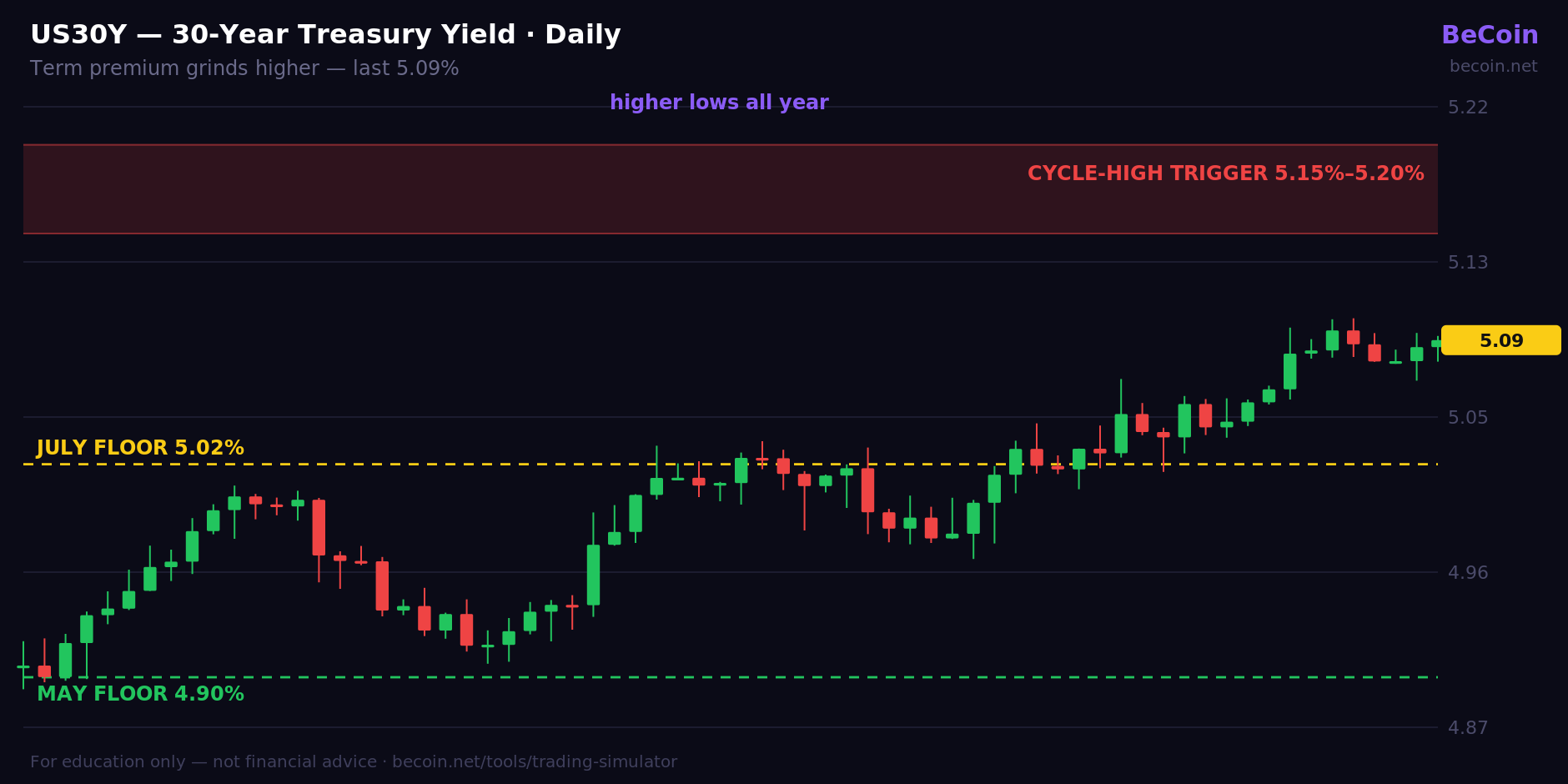
30-Year Treasury Yield Near 5.09%: Term Premium Rises
The 30-year Treasury yield ended the week pinned near 5.09% — its highest neighborhood of the year — even as softer CPI and PPI prints pulled the 10-year down to 4.55%. The long bond refused to rally with the rest of the curve, and that refusal is the story: with the 2-year at 4.18%, the 2s30s spread now stands near +91 basis points, the steepest of the cycle.
Why it matters. When inflation data softens and the long end still won't come down, the market is telling you the problem isn't this month's CPI — it's the supply of paper and the price of time. Treasury issuance keeps growing, a Fed with a hiking bias won't be absorbing duration, and buyers are demanding a fatter term premium to hold 30-year risk. The costs are already flowing downstream: the Freddie Mac 30-year fixed mortgage printed 6.55% this week, its highest since last September. Equity valuations, pension math, and every long-duration asset on the planet discounts off this yield — a 5-handle that sticks changes the arithmetic everywhere.
Technical analysis. The long bond's yield chart is a staircase of higher lows all year: 4.90% held in May, 4.98% in June, and July's floor so far is 5.02%. Resistance — the level that has capped three attempts since the spring — is the 5.15%–5.20% zone; a weekly close above it would be a cycle high and likely force a fresh repricing of everything from REITs to growth multiples. Support below 5.02% doesn't appear until 4.90%, and reaching it would probably require either a growth scare or an explicit dovish turn. The trend is grinding, not spiking — which is precisely what term-premium repricing looks like, as opposed to a panic.
BeCoin's forecast read. The model's weekly path holds a mild upward drift in yield while the 2s30s steepener stays intact — it treats dips toward 5.00% as positioning resets, not trend changes. Its monthly distribution puts meaningful weight on a 5.15% test around the July 30 Fed meeting and the August refunding announcement. The invalidation is a close below 4.90%: that would say the growth scare has arrived and flip the model defensive across risk assets too. Follow the daily model updates on the BeCoin forecast page.
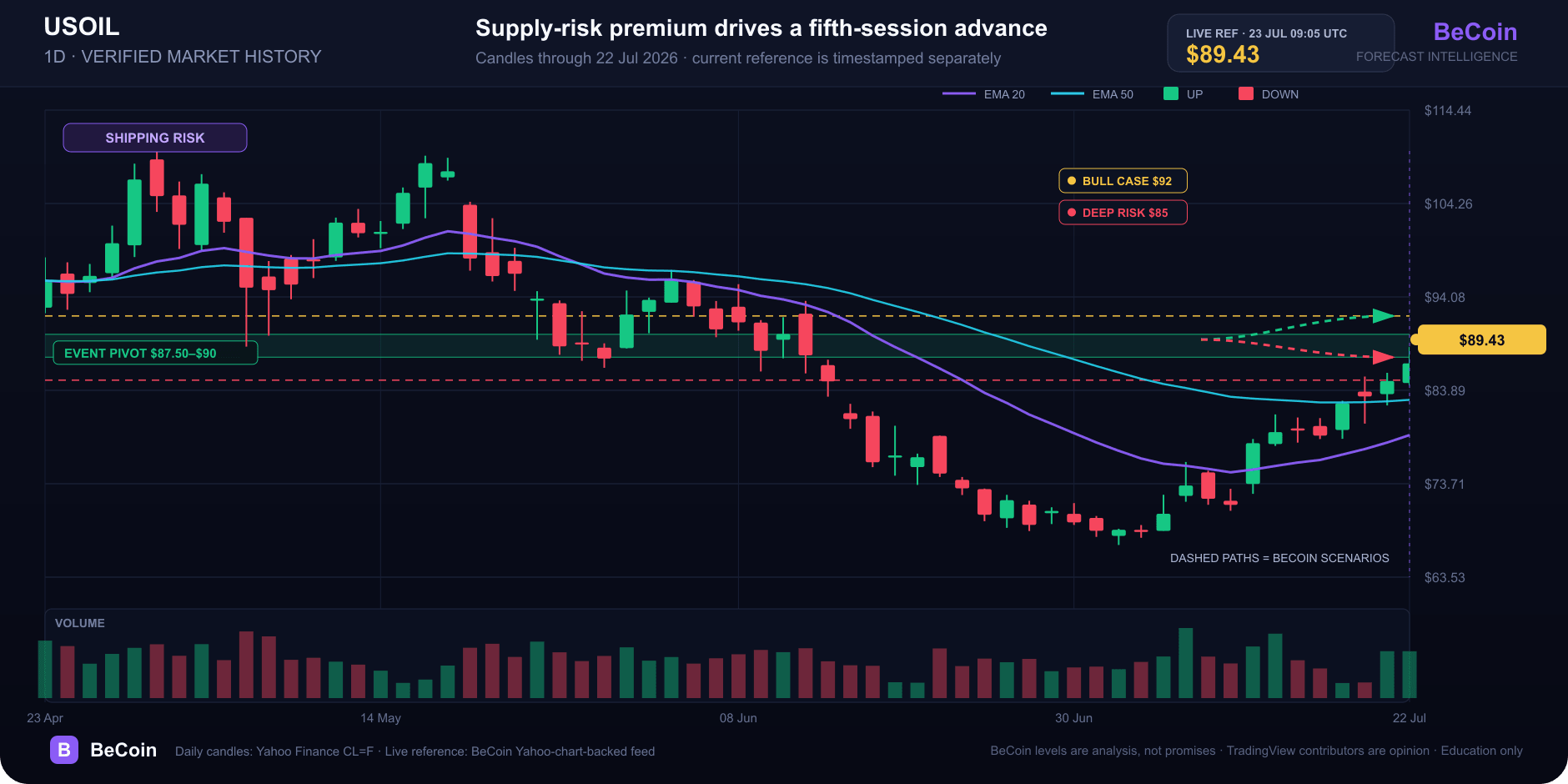
WTI reaches $89.43 as Brent clears $95 on renewed supply risk
WTI traded near $89.43 while Brent moved above $95 as Middle East shipping risk lifted crude for a fifth session. Key levels, catalysts and invalidation.
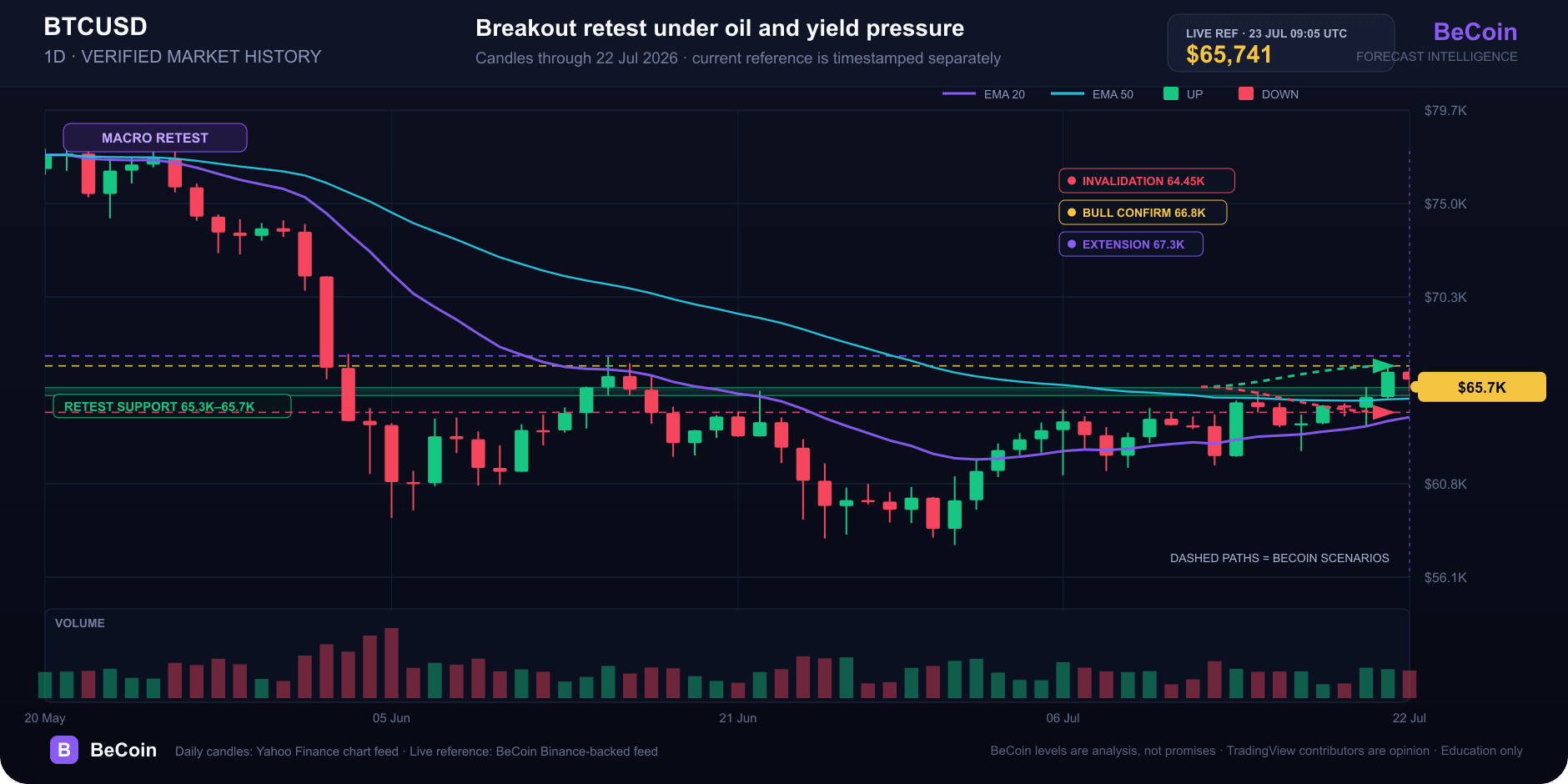
Bitcoin slips to $65,741 as oil and yields test the breakout
Bitcoin is near $65,741 as rising oil and Treasury yields test the $65.7K breakout floor. Here are the levels that confirm or invalidate the move.

Which Broker Is Better for Weekend Trading?
It was a chilly Saturday morning, and while the rest of the world was sleeping in or catching up on shows, I was staring at a completely frozen screen. My usual EUR/USD chart looked like a heart monitor flatlining. The traditional markets were closed. The banks were shut down. For a long time, that was […]

Why Traders Move from Binomo to Deriv in 2026: The Real Reasons Behind the Switch
If you spend enough time around trading communities, you’ll notice a pattern. Many traders start with Binomo. Then, after a few months, a surprising number begin looking at Deriv. Some switch completely. Others keep both accounts but gradually move most of their trading activity to Deriv. I noticed this trend while talking to beginner traders […]

Deriv vs Binomo for Low-Risk Trading in 2026: Which Platform Is Better for Safer Growth?
Most beginners enter trading with one simple goal: avoid blowing up their account in the first week. That is exactly why low-risk trading matters more than fast profits. Two platforms that constantly appear in beginner discussions are Deriv and Binomo. Both allow small deposits, short-term trading, and beginner-friendly access. But when your focus is protecting […]
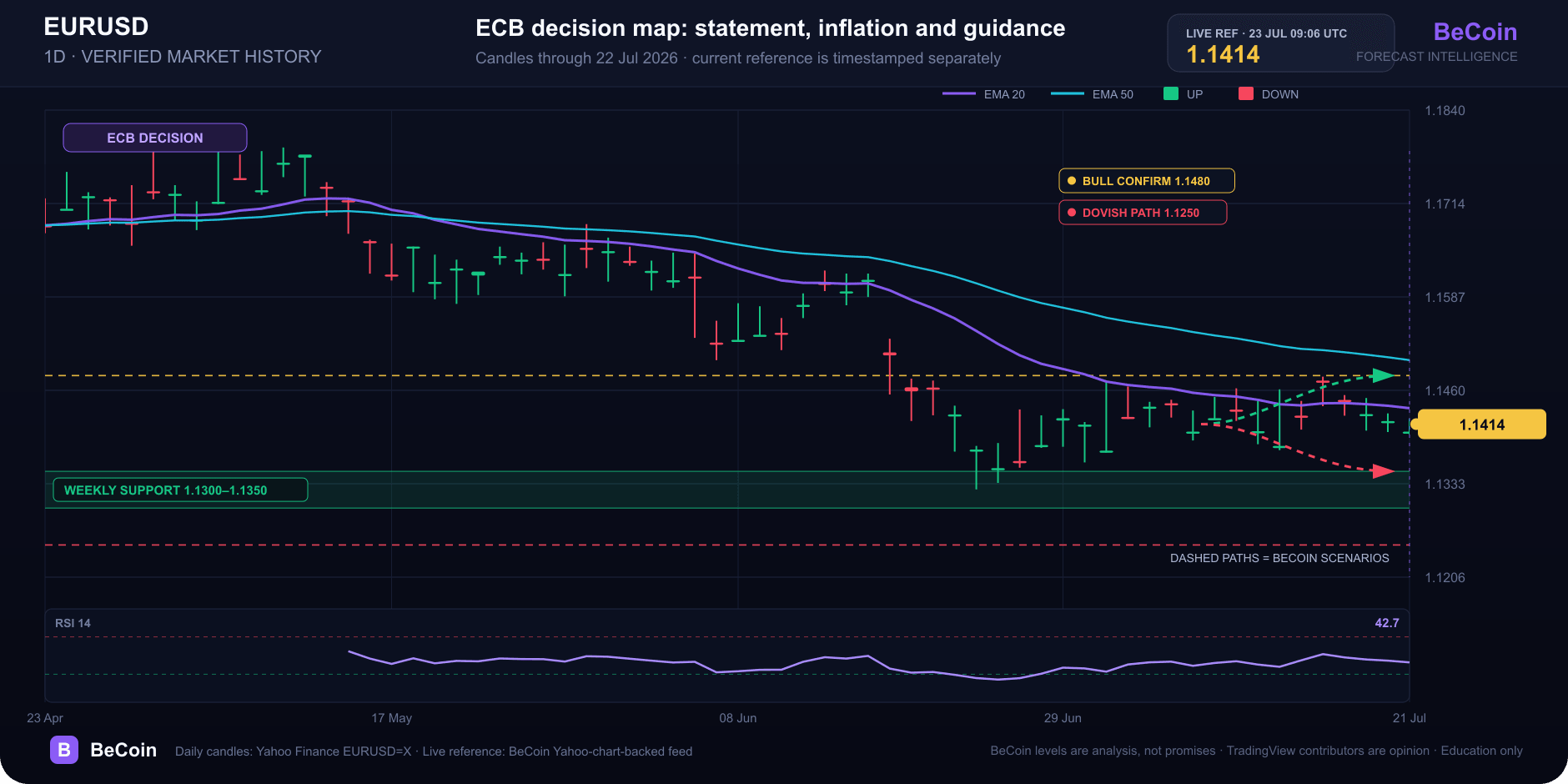
EUR/USD holds 1.1414 before the ECB decision: three scenarios
EUR/USD traded near 1.1414 before the ECB’s July decision. Here is what a hold, hawkish hold or surprise hike could mean for 1.1350 and 1.1480.