Minimum Wage by Country: Global Comparison & Forex Impact
Minimum Wage by Country: Global Comparison and What It Means for Forex & Macro Markets
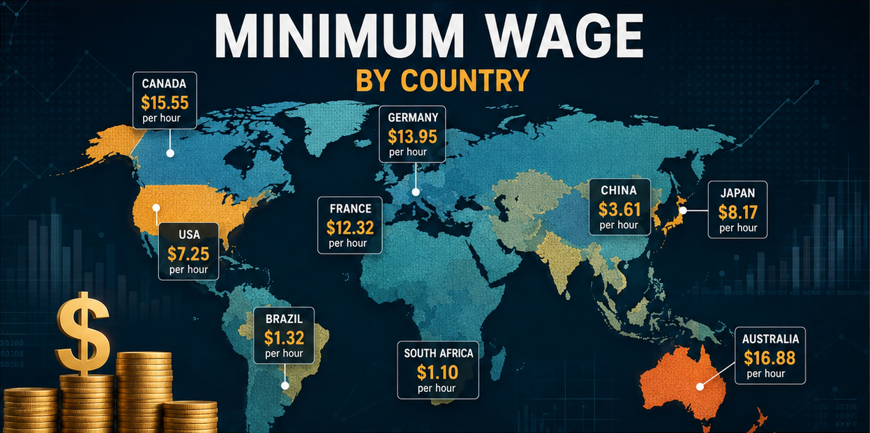
The minimum wage by country is more than a labor-market statistic. It can provide useful insight into household income, consumer spending, inflation pressures, business costs, and ultimately the broader economic environment that influences currency markets.
Minimum wages vary significantly around the world because countries use different wage-setting systems, currencies, working-hour structures, and economic conditions. For investors and forex traders, understanding these differences can add another layer to macroeconomic analysis.
What Is the Minimum Wage?
The minimum wage is the legally established lowest amount an eligible worker can generally be paid for their work. Depending on the country, it may be expressed as an hourly, daily, weekly, or monthly wage.
There is no single global standard for comparing minimum wages. Some countries have a national statutory minimum wage, while others rely heavily on collective bargaining or regional wage systems.
The OECD maintains international minimum-wage datasets covering its member economies and several partner countries, with figures available in national currencies as well as comparable real-wage measures.
Minimum Wage by Country: Why Comparisons Matter
A simple comparison of wages in local currencies can be misleading. Exchange rates can make a wage appear larger or smaller when converted into US dollars, while differences in living costs can substantially change purchasing power.
For this reason, economists often examine real minimum wages and purchasing-power-adjusted figures rather than relying only on nominal exchange-rate conversions. The OECD's real minimum-wage dataset converts wages using consumer prices and purchasing-power parity measures to improve international comparisons.
For example, a worker earning a relatively high nominal wage in one country may not necessarily have greater purchasing power than a worker earning less in another country if local prices are significantly higher.
Minimum Wage and Inflation
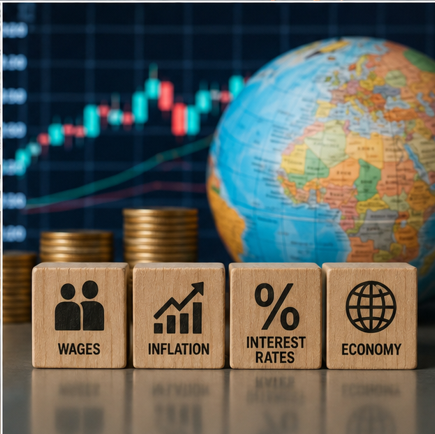
Minimum wages can also matter for inflation analysis.
When governments raise statutory wages, lower-paid workers may have more disposable income, potentially supporting household consumption. At the same time, businesses facing higher labor costs may increase prices, reduce hiring, or adjust profit margins.
The actual effect depends on the size of the wage increase, productivity growth, labor-market conditions, and how widespread minimum-wage employment is.
This makes minimum wage data particularly useful when analyzing wage pressures alongside inflation, employment, and consumer spending.
Why Forex Traders Watch Minimum Wages
For the forex market, minimum wages are rarely a standalone trading signal. Instead, they form part of a broader macroeconomic picture.
Higher wages can contribute to stronger consumer demand and potentially persistent inflation. If inflation remains elevated, a central bank may maintain restrictive monetary policy for longer. Expectations about interest rates can influence bond yields and currency valuations.
Conversely, weak real wage growth can indicate pressure on household purchasing power. This may affect consumer spending and economic growth, potentially changing expectations for monetary policy.
The OECD also publishes minimum wages relative to average or median earnings, which can be more informative than simply comparing currency amounts because it shows how significant the minimum wage is within each country's overall wage structure.
Minimum Wage by Country: The Bigger Macro Picture
A useful analysis should therefore consider several indicators together:
- Minimum wage growth
- Inflation and real wage growth
- Employment and unemployment
- Average and median wages
- Consumer spending
- Labor productivity
- Central-bank interest rates
- Currency exchange rates
The OECD's latest data provide national-currency minimum-wage series and real minimum-wage measures, making them useful starting points for cross-country wage analysis.
Final Thoughts
The minimum wage by country provides a valuable window into labor markets and household purchasing power. For macroeconomic and forex analysis, its importance goes beyond the headline wage figure.
The most useful approach is to compare minimum wages with inflation, average earnings, productivity, and monetary policy. When these indicators move together, they can reveal important changes in domestic demand and inflation expectations.
Becoin.net Premium Forecast- Becoin.net Tariff Plans
As global labor markets continue to evolve, tracking minimum wage by country can help investors better understand the economic forces behind currencies, consumer prices, and central-bank decisions.

Which Broker Has the Cleanest Interface? Real Comparison for Beginners in 2026
Looking for the cleanest trading interface in 2026? Compare Binomo, IQ Option, Quotex, Deriv, and more based on speed, layout, usability, mobile experience, and beginner friendliness. When most beginners choose a broker, they focus on bonuses, payouts, or deposit methods. But after testing multiple platforms for months, I realized something surprising: A messy interface can […]

Deriv vs IQ Option for Synthetic Indices: Which Platform Is Better in 2026?
Synthetic indices have become one of the most talked about trading categories among beginners and experienced traders alike. Unlike forex or crypto markets that depend on real world events, synthetic indices operate 24/7 using algorithm driven price movements. That means traders can access opportunities at any time without waiting for market openings or major news […]

Binomo vs IQ Option Mobile App Comparison 2026: Which Trading App Is Better for Beginners?
Mobile trading is no longer a backup option for traders. For many beginners, the smartphone app becomes the main trading workstation. Whether you are entering quick trades during a lunch break or analyzing charts late at night, the quality of a broker’s mobile app can directly impact your results. Two platforms that continue to dominate […]

Safest Broker for Small Deposits in 2026
Looking for the safest broker for small deposits in 2026? Discover beginner-friendly trading platforms with low minimum deposits, reliable withdrawals, risk controls, and the best options for starting safely with limited capital. Starting trading with a small amount of money sounds easy until you actually deposit real funds. Most beginners quickly realize that choosing the […]

Which Broker Has Faster Withdrawals? Real 2026 Comparison for Traders
When most beginners choose a broker, they focus on bonuses, signals, or flashy interfaces. But after trading for a while, you realize one thing matters more than almost anything else: How fast can you actually withdraw your money? A broker can look perfect until your first withdrawal request gets stuck in “processing” for three days. […]
Biggest Beginner Mistakes That Kill Trading Accounts
Trading looks simple from the outside. Open an account, place a few trades, and grow your balance. But reality is different. Most beginners do not lose because markets are impossible. They lose because they repeat the same avoidable mistakes. A small account can survive bad market conditions. What usually kills it is poor decision-making, emotional […]