
Fear of Missing Out (FOMO) in Trading
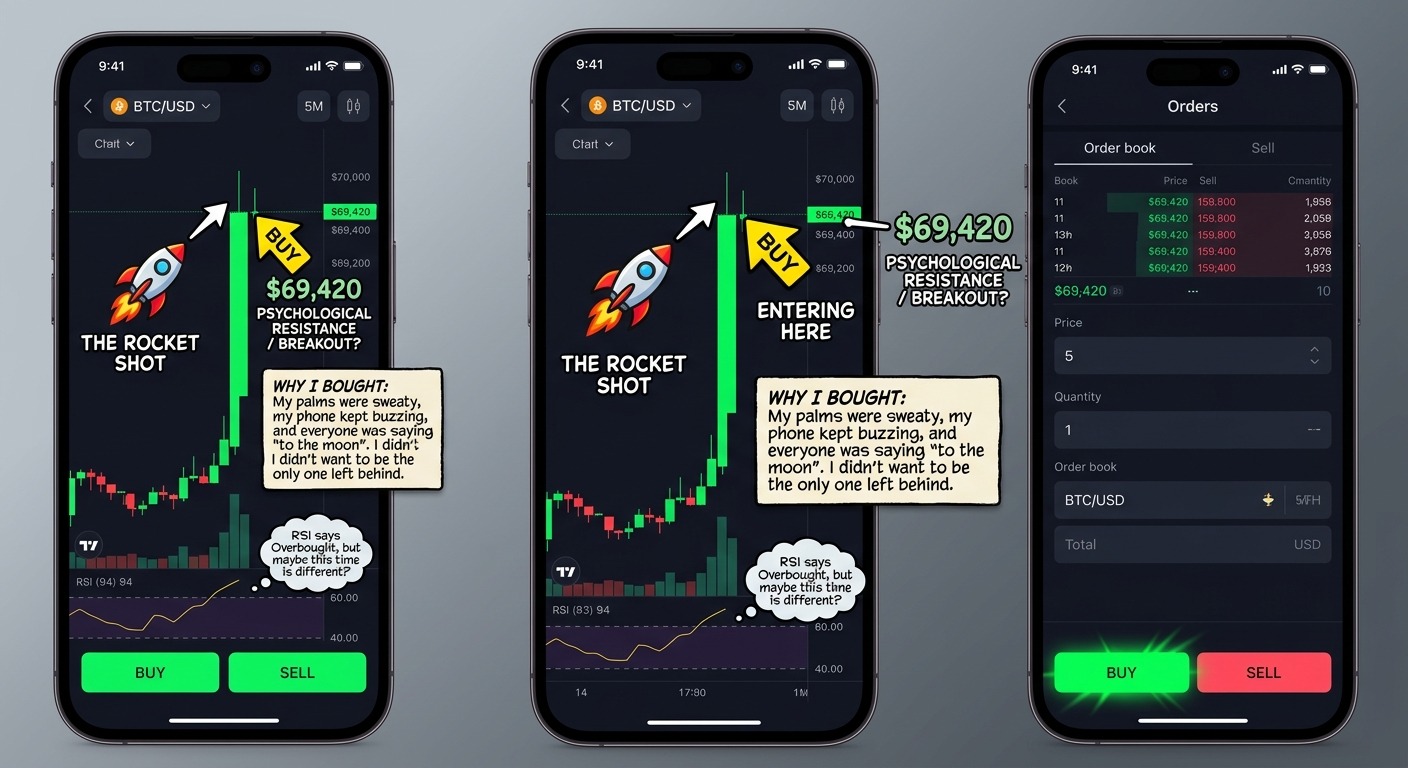
The chart looked like a rocket blasting off into space.
It was 11:14 PM on a quiet Tuesday. I was lying in bed, half-asleep, scrolling on my phone. Suddenly, a notification popped up. A tiny altcoin I had been watching all week was suddenly shooting up. Ten percent in three minutes. Then fifteen. Then twenty.
My heart started thumping against my ribs. My palms felt sweaty. A loud voice inside my head started shouting that everyone else on the internet was getting rich while I sat there doing nothing.
I did not draw a single trendline. I did not check where the major resistance levels were sitting on the chart. I did not even look at the trading volume. I just slammed my thumb against the buy button with half of my account balance.
The second my order went through, the green candle froze.
It hung in the air for five horrifying seconds. Then a massive red line crashed down through my screen like a falling rock. My entire account balance shrank right before my eyes. In under a minute, $500 disappeared into thin air.
That painful night taught me a lesson I will never forget. I was not trading the market. I was trading my own wild panic. If you want to stop losing your hard-earned capital to crazy chart spikes, you need a disciplined system. I finally found my trading edge through Becoin Premium, where in-depth daily analysis replaces panic buying.
What Is FOMO and Why Does Your Brain Trick You?
FOMO stands for Fear of Missing Out. In everyday life, it happens when you see pictures of a fun party you missed. In trading, it happens when you see a price chart moving up fast without you on board.
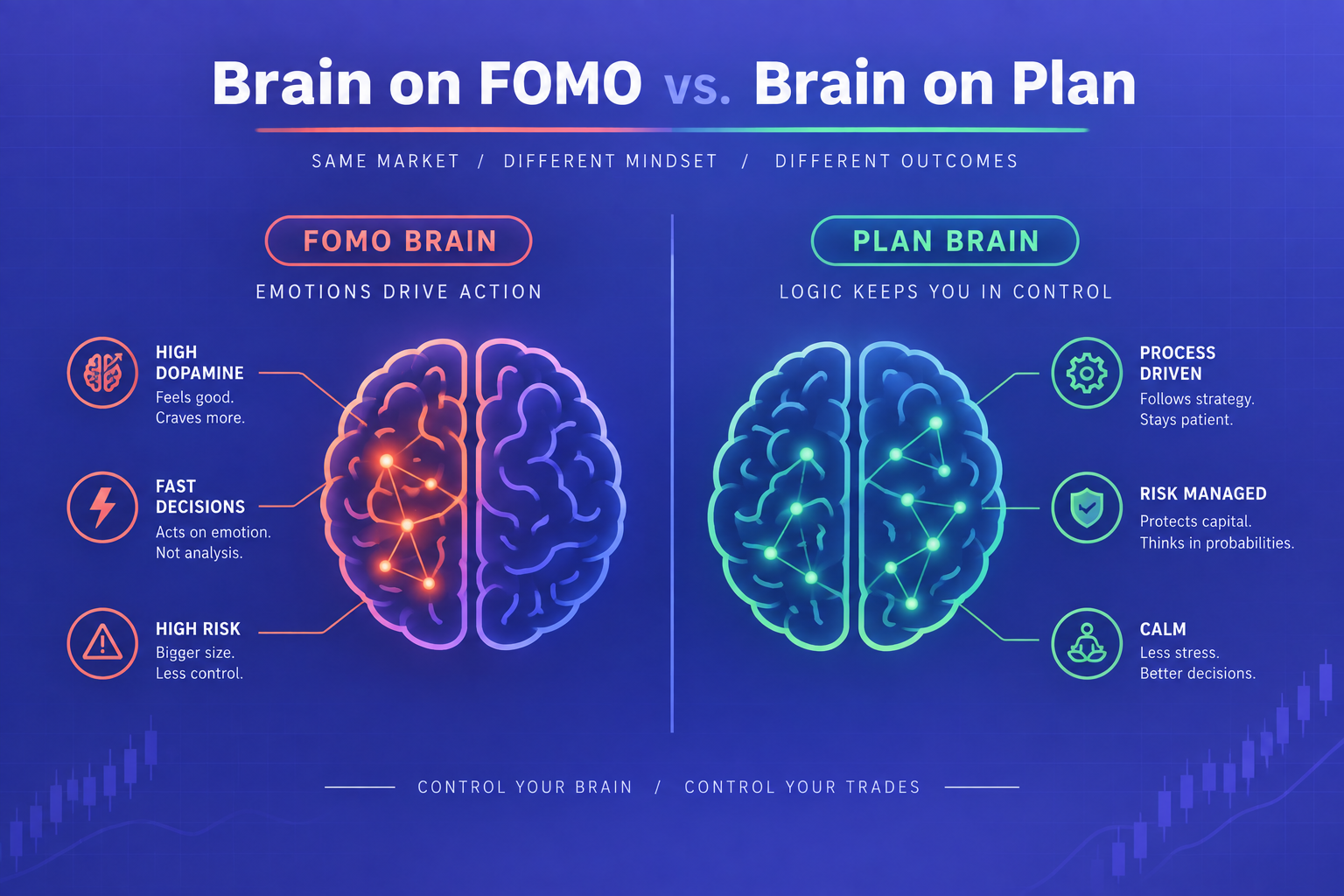
Your brain plays a sneaky game with you during these moments. Seeing prices jump fast releases dopamine, the same chemical your brain makes when you eat sweet candy or win a prize in a game.
At the same time, your mind processes a missed profit as if someone stole money right out of your pocket. That is why watching a chart soar without you feels physically uncomfortable.
Researchers examining stock market dynamics in a published study on The Effects of FOMO on Investment Behavior found that panic-driven investors regularly trade on emotion over logic, triggering overtrading, speculative choices, and severe financial losses.
When price charts explode upward, your brain wants to leap on board. But jumping onto a high-speed train usually ends in a crash.
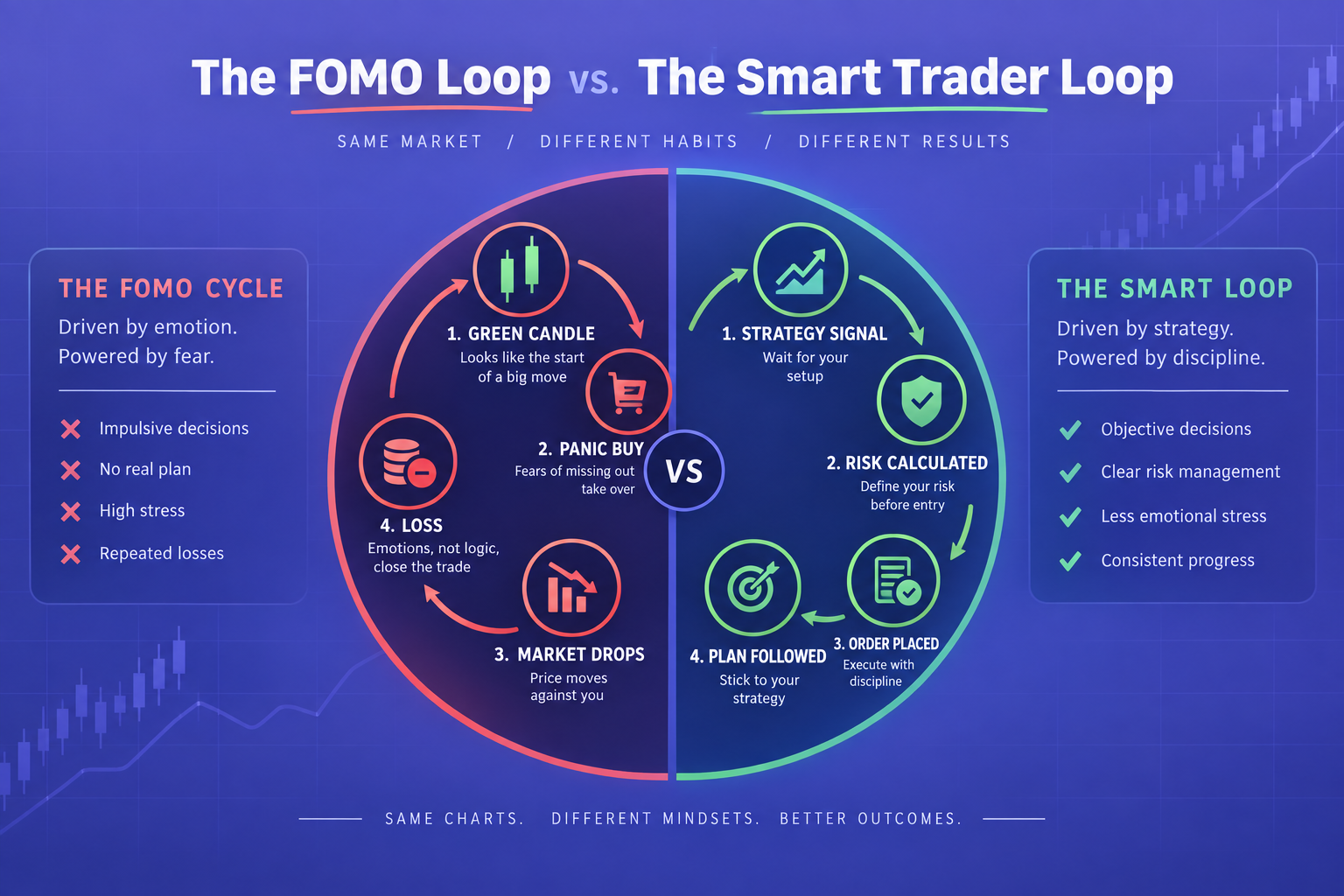
The Four Triggers That Make You Trade Recklessly
To defeat an enemy, you must know how it operates. I spent months journaling my worst mistakes, and I identified four specific traps that always triggered my impulsive trades.
The Giant Green Candle
You open your screen and see a massive green bar shooting straight toward the sky. You freeze up. You convince yourself that if you do not enter right now, you will lose your only shot at a big win.
Social Media Hype
You open your favorite trading feed. Everyone is posting screenshots of huge wins. You never see the dozens of bad trades they quietly deleted earlier that morning.
Regret Over Past Misses
Maybe you spent hours looking at a setup yesterday, decided to wait, and then watched it run up fifty percent. The next time you spot any quick price movement, you jump in too early just to heal your wounded pride.
Revenge After a Loss
When you lose money on a trade, your ego hurts. You want that money back immediately. You leap into the very next moving chart you find without waiting for a real technical signal.
How I Rebuilt My Trading Routine
Overcoming this emotional roller coaster took time, but I created simple rules that saved my portfolio.
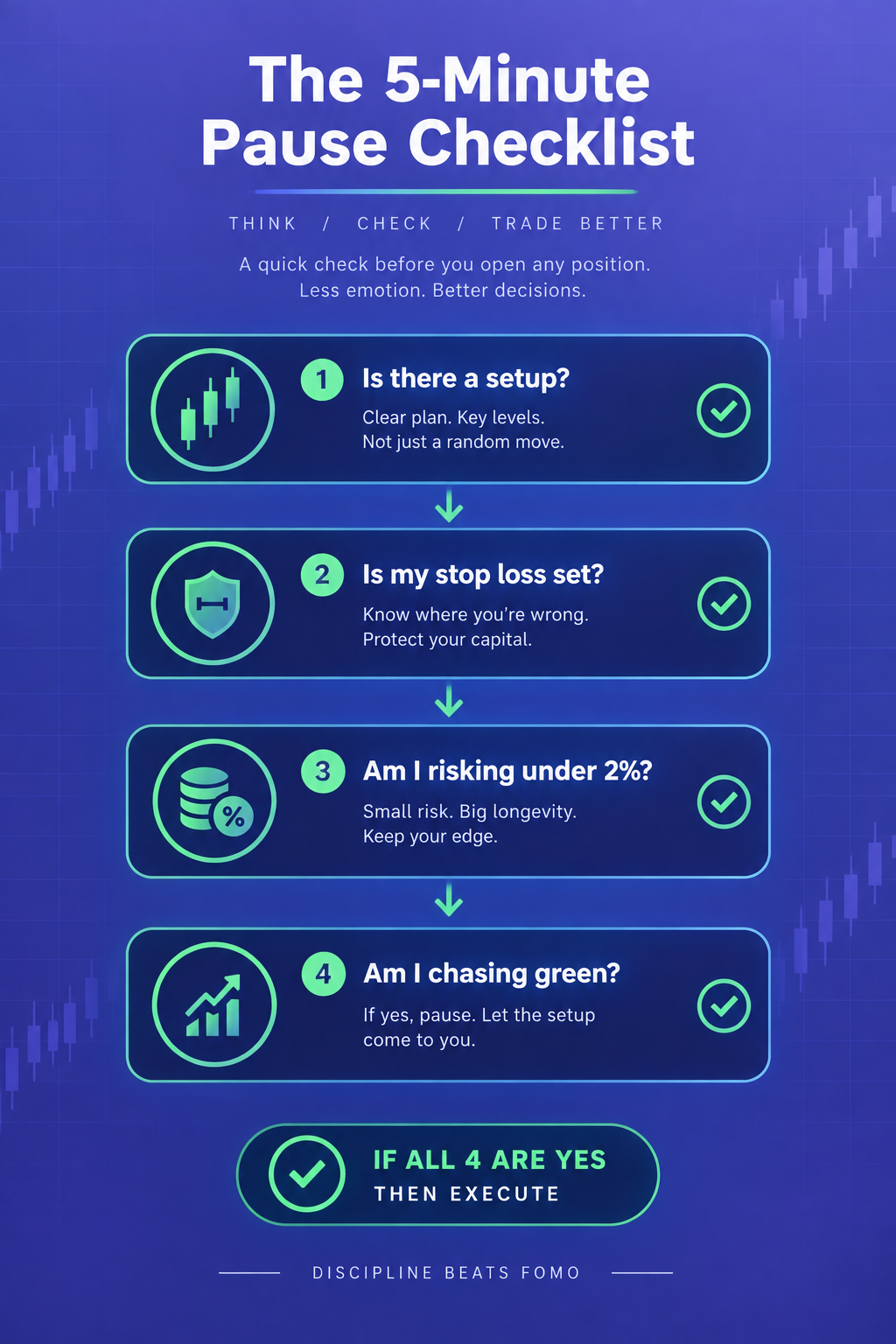
First, I built a quick verification routine before placing any order. I answer three basic questions:
- Where is my exit plan if this chart goes against me?
- Am I risking less than one or two percent of my balance?
- Did I plan this trade before the price started moving fast?
If I cannot give a clear yes to every question, I lock my screen and step away.
Second, I began practicing on reliable platforms where I could test setups without burning real cash.
If you want to test your technical strategies on smooth demo charts, explore the practice environments on Binomo or build a structured layout on IQ Option.
For fast chart setups, platforms like Pocket Option and Quotex offer responsive tools to refine your execution timing.
I also tested execution speeds using ExpertOption alongside Olymp Trade for multi-asset tracking.
If you like clean and modern tools, Capital Core and Deriv provide quiet trading spaces to execute setups without emotional clutter.
Three Steps to Stop Panic Trading Today
If you feel your heart racing while watching a live chart, try these three steps to regain control.
Step 1: The 5-Minute Pause
When you feel a sudden urge to jump into a fast trade, step away from your computer. Set a five-minute timer on your phone. If the trade setup still makes sense after five minutes of cooling off, re-evaluate it. Most of the time, the emotional urge disappears.
Step 2: Calculate Your Downside First
Uncontrolled excitement makes you dream about huge gains before you even enter. Turn that habit around. Before opening a position, calculate exactly how many dollars you lose if the trade fails. If that number bothers you, skip the trade. Check out Becoin’s position size calculator.
Step 3: Keep an Honest Trading Journal
Write down every single position in a physical notebook. Record why you entered, how you felt in your chest, and what the chart looked like. Reviewing your entries weekly helps you spot bad habits quickly.
I covered similar psychological adjustments in our guide on Developing Disciplined Trading Habits on the main blog. Learning from your past choices is the quickest path toward consistent trading.
The Market Always Offers Another Chance
The biggest turning point in my journey happened when I accepted one clear fact: The financial markets will never run out of trade setups.
Missing a huge price run feels annoying for a few minutes. But the market will build brand new setups tomorrow, next week, and next year. You do not need to capture every sudden move to grow your capital. You only need to execute the trades that meet your exact rules.
I used to think successful trading required fast fingers. Now I know it requires extreme patience. When you stop chasing runaway charts, you stop donating your money to disciplined traders who sat back and waited for the right setup.
If you are ready to quit guessing and start trading with professional confidence, you do not have to do it by yourself. Explore live chart updates on our Becoin Forecast Hub, and give yourself a permanent market edge by joining Becoin Premium today. Access deep chart breakdowns, real-time alerts, and systematic market analysis built for long-term growth.
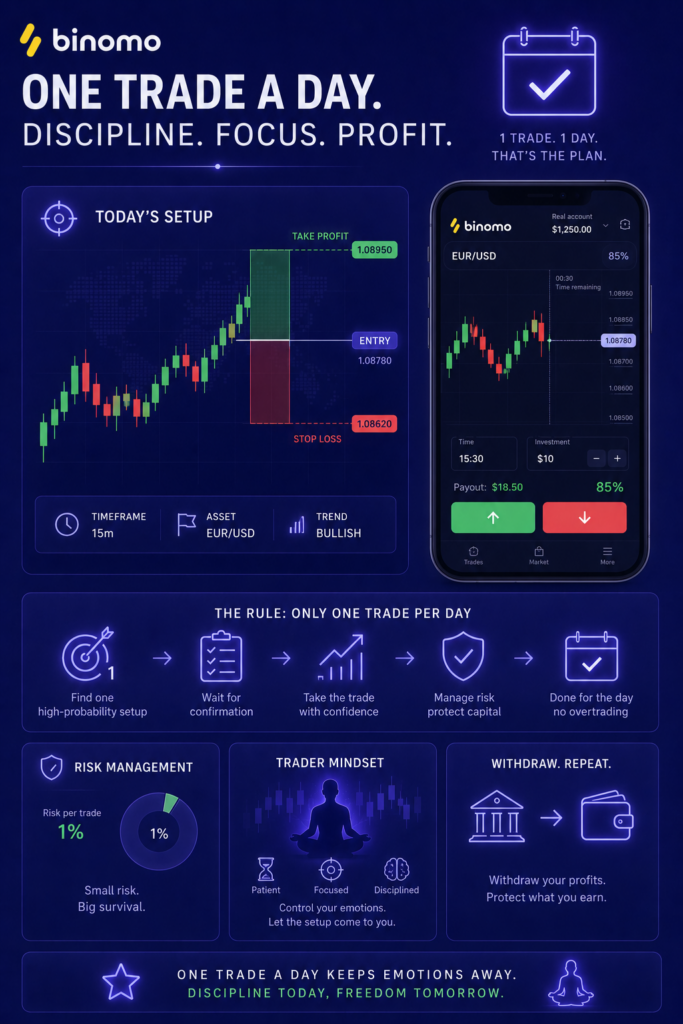
Best Broker for One Trade a Day Strategy in 2026
Most traders lose money because they trade too much. They enter random setups, chase candles, overreact emotionally, and turn a simple strategy into pure gambling. That is exactly why the one trade a day strategy is becoming more popular among smart traders in 2026. Instead of sitting in front of charts all day, this approach […]
Chasing Safety in a High-Stakes World: My Quest for the Best Low-Risk Trading Platforms
I still remember the sinking feeling in my stomach when I lost my first tiny trading account. It wasn’t a massive fortune, but it was mine. That night, I realized a brutal truth about this industry: most beginners fail not because they lack passion, but because they dive into high-risk environments without a life jacket. […]
Deriv vs Binomo Deposit Methods: My 2026 Real Money Comparison Guide
I sat in the corner of a crowded coffee shop, my eyes fixed on my phone screen. After months of testing strategies on a demo account, I had finally saved up a small pocket of risk capital. I felt ready to trade live. A high-probability setup was forming on my charts, and my heart rate […]

Which Broker Is Better for Students in 2026?
For students, trading usually starts with one simple goal: learning how markets work without risking too much money. Most students are not starting with huge budgets. They are trading from a phone, using mobile internet, balancing studies, and trying to avoid losing money quickly. That changes what actually matters in a broker. The “best broker” […]

Best Broker for Pakistani Traders in 2026
Finding the best broker in Pakistan is not as simple as choosing the platform with the biggest ads or the highest payout percentage. Pakistani traders face unique challenges including payment method limitations, withdrawal delays, unstable strategies, and brokers that look attractive at first but become difficult to use later. Many beginners deposit money into the […]