Nancy Pelosi Stock Tracker: Latest Trades, Portfolio & Performance
Every disclosed trade from official STOCK Act filings — and why 2026 is the last year anyone gets to track them.
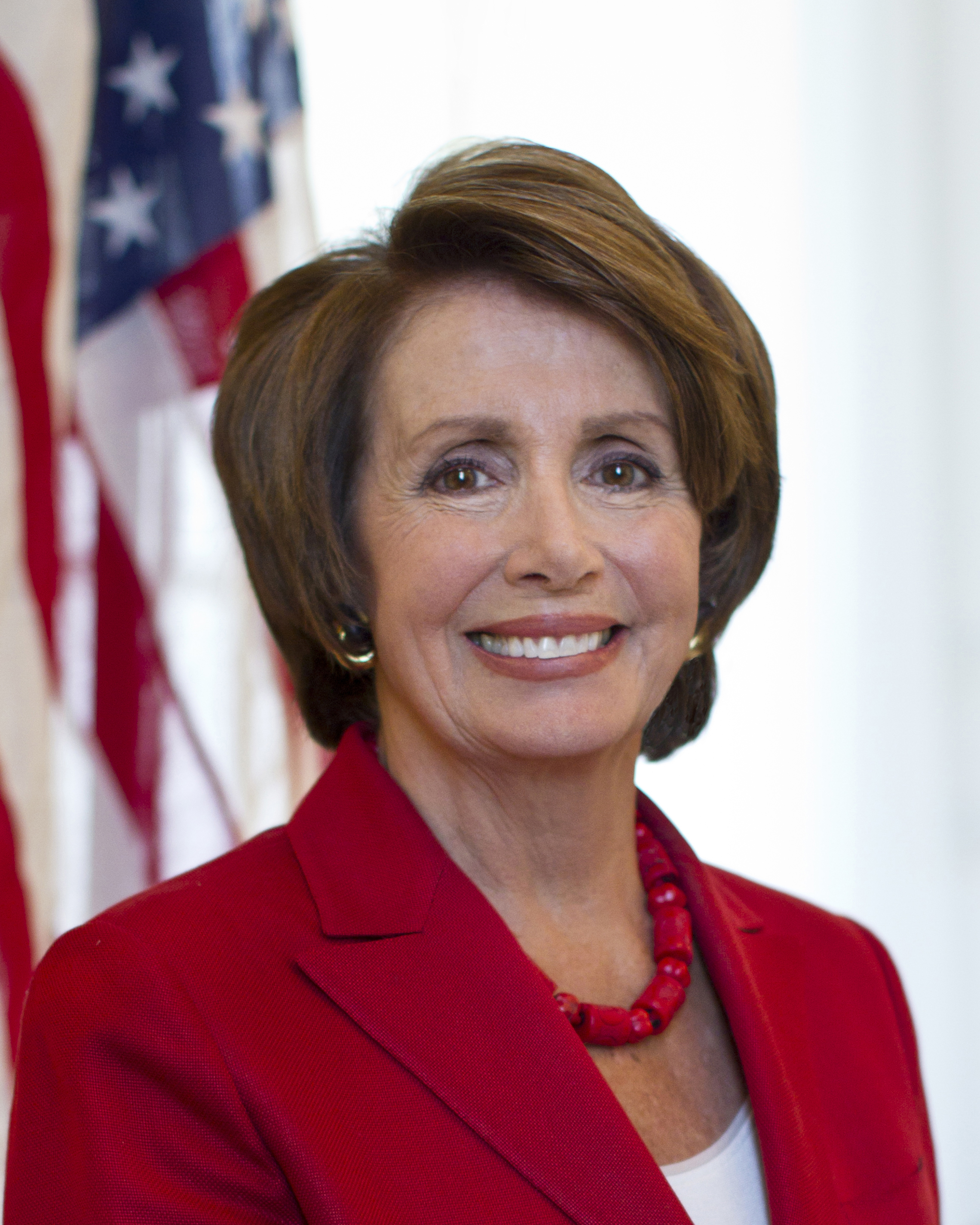
Wall Street has research departments; retail traders have Nancy Pelosi's Periodic Transaction Reports. Love it or hate it, the former House Speaker's family portfolio has become the most-watched set of financial disclosures in American politics — and there's a deadline attached now: she isn't running for re-election, so the filings stop in January 2027. This page tracks what the official filings actually say, without the hype.
Latest disclosed trades
All rows come from House Periodic Transaction Reports (PTRs). Values are the ranges the STOCK Act requires — exact amounts are never disclosed.
| Traded | Filed | Ticker | Action | Reported value | Since trade* |
|---|---|---|---|---|---|
| May 29, 2026 | Jun 23, 2026 | INTC | Buy 200 calls, $50 strike, exp Mar 2027 | $1M–$5M | +6.5% |
| May 29, 2026 | Jun 23, 2026 | UBER | Buy 200 calls, $50 strike, exp Mar 2027 | $500k–$1M | +7.3% |
| Jan 16, 2026 | Jan 23, 2026 | AB | Buy 25,000 shares (new position) | $1M–$5M | −17.3% |
| Jan 16, 2026 | Jan 23, 2026 | GOOGL | Exercise 50 calls → 5,000 shares ($150 strike) | $500k–$1M | +1.4% |
| Jan 16, 2026 | Jan 23, 2026 | AMZN | Exercise 50 calls → 5,000 shares ($150 strike) | $500k–$1M | −6.2% |
| Jan 16, 2026 | Jan 23, 2026 | NVDA | Exercise 50 calls → 5,000 shares ($80 strike) | $250k–$500k | −3.1% |
| Jan 16, 2026 | Jan 23, 2026 | TEM | Exercise 50 calls → 5,000 shares ($20 strike) | $50k–$100k | −22.0% |
| Jan 16, 2026 | Jan 23, 2026 | VST | Exercise 50 calls → 5,000 shares ($50 strike) | $100k–$250k | — |
| Dec 30, 2025 | Jan 2026 | AAPL | Buy 20 calls, $100 strike, exp Jan 2027 | $50k–$500k | — |
| Dec 30, 2025 | Jan 2026 | DIS | Sell 10,000 shares | $1M–$5M | — |
| Dec 30, 2025 | Jan 2026 | PYPL | Sell 5,000 shares | $50k–$500k | — |
| Dec 24, 2025 | Jan 2026 | AAPL | Sell 45,000 shares | $5M–$25M | — |
| Dec 24, 2025 | Jan 2026 | NVDA | Sell 20,000 shares | $1M–$5M | — |
Source: US House Clerk PTR filings; *price change of the underlying since the transaction date, per Quiver Quantitative estimates (Jul 2026). Note the Traded → Filed gap: that is the disclosure lag every follower inherits.
The pattern of the last six months: harvest huge, long-held equity gains (Apple, Nvidia sales in December), convert expiring deep-in-the-money calls into stock (the January exercises), rotate into a new financials position (AllianceBernstein), and open fresh leveraged bets (Intel, Uber). It reads less like retirement and more like a portfolio reload.
Performance vs the S&P 500
No official return figure exists — the filings show ranges, not balances — so every "Pelosi return" you see is a tracker's estimate. Here's what the most-cited ones report:
| Year | Pelosi portfolio (est.) | S&P 500 | Estimate source |
|---|---|---|---|
| 2023 | ≈65% | 24.2% | Unusual Whales congressional report |
| 2024 | ≈54–71% | 25.0% | Unusual Whales / Quiver Quantitative (methods differ) |
| 2025 | ≈12–18% | ≈10–15% | Pelosi Tracker / press estimates |
| 10-year cumulative | ≈838% | ≈256% | Press analyses of tracker data |
Estimates vary because trackers must guess position sizes inside the disclosed ranges and price the options differently. Treat every figure as approximate — the direction (persistent outperformance), not the decimals, is the story.
Copy-trade strategy vs S&P 500, cumulative since 2014
Endpoint figures per Quiver Quantitative's Pelosi copy-trade model (Jul 2026: +887.1% vs SPY +297.1% since May 2014); the path between points is illustrative. Past performance guarantees nothing.
What the portfolio holds now
Reconstructed from filings, the family portfolio is an AI-heavy barbell: mega-cap tech equity on one side, leveraged call positions on the other. Current disclosed positions include Apple (heavily trimmed in December, upside kept via 2027 calls), Nvidia, Alphabet, Amazon, Broadcom, Palo Alto Networks, Tempus AI, Vistra, AllianceBernstein, and the new Intel and Uber call options. Estimated family net worth runs from roughly $245 million (Quiver, Jun 2026) to far higher depending on how real estate and private holdings are counted; disclosed trading since 2014 totals $216.74 million across 203 transactions (Quiver, Jun 2026).
Disclosed buys vs sells by year (2014–2026)
Reported-range midpoints, USD millions. Green = buys/exercises, orange = sales.
Compiled from PTR filings (Quiver Quantitative aggregation, Jul 2026). The 2025 orange spike is the great Apple/Nvidia profit-taking; 2026 so far is all buying.
All 203 disclosed trades by sector
Sector counts per Quiver Quantitative (top 5 shown). Three quarters of everything the family has ever disclosed sits in tech and communications.
The playbook: deep-in-the-money calls
The signature move in the filings is the deep-in-the-money (DITM) call option — contracts with strike prices far below the market price. A $150-strike Alphabet call behaves almost exactly like Alphabet stock (delta near 1.0) but ties up a fraction of the cash, freeing capital to spread across Nvidia, Broadcom, Palo Alto, Tempus and Vistra at once. It's leverage, but the conservative kind: the options already carry intrinsic value, so they rarely expire worthless. The January 2026 exercises — five positions converted to stock in one day — are that strategy completing its cycle.
The five trades that built the legend
Outcomes below use disclosed entry filings and subsequent public prices; exact position profits are unknowable because filings state ranges.
| Trade | Disclosed | What happened next |
|---|---|---|
| Nvidia $52-strike LEAPS (500 contracts) | Nov 2023 | Exercised Dec 2024 into 50,000 shares through the AI supercycle; NVDA roughly tripled over the holding window. At times ~20% of the whole portfolio. |
| Tempus AI $20-strike calls | Jan 2025 | Stock ran from ≈$35 to ≈$89 within a month of disclosure (+150%); exercised Jan 2026 at a $20 strike. |
| Broadcom $80-strike calls (200 contracts) | Jun 2025 | Exercised into 20,000 shares with AVGO trading several times the strike; retail volume spiked on the filing. |
| Palo Alto Networks $100-strike calls (140 contracts) | Dec 2024 | Exercised into 14,000 shares at roughly half the market price of the time. |
| Apple long equity position | built over years | 45,000 shares sold Dec 2025 ($5–25M) plus a 28,200-share charitable contribution — upside retained via $100-strike calls to 2027. |
Sourced from PTR filings + subsequent market prices; per-trade returns are estimates, not disclosed figures.
Who actually places the trades
Paul Pelosi, her husband and a San Francisco investor, manages the portfolio; STOCK Act rules simply require every filing to carry the member's name. Members must report any trade over $1,000 within 45 days — that lag is why "copying Pelosi" means buying weeks after the fact. Her office has consistently said she owns no stocks personally and doesn't direct the trades. Critics answer that the household still benefits from proximity to policy — the reason congressional-trading-ban bills keep returning to the floor.
The "Pelosi Effect"
Disclosures move markets. The cleanest example: Tempus AI — after her January 2025 options purchase became public, the stock ran from about $35 to $89 within a month as retail money piled in. Broadcom volume spiked after the June 2025 call exercise was filed; every Nvidia disclosure feeds a news cycle. There are now ETFs and copy-trading products that mirror the filings automatically — some marketing S&P-beating returns. The irony is structural: by the time a PTR is public, the trade is up to 45 days old. Followers buy the echo, not the signal.
How to track her filings yourself — free, 3 steps
You don't need a paid app; the primary source is public:
- 1. Open the House Clerk's financial-disclosure portal (disclosures-clerk.house.gov) and search "Pelosi, Nancy" under Periodic Transaction Reports. Every filing is a PDF with ticker, date, action and value range.
- 2. Read the two dates. Each row shows a transaction date and a filing date — the gap between them (up to 45 days) is your information lag. Trades over $1,000 must be filed within 30 days of the member becoming aware, never more than 45 days after execution.
- 3. Set an alert. Free tiers of Quiver Quantitative and Capitol Trades email you when a new Pelosi PTR lands, usually within hours of publication.
Expect a handful of filings per year, in bursts — she filed in January and May of 2026, and heavily each December.
Copying the portfolio: ETF, apps, or DIY?
Three ways people "trade like Pelosi", and what each actually gets you:
- The "Pelosi ETF" (NANC) — the Unusual Whales Subversive Democratic Trading ETF, ≈$272M in assets (June 2026), ≈+20.4% over the past year. Reality check: it tracks disclosed trades of all Democratic members and families across ~750 holdings — Pelosi's filings influence it, but it is not a Pelosi clone.
- Tracker apps and copy portfolios (Pelosi Tracker, Autopilot-style products) — mirror her filings directly, but execute only after disclosure. You inherit the full 45-day lag.
- DIY from the PTRs — free and fastest after publication, but the same structural problem applies: in the Tempus AI case the stock had already begun rerating before most followers could act, and December's big Apple/Nvidia sales were public weeks after the fact.
That lag is the honest takeaway: every follower — ETF, app or DIY — buys the echo. If the edge is information, it expired before you could trade it; what remains is a curated momentum portfolio of mega-cap tech.
Don't trade 45 days late. Trade with a model.
Every ticker in her filings has a live BeCoin forecast — bull, base & bear scenarios for Nvidia, Apple, Alphabet, Amazon and thousands more.
Open the forecast hubMethodology & data sources
Trades come from official US House Periodic Transaction Reports filed under the STOCK Act (searchable at the House Clerk's financial-disclosure portal under "Hon. Nancy Pelosi"), cross-checked against Quiver Quantitative and Capitol Trades compilations. Filings state value ranges only, so all dollar totals here are range midpoints; performance figures are third-party tracker estimates (Unusual Whales, Pelosi Tracker) whose methodologies differ — we report them as ranges with attribution. Net-worth figures are estimates and vary widely by source. This page is educational information, not investment advice and not an accusation of wrongdoing: all described activity is legal under current law. See our disclaimer. Quantitative tracker values are dated snapshots and may change after new filings or market-data revisions.
Sources: House Clerk PTR filings (2024–2026) · Quiver Quantitative · Capitol Trades · Unusual Whales congressional reports · press analyses of tracker data. Compiled Jul 2026.