Why Revenge Trading Feels So Tempting (And How to Stop It)
⚠️ Emergency Notice for Active Traders:
If you just lost money and feel a strong urge to open a new trade immediately. STOP! Step away from your computer, close your trading app, and take 15 minutes to reset. Your brain is reacting to stress, not logic.
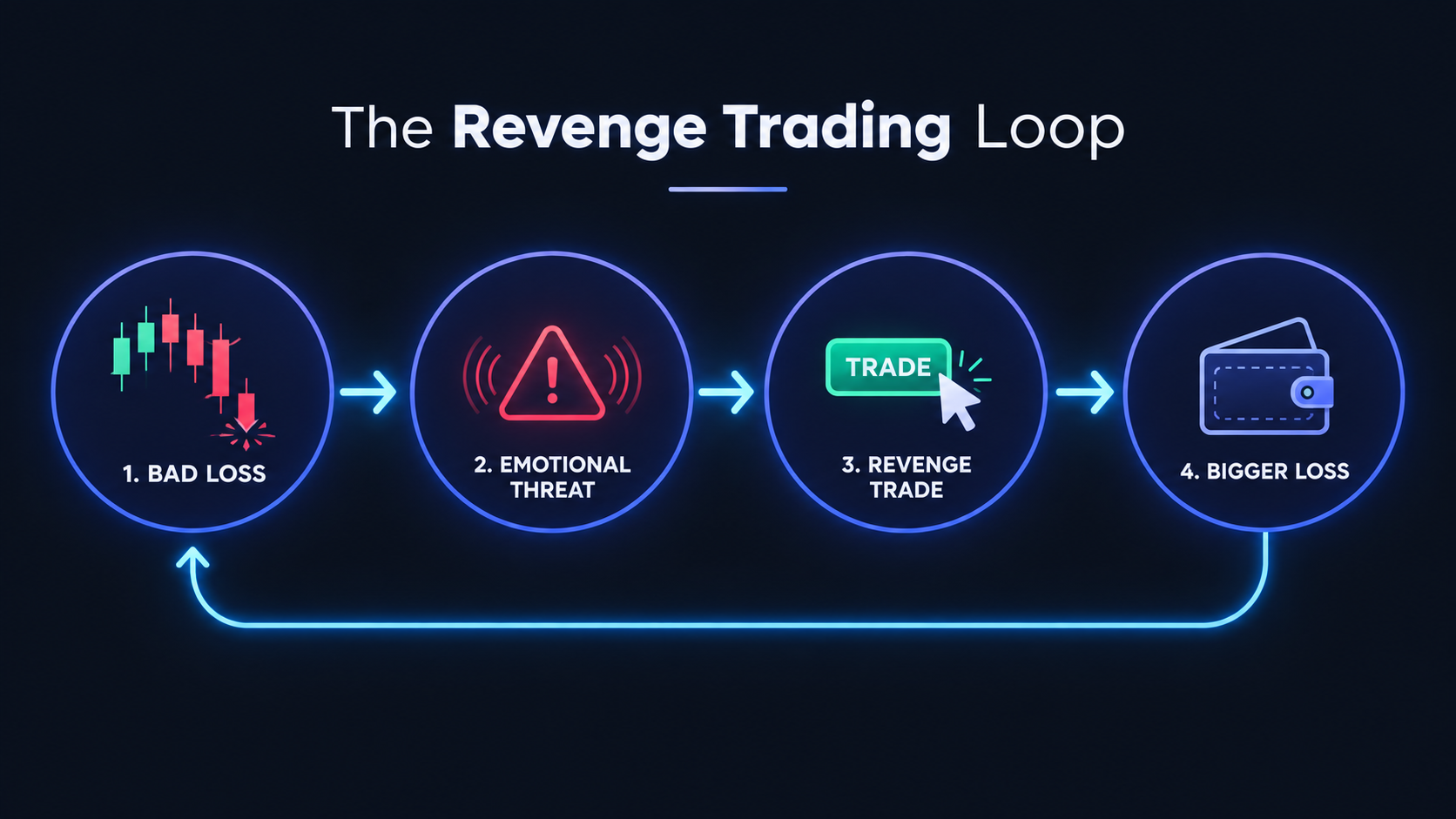
I still remember staring at my screen at 2:15 AM after taking a quick $1,200 loss. My heart was racing. Instead of closing my laptop and calculating data properly, I got furious. I doubled my lot size and clicked BUY without a real setup.
Ten minutes later, my entire account balance was wiped out.
When you make a wrong trading decision, it is easy to react out of anger rather than analysis. But instead of revenge trading, the smart move is to pause, breathe deeply, and reconnect with cold, objective market data.
If you want to remove emotion from your daily decisions, start by checking ourBecoin Home Page. Our algorithms analyze over 300 market signals in real time to provide accurate, data-driven forecasts for day trading and investing. For traders who want full institutional-grade trade parameters and high-probability setups, upgrade directly to ourBecoin Premium Plans to execute with clarity and discipline.
What Is Revenge Trading?
Revenge trading happens when you try to win back lost money immediately after a bad trade. Instead of following your strategy, you trade out of anger, fear, or frustration.
When you revenge trade:
- You ignore risk management rules.
- You open trades without clear technical setups.
- You risk far too much capital on a single position.
A comprehensive behavioral finance study published in theJournal of Financial and Quantitative Analysis confirms that emotional trading spikes significantly after account losses, directly driving poor execution and severe underperformance. Researchers found that traders who let recent losses dictate their next entry consistently suffer larger subsequent drawdowns than those who adhere to strict risk rules.
Why Does Revenge Trading Feel So Irresistible?
Revenge trading is not a knowledge problem; it is a biology problem.
1. Loss Aversion (Losing Money Hurts)
The psychological pain of losing money is twice as powerful as the pleasure of making the exact same amount. When you lose $100, your brain treats it like an emergency. You want to regain control immediately.
2. Your Brain Under Attack
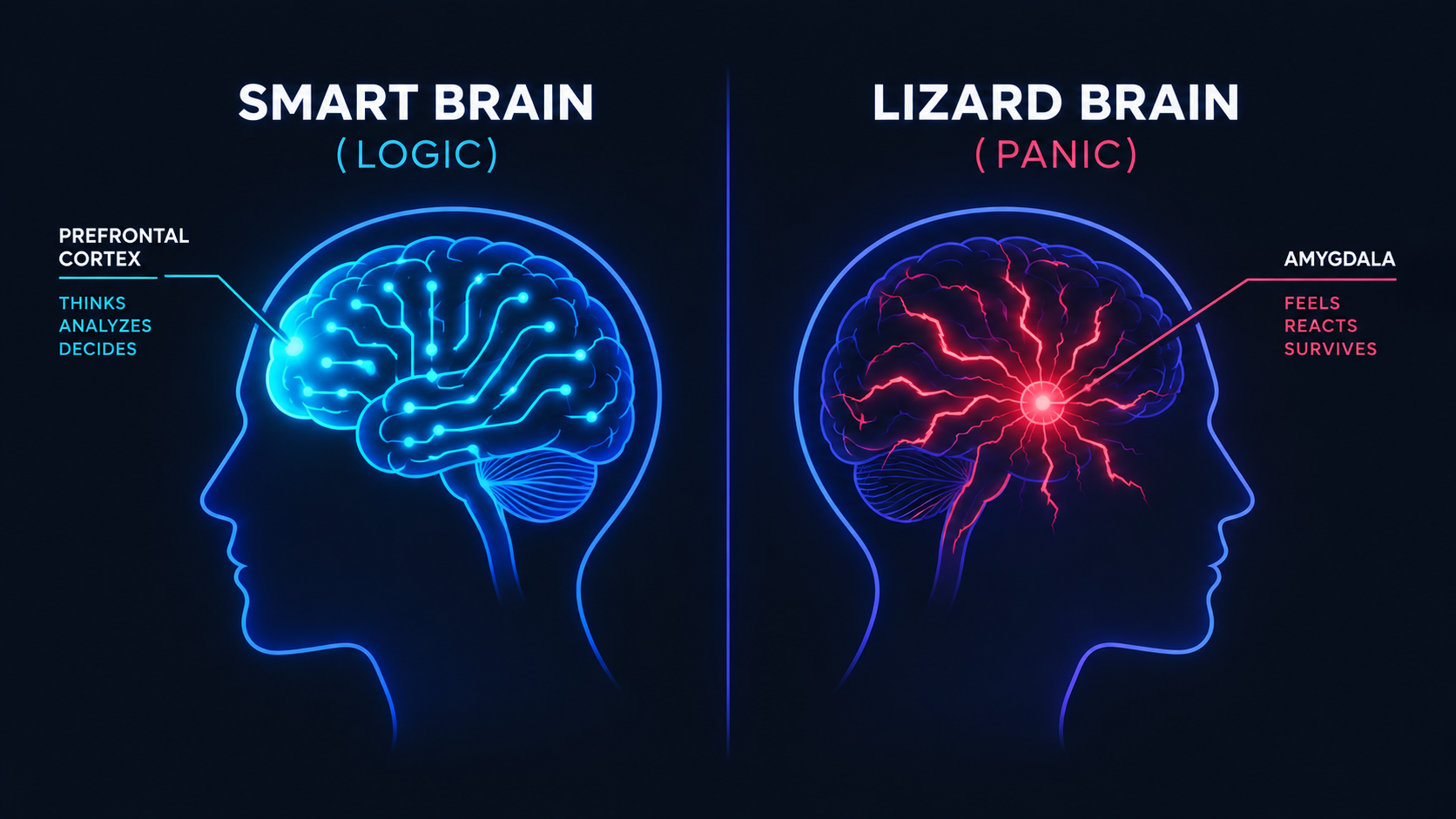
When a trade hits your stop-loss, a part of your brain called the amygdala detects an emotional threat. It floods your body with stress hormones like cortisol and adrenaline:
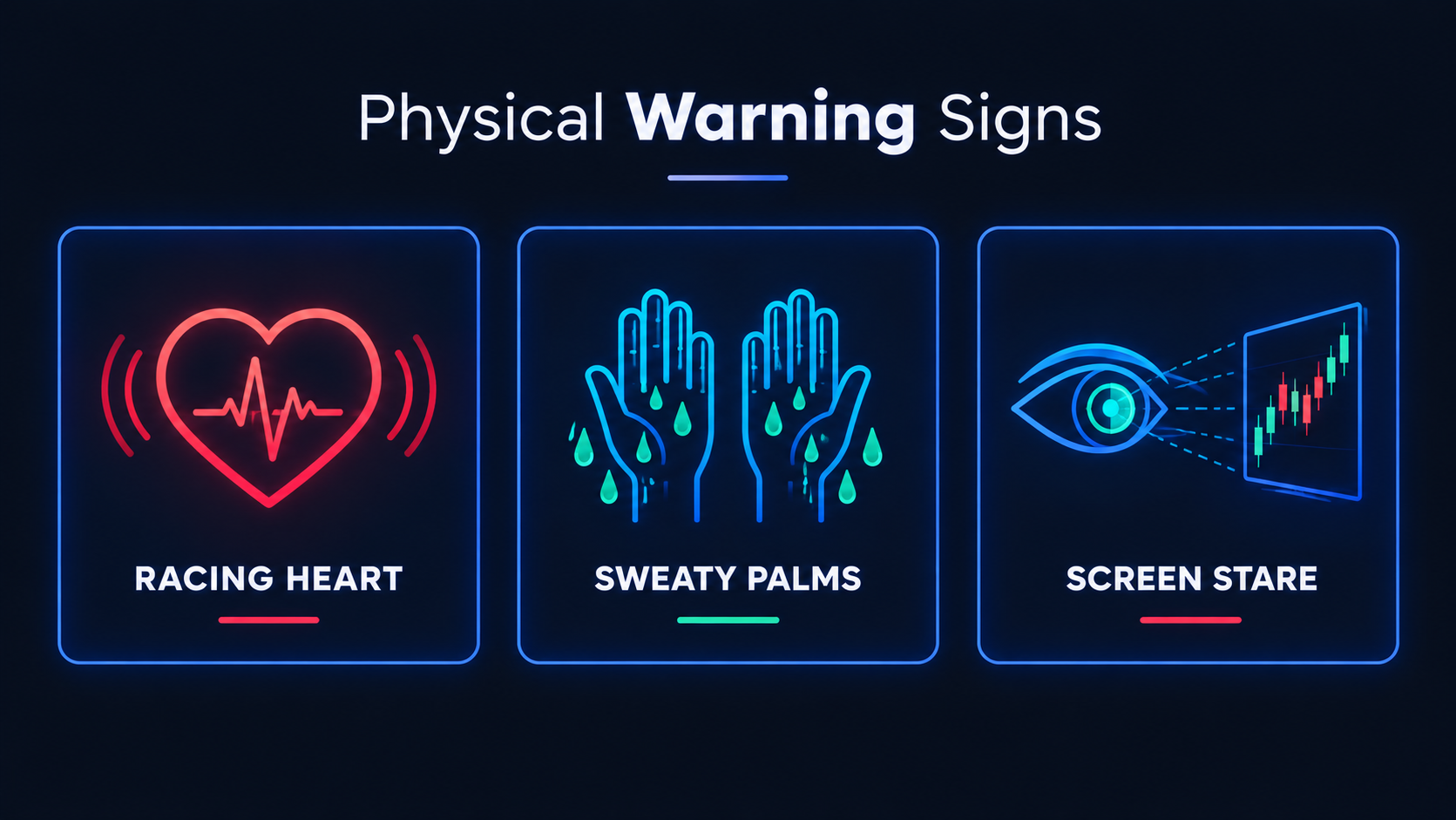
- Your heart rate goes up.
- Your field of vision narrows.
- Your logical prefrontal cortex temporarily turns off.
You enter a "fight-or-flight" state. Because you cannot physically fight the market charts, your brain fights back by opening another trade.
3. The Dopamine Trap
Opening a new trade gives your brain a quick shot of hope. For a few seconds, your anxiety disappears because you tell yourself: "If this trade wins, I will break even." This creates an addiction cycle similar to playing a slot machine.
How to Spot the Warning Signs
Before clicking order buttons emotionally, check yourself for these warning signs:
| Physical Signs | Emotional & Mental Lies |
|---|---|
| Fast or shallow breathing | "The market owes me this money back." |
| Clenched jaw or tight shoulders | "If I double my position, I only need a small move." |
| Staring intensely without blinking | "I just want to break even, then I will stop." |
| Hot sensation in your face or chest | "This setup isn't perfect, but it might work." |
The 4-Step "Circuit Breaker" System
Willpower fails under stress. To protect your capital, you need automated rules and physical habits.
Step 1: Follow the 30-Minute Rule
Stress hormones take roughly 20 to 30 minutes to leave your bloodstream. After closing a losing trade, force yourself to step away from your trading desk for at least 30 minutes. Take a walk, drink water, or stretch. Do not look at market charts until your heart rate slows down.
Step 2: Set a Hard Daily Loss Limit
Decide your maximum allowed loss per day before you open your platform (for example, 2% of your account). If you hit that loss limit, your trading day is officially over. Turn off your computer.
If you want to build structured daily habits, check out our guide on theSimple Daily Trading Routine for Consistency to keep your risk on track.
Step 3: Focus on Process, Not P&L
A trade that follows your rules and loses money is still a good trade. A trade that breaks your rules but happens to make money is a bad trade. Measure your daily performance by how well you followed your plan, not by your total profit or loss.
Step 4: Keep a Pre-Trade Checklist
Before opening any new position, answer this single question in your journal:
"Am I placing this trade because my strategy gave a valid signal, or because I am trying to cover a previous loss?"
Ready to Trade with Structure Instead of Emotion?
Revenge trading thrives when you lack a clear market strategy. Stop relying on impulse and start trading with analytical backing.
- Get Real-Time Market Structure: Stop guessing market direction. Explore our structured, data-driven analysis across Crypto, Forex, and Stocks at theBecoin Forecast Hub.
- Find the Right Platform for Your Risk Style: Choosing the right broker with clear risk management tools can prevent costly mistakes. Read our raw comparison guide onFinding the Best Trading Broker for Side Income or compare platforms in our detailed breakdown ofBinomo vs IQ Option for Small Accounts.
- Upgrade Your Execution: Want access to institutional-grade setups and actionable trade parameters? Check outBecoin Premium Plans to trade with a proven statistical edge.

Deriv vs IQ Option for Beginners in 2026: Which Platform Is Better to Start With?
Choosing your first trading platform can decide whether you stay consistent or quit after blowing your first account. Most beginners do not fail because trading is impossible. They fail because they start on platforms that confuse them, encourage emotional trading, or make risk management difficult. Two names that often appear in beginner discussions are Deriv […]

Binomo vs IQ Option for Small Accounts: Which Platform Is Better for Beginners in 2026?
Most people entering online trading do not start with thousands of dollars. They start small. Usually with $10, $20, or maybe $50. That small balance changes everything about how a trader behaves. Every loss feels bigger, every win feels emotional, and every mistake has a stronger impact on the account. This is exactly why beginner […]
Simple Daily Trading Routine for Consistency
Most traders do not fail because of strategy alone. They fail because they are random. They trade when emotional, skip planning, increase risk after losses, and ignore review sessions. Consistency in trading usually comes from routine more than prediction. A simple daily trading routine helps you stay disciplined, reduce emotional mistakes, and improve decision making […]
Why Traders Move from Binomo to Deriv in 2026: The Real Reasons Behind the Switch
If you spend enough time around trading communities, you’ll notice a pattern. Many traders start with Binomo. Then, after a few months, a surprising number begin looking at Deriv. Some switch completely. Others keep both accounts but gradually move most of their trading activity to Deriv. I noticed this trend while talking to beginner traders […]
Deriv Volatility 75 Strategy Backtest: What Actually Works After 1,000 Trades?
The first time I tried trading Volatility 75, I thought I had found the perfect market. No news shocks. No central banks. Just clean, continuous price movement. Within two weeks, I blew my first account. That experience forced me to stop guessing and start testing. Instead of chasing indicators or copying strategies from forums, I […]