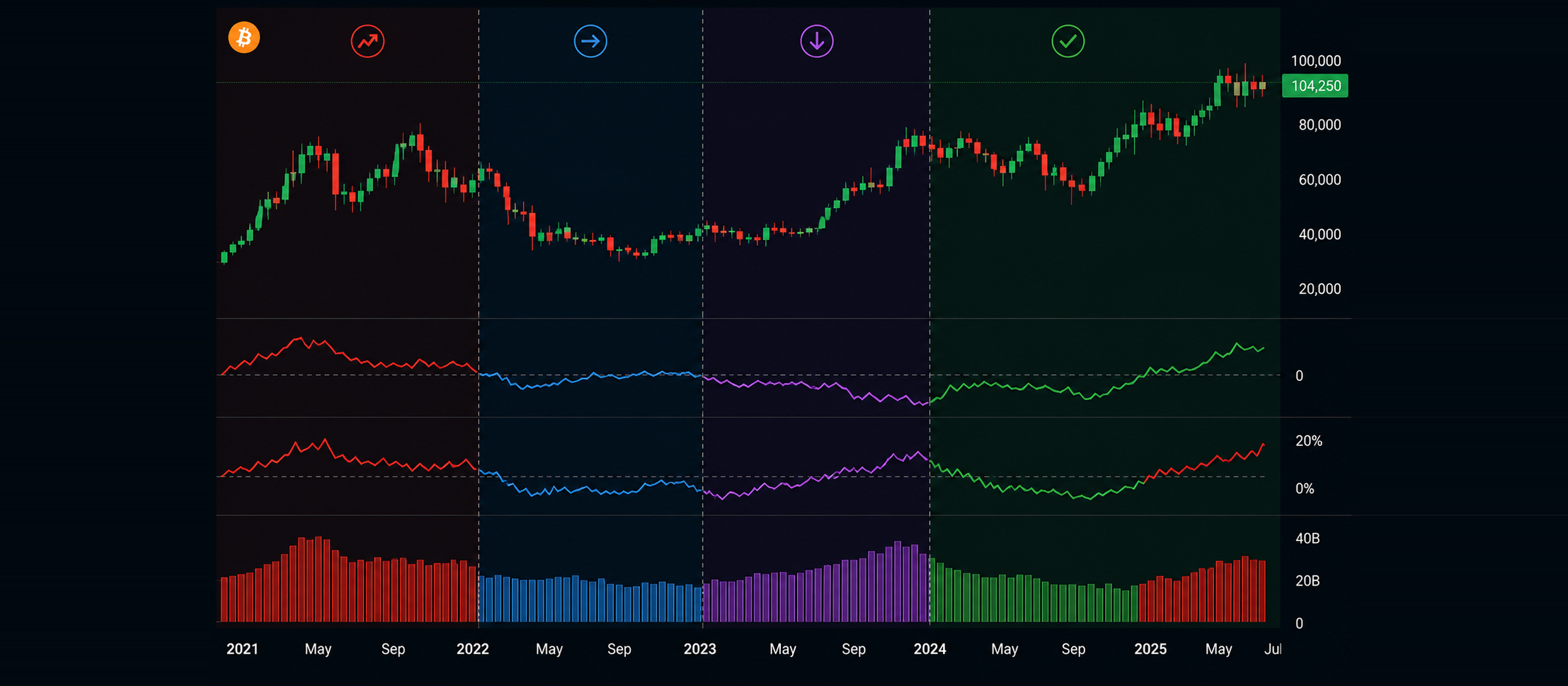
Basis, Funding and Open Interest: Reading All Three Together Instead of One at a Time
Crypto commentary tends to quote derivatives data one number at a time. Funding is elevated, so the market is overheated. Open interest is rising, so conviction is growing. Basis is wide, so institutions are buying. Each statement can be true and still be useless, because these three measures only describe positioning when they are read as a set. Individually they are ambiguous; in combination they narrow the possibilities considerably.
What each measure actually tells you
Funding is the periodic payment that keeps a perpetual contract tethered to spot. It is a price for holding a side, and it tells you which side is paying to stay there. Basis is the spread between a dated future and spot, and it reflects the cost of carry plus whatever premium the market attaches to future exposure. Open interest is the total value of contracts outstanding, which measures how much positioning exists but says nothing about who is on which side. None of the three tells you direction on its own.
Why open interest is meaningless in isolation
Rising open interest simply means new contracts are being created. That happens when new longs meet new shorts, which is not a directional statement at all. The interpretation only appears once you add price and funding. Open interest rising with price and positive funding suggests fresh long exposure paying to be there. Open interest rising with falling price and negative funding suggests fresh shorts. Open interest falling on a large price move means positions are being closed rather than opened, which usually marks the end of a move rather than its beginning.
The combinations worth recognising
A handful of configurations recur often enough to be worth naming. When basis is wide, funding is positive and open interest is climbing steadily, leveraged demand is building and the market is becoming more sensitive to a shock. When basis compresses toward cash rates while open interest holds, exposure is being carried without much speculative premium, which is a calmer structure. When funding flips negative while price holds firm, short exposure is being added into strength, which changes the balance of forced-buying risk. And when all three fall together after a sharp move, the market has cleared rather than reversed. Comparing these against spot volume and exchange depth avoids drawing conclusions from derivatives alone, and the Crypto Forecast Hub is a practical place to view them together.
Common mistakes in reading the data
Several errors are frequent enough to mention. Aggregating open interest across venues without adjusting for differing contract specifications produces misleading totals. Quoting funding as an annualized figure during a brief spike exaggerates its significance. Treating a wide basis as automatic evidence of institutional demand ignores that it can simply reflect higher risk-free rates. And comparing today's open interest to a figure from a prior cycle without adjusting for price makes growth look larger than it is, since the same number of contracts is worth more at a higher price.
What would invalidate a positioning read
A positioning thesis built on these three measures fails when the data source is incomplete. If a large share of activity migrates to venues that do not report, aggregate figures stop describing the market. If a single large participant dominates one venue, its hedging can distort funding without reflecting broad sentiment. And if spot volume collapses while derivatives volume holds, the derivatives signal is describing a shrinking and less representative market. Checking those conditions first is what separates analysis from assertion.
Becoin.net Tariff Plans ---> Here
Using the set as context
Read together, these measures describe how exposure is built, how expensive it is to hold and how fragile it might be. They do not indicate what price will do next, and this article intentionally offers no entries, targets or recommendations. The value is in interpretation: understanding whether a move is being driven by new positioning, by the unwinding of old positioning, or by something happening in spot markets entirely.
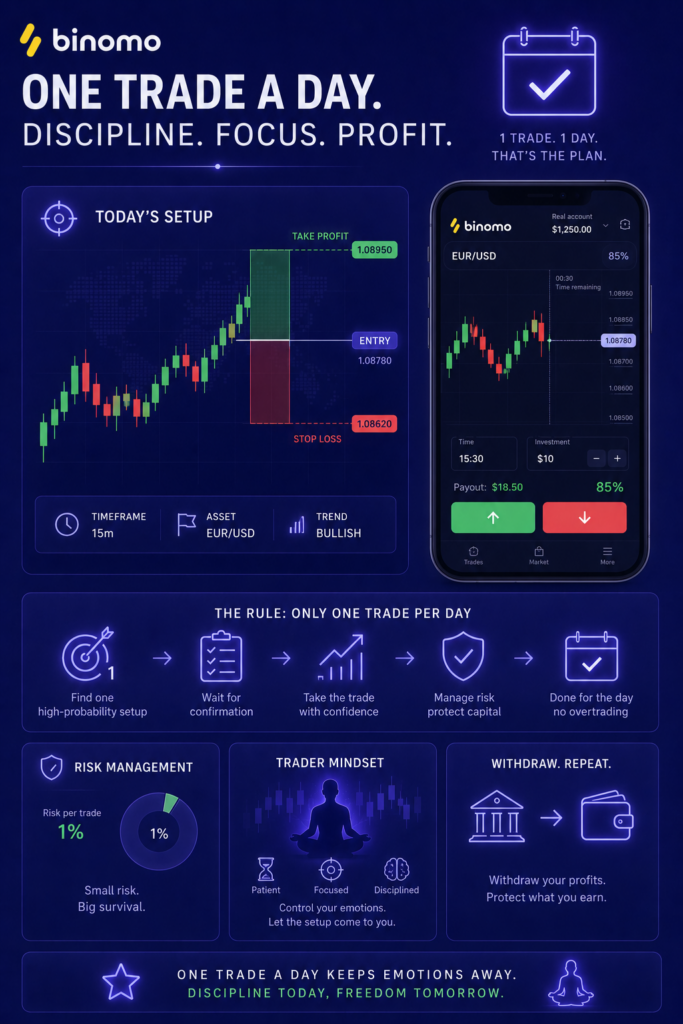
Best Broker for One Trade a Day Strategy in 2026
Most traders lose money because they trade too much. They enter random setups, chase candles, overreact emotionally, and turn a simple strategy into pure gambling. That is exactly why the one trade a day strategy is becoming more popular among smart traders in 2026. Instead of sitting in front of charts all day, this approach […]

The Best Broker Without Complicated Features (And Why Simplicity Wins)
Most traders don’t fail because they lack knowledge. They fail because their platform buries them in noise before they even place their first trade. Here’s what actually works. It Started With a Confession From a $10 Trader A reader messaged us a few months back. He had been trying to trade for three weeks, had […]
Which Broker Has Faster Withdrawals? Real 2026 Comparison for Traders
When most beginners choose a broker, they focus on bonuses, signals, or flashy interfaces. But after trading for a while, you realize one thing matters more than almost anything else: How fast can you actually withdraw your money? A broker can look perfect until your first withdrawal request gets stuck in “processing” for three days. […]

Trading Currency Strength Instead of Single Pairs
It was a Tuesday afternoon when I realized I was fighting a losing battle against a ghost. My screen was a chaotic web of indicators. I had the EUR/USD chart open, a moving average crossing over here, a relative strength index flashing oversold there, and a price action setup that looked textbook perfect. I clicked […]

Why Market Open Hours Create the Best Trading Opportunities
I used to think trading was a 24-hour conveyor belt of endless cash. In my earliest days, armed with a laptop, a hot cup of coffee, and far too much unearned confidence, I would stare at charts at 11:00 PM on a Tuesday. The candles barely moved. They crawled across my screen like snails on […]

Best Broker for Learning Price Action in 2026 (Tested by Real Traders)
Most traders think they need a better strategy. What they actually need is a better understanding of price. A few years ago, one of our community members had over ten indicators on his chart. RSI. MACD. Moving averages. Bollinger Bands. Stochastic. Every new YouTube video added another indicator. The result? More confusion. Not more profits. […]