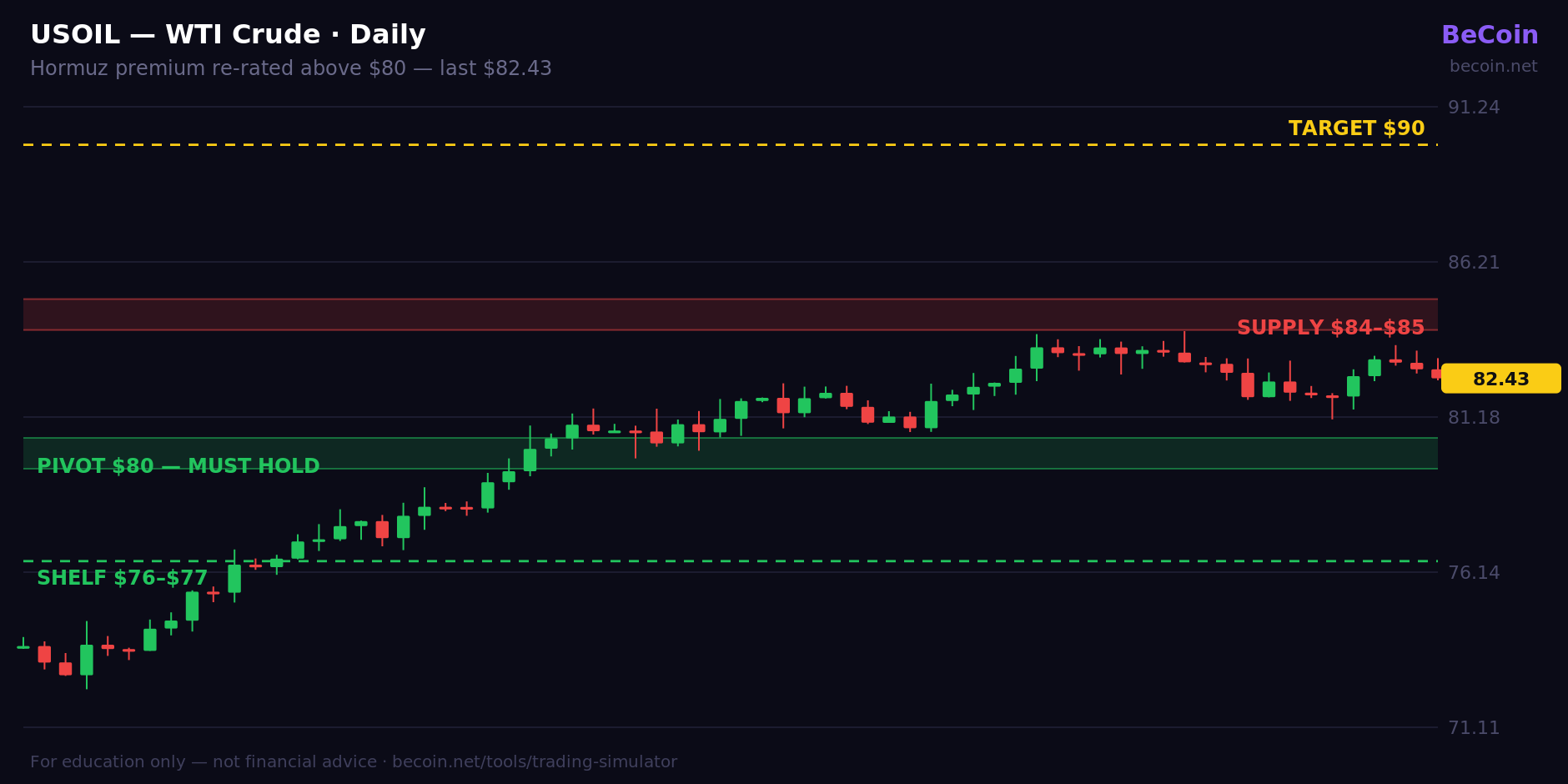
WTI holds $82 as the Hormuz premium sticks — supply risk vs talks
WTI crude is trading at $82.43 on Tuesday, essentially flat on the day but holding a level that would have looked improbable two weeks ago, when oil sat near $73. The Strait of Hormuz risk premium hasn't faded — it has hardened into the price, and the barrel is now defending $80 rather than testing it.
Why it matters
This is the one market where escalation and diplomacy pull in opposite directions in real time. On the bullish side: vessel traffic through Hormuz — the chokepoint for roughly a fifth of the world's oil — has fallen sharply after Iranian attacks on ships, US airstrikes have run for nine consecutive nights, and Yemen's Houthis have announced a maritime embargo threatening Red Sea flows. On the bearish side: Iran says mediators have presented de-escalation proposals and that talks with the US could resume. So far the physical disruption is winning, and that keeps a premium in every barrel — which flows straight into inflation prints and, by extension, the Fed's higher-for-longer calculus.
Technical analysis
The structure has re-rated an entire tier higher. The $80 round level is now the pivot the bulls must defend; hold it and the $84–$85 supply band — where spring rallies stalled — becomes the target, with a clean break opening the door toward $88–$90. Lose $80 on a daily close and the market fills back toward the $76–$77 shelf, the launch point of this leg. Momentum is positive but extended: price is well above its 50-day average, the signature of a headline-driven move that can give back fast if the talks calendar produces a breakthrough.
BeCoin's forecast read
The model's 24-hour path leans higher while headlines run hot and Hormuz traffic stays impaired, but its weekly view is more cautious than the tape — risk-premium spikes without a confirmed, sustained supply loss have mean-reverted in four of the last five episodes it has trained on. The tell to watch is tanker-traffic data against the negotiation headlines: a confirmed, lasting transit disruption re-rates the whole curve toward $90; a credible de-escalation gives back most of the premium and puts $76 back in play.
Track crude alongside every major market on BeCoin's forecast hub. Get full access to all 100+ assets → · Educational only — not financial advice.
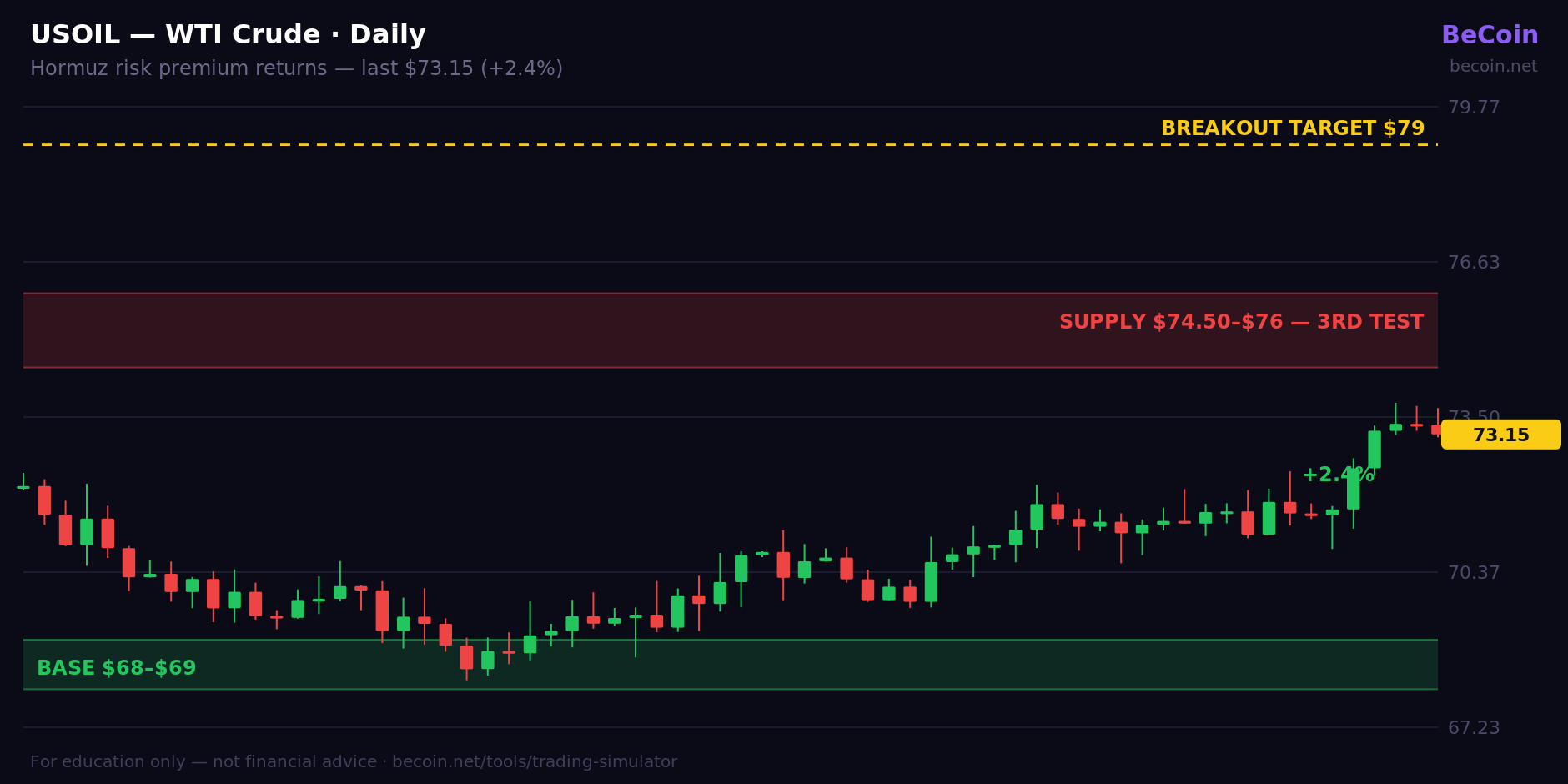
WTI jumps to $73 as Hormuz risk premium returns — recovery leg or headline spike?
WTI rose 2.4% to $73.15 after US strikes on Iran and retaliation on US bases disrupted energy flows through the Strait of Hormuz. BeCoin's model sees the $74–$76 supply band as the test that decides whether this is a new leg or another fade.
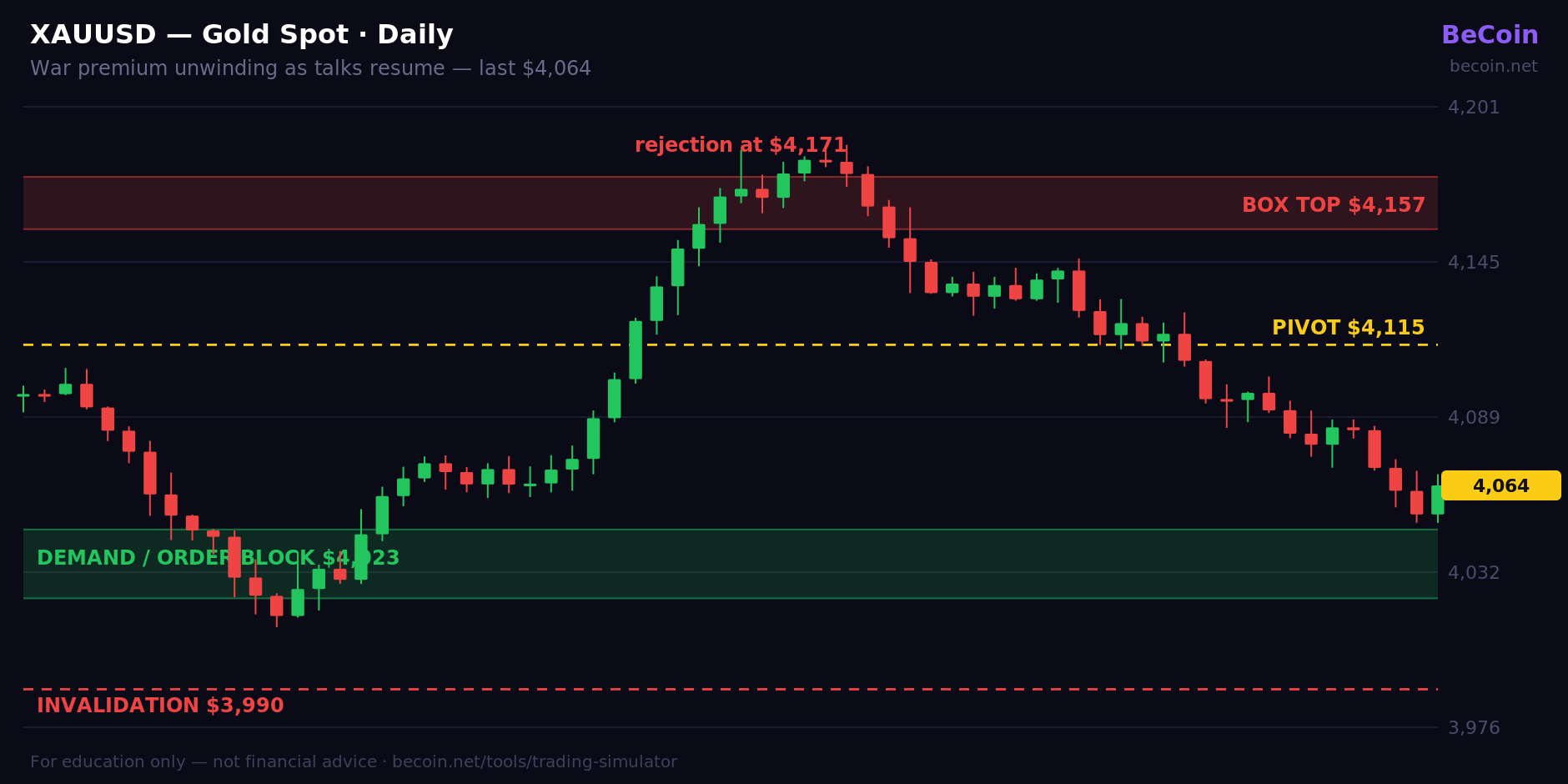
Gold slips to $4,064 as US–Iran talks resume — the $4,023 line decides what's next
Gold fell 1.4% to $4,064 as US–Iran negotiations resumed despite the Strait of Hormuz escalation, unwinding part of the war premium. The $4,023 order block is the level bulls must hold; BeCoin's model keeps the range read until $4,157 breaks.
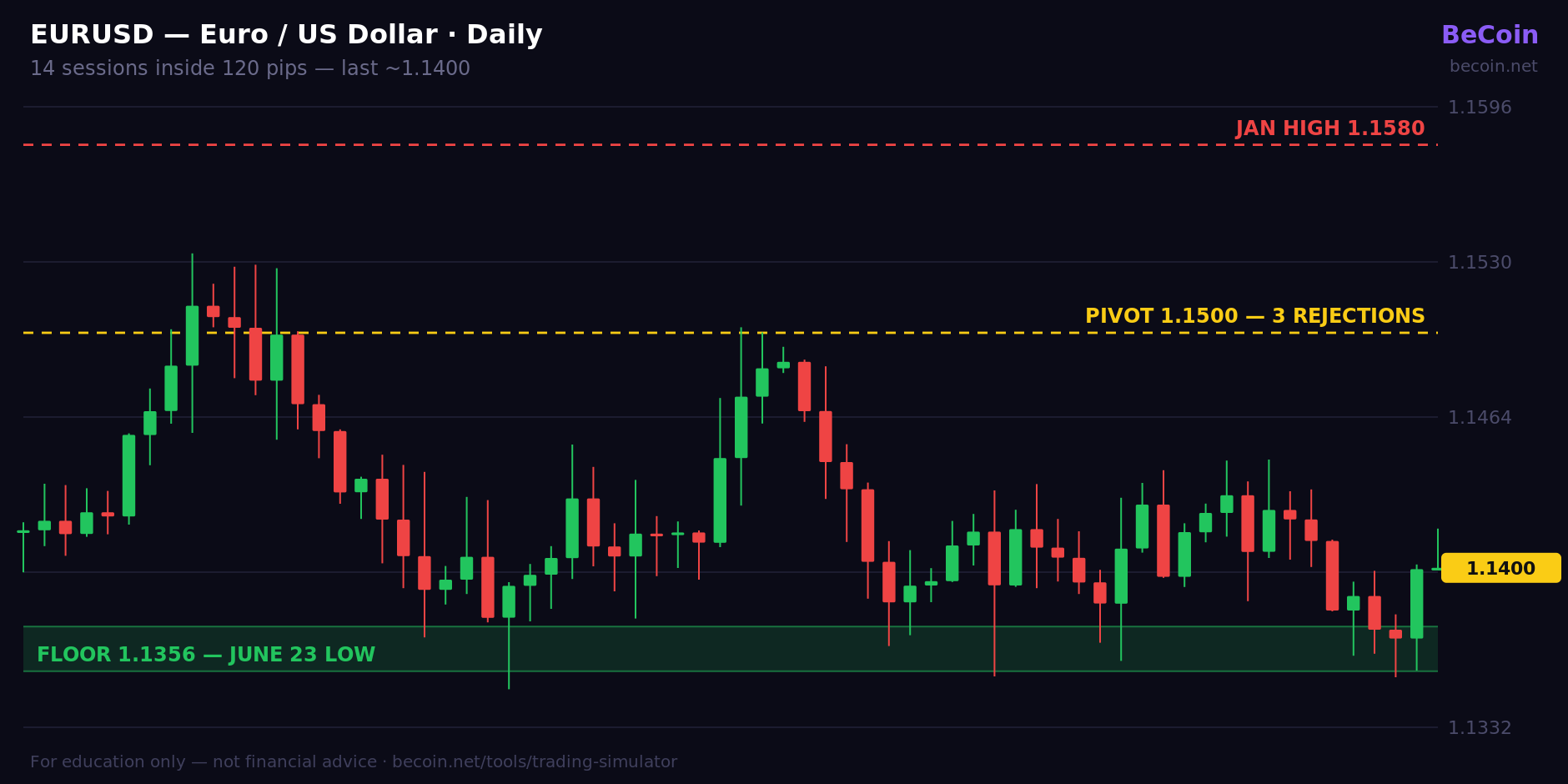
EUR/USD holds near 1.14 as Fed-hike bets meet a 4.56% ten-year — the 1.15 pivot decides
EUR/USD is consolidating around 1.14 after last year's 13% surge, with US 10-year yields easing to 4.56% while the Fed keeps a hike on the table. BeCoin's model calls 1.1500 the pivot: acceptance above resumes the uptrend, rejection keeps the 1.1350 floor in play.
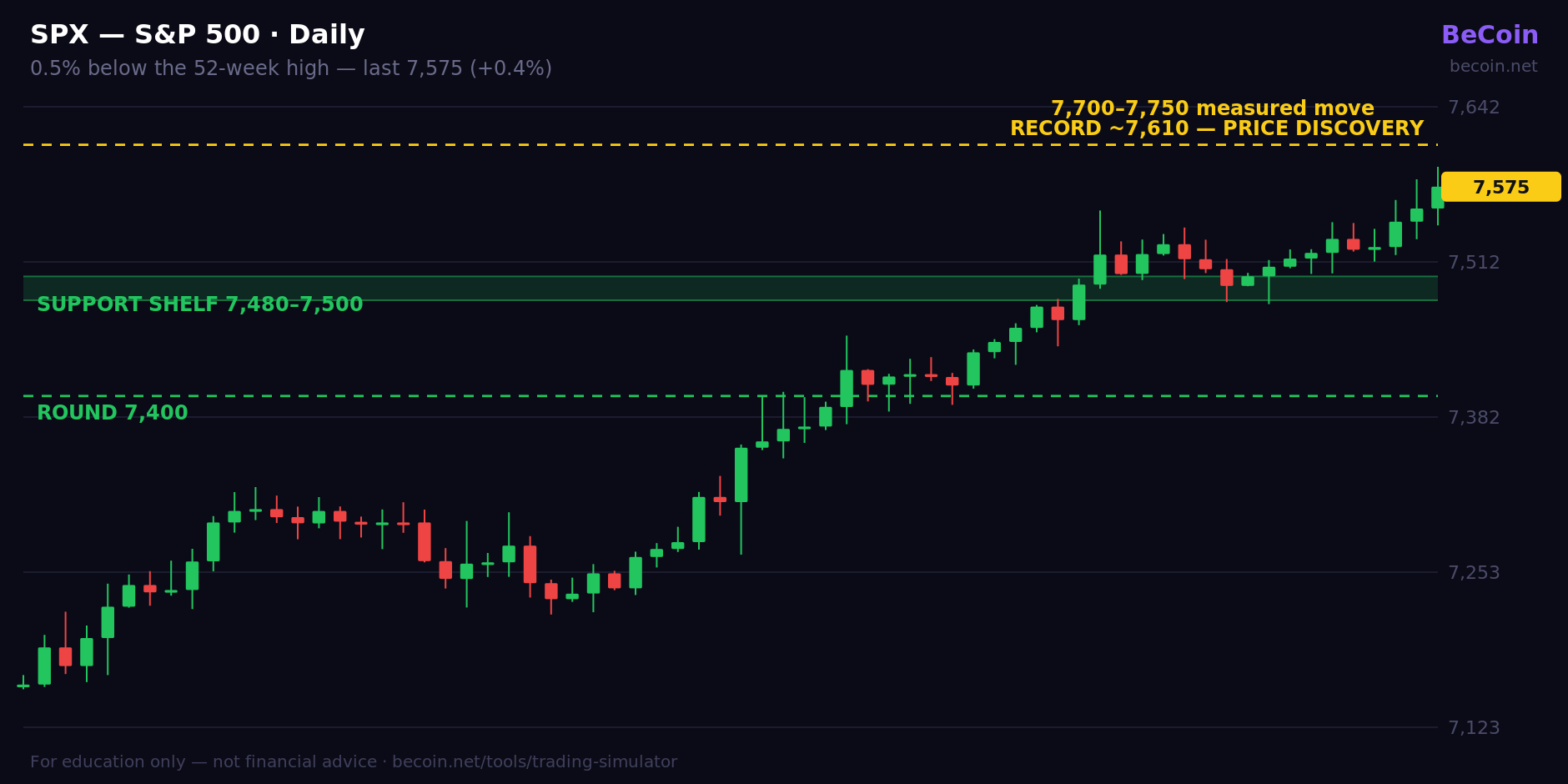
S&P 500 at 7,575, half a percent from a record — while the Fed still talks hikes
The S&P 500 rose 0.4% to 7,575, within 0.5% of its 52-week high, shrugging off Middle East strikes and hawkish Fed pricing. BeCoin's model respects the trend but flags the narrowing gap between record prices and rising-rate expectations.
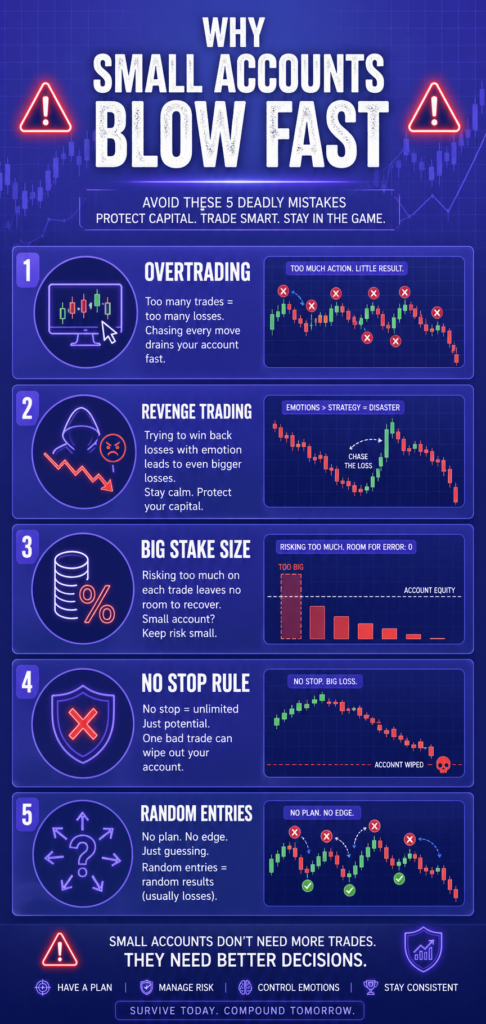
Risk Management for Small Accounts ($10–$50)
Starting with a small trading account can feel frustrating. You want fast growth, but one bad decision can wipe out weeks of progress. That is why risk management matters more for a $10 account than for a $1,000 account. Many beginners focus only on strategy. They search for the best indicators, signals, or entry methods. […]
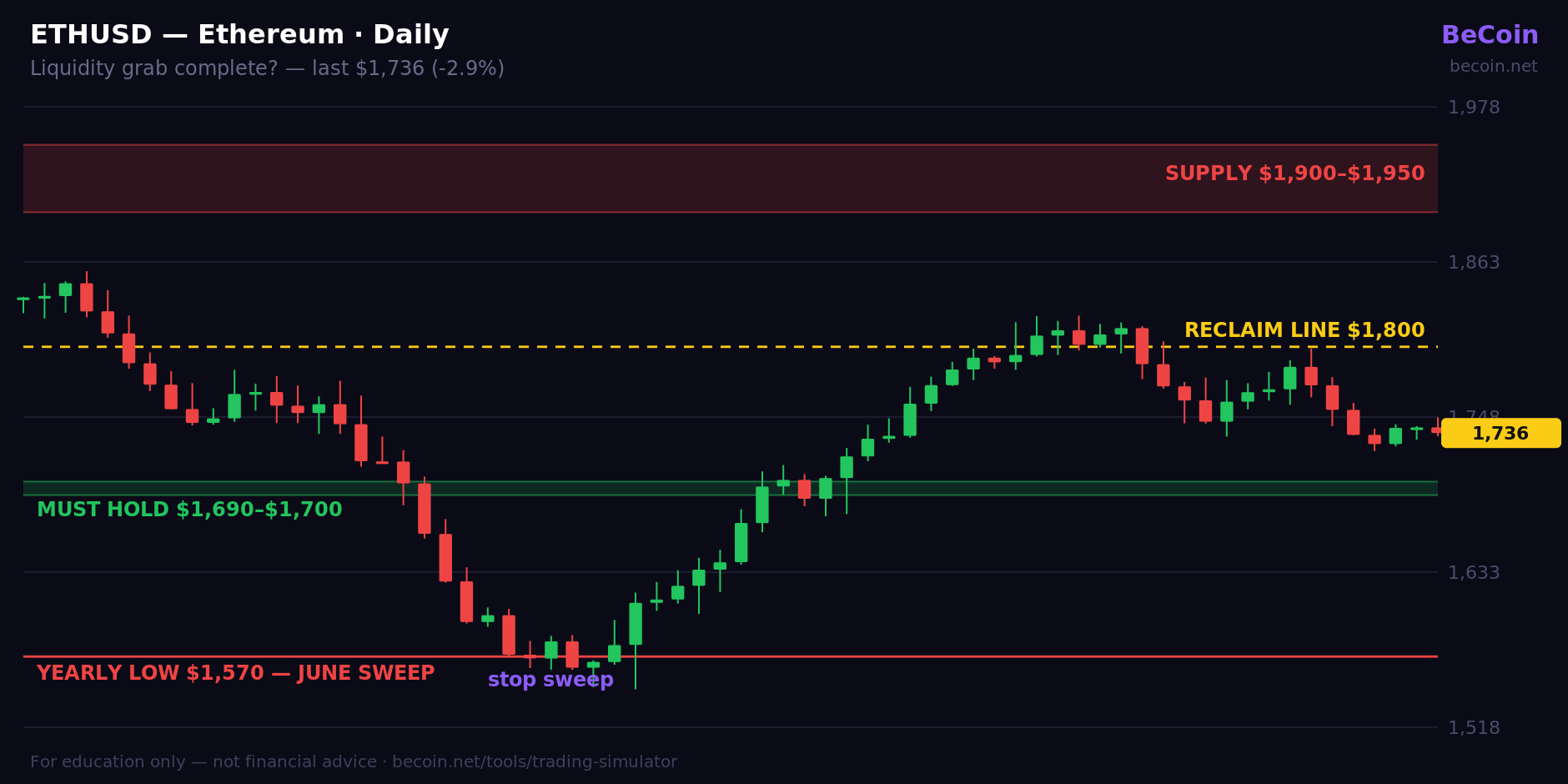
Ethereum at $1,737: was that the liquidity grab, or is the yearly low next?
ETH slipped 2.9% to $1,737, back toward the zone smart-money traders call a completed liquidity grab above the $1,570 yearly low. BeCoin's model makes $1,690–$1,700 the line: hold it and the reclaim of $1,800 is the trade; lose it and the low gets retested.